
In this Article
- What Is a Doppio Espresso? (Direct Answer)
- The History Behind the Doppio
- Doppio vs. Double Espresso: Is There Actually a Difference?
- How to Make a Doppio Espresso at Home (Step-by-Step)
- Doppio Espresso Caffeine Content
- Doppio Espresso Calories and Nutrition
- Doppio vs. Other Espresso Drinks: What’s the Difference?
- What Is a Doppio at Starbucks?
- Starbucks Doppio Espresso Copycat Recipe
- Vegan and Dairy-Free Doppio Variations
- Iced Doppio Espresso: Everything You Need to Know
- Common Doppio Mistakes and How to Fix Them
- Doppio Espresso and Health: What the Research Actually Says
- Cost Breakdown: Doppio at Home vs. Café vs. Starbucks
- Recommended Tools and Brands
- Frequently Asked Questions About Doppio Espresso
- The Bottom Line
A doppio espresso is a double shot of espresso — two full extractions pulled into one cup using roughly 14–20 grams of ground coffee to yield approximately 60ml (2 oz) of concentrated espresso. If you’ve ever stood at a café counter squinting at “solo,” “doppio,” and “lungo” wondering what on earth you’re ordering, this guide settles it permanently.
Here’s what most articles won’t tell you: at most coffee shops outside Italy, you’ve been drinking a doppio this whole time without knowing it. The double shot quietly became the industry default years ago. So understanding the doppio isn’t just trivia — it changes how you order, how you brew at home, and how you get exactly the cup you want every single time.
What Is a Doppio Espresso? (Direct Answer)
A doppio espresso (pronounced DOH-pee-oh) is the Italian term for a double shot of espresso. “Doppio” simply means “double” in Italian. It uses double the ground coffee of a single shot (solo) and produces double the liquid volume — typically 60ml versus the 30ml of a single.
The key thing most explanations get wrong: a doppio is not more concentrated than a single espresso. It has more total caffeine because it uses more coffee, but the strength per sip — the concentration — stays the same when the brew ratio is maintained. You’re drinking more of the same intensity, not an amplified version.
Quick Reference Box:
- Dose: 14–20g of ground coffee (double basket)
- Yield: ~60ml / 2 oz liquid espresso
- Brew ratio: 1:2 (e.g., 18g in → 36g out)
- Extraction time: 25–30 seconds
- Caffeine: 58–185mg (averaging ~126–150mg)
- Calories (black): 5–10 kcal
- Pronunciation: DOH-pee-oh
The History Behind the Doppio
Espresso itself traces back to Angelo Moriondo, who patented the first steam-powered espresso machine in Turin in 1884. The commercial espresso culture that followed — and the language around it — was shaped by Italian café tradition, where ordering coffee meant a single shot, 25–30ml, pulled with about 7 grams of coffee.
The doppio emerged because single-basket portafilters had a practical ceiling. Early lever machines couldn’t efficiently extract more than about 7–9 grams at a time. When double baskets became standard equipment, baristas could pull two streams simultaneously — and the doppio was born as a natural extension.
What changed everything globally was Starbucks. When they expanded aggressively through the 1990s, they standardized the double shot as their espresso base. Suddenly, millions of Americans were drinking doppios without the Italian name attached. By the time specialty coffee culture exploded in the 2000s, the double basket had quietly become the industry default. Most cafés today pull every single espresso drink from a double basket.
So when you order “an espresso” at your local independent coffee shop, there’s a strong chance you’re already getting a doppio. The barista just doesn’t advertise it.
Doppio vs. Double Espresso: Is There Actually a Difference?
Short answer: no. Doppio and double espresso are the same drink — one in Italian, one in English.
The confusion creeps in because the word “doppio” sounds more precise, more technical, more Italian café than “double espresso.” Some people assume a doppio is pulled differently — tighter ratio, shorter extraction, more concentrated. That’s not accurate. Both terms describe the exact same thing: two shots extracted from a double portafilter basket into a single cup.
Where real variation exists is between cafés, not between the words:
| Variable | Traditional Italian Doppio | Modern Specialty Café Double |
| Dose | 14g | 17–20g |
| Yield | 30–40ml | 36–45g (by weight) |
| Ratio | ~1:2 | 1:2 to 1:2.5 |
| Extraction time | 25–30 sec | 25–32 sec |
| Measurement | Volume (ml) | Weight (grams) |
The shift from measuring by volume to measuring by weight on a scale is significant. Crema throws off volumetric measurements — a shot that looks like 60ml might only be 40ml of actual liquid once the foam dissipates. Modern specialty cafés use digital scales to hit precise ratios every time, which is why the drinks taste more consistent.
How to Make a Doppio Espresso at Home (Step-by-Step)
You do need an espresso machine — this is non-negotiable. Moka pots, AeroPress, and French presses produce strong coffee, but not true espresso. True espresso requires 8–10 bars of pressure, which only an espresso machine delivers.
Equipment You’ll Need
- Espresso machine with a double portafilter basket (a machine like the Breville Barista Express or the De’Longhi Stilosa handles this well for home use)
- Burr grinder — this matters enormously. Blade grinders produce uneven particles that cause channeling and bitter, uneven extraction. A burr grinder like the Baratza Encore or the Eureka Mignon produces consistent grounds that actually taste good.
- Digital kitchen scale accurate to 0.1g
- Tamper
- Small preheated espresso cup (ideally 90–100ml capacity for a doppio)
The Doppio Recipe
Dose: 18g of freshly ground coffee Target yield: 36g espresso (by weight) Target time: 27–30 seconds Water temperature: 92–94°C (197–201°F)
Step-by-step:
- Preheat everything. Run a blank shot of hot water through your portafilter and into your cup. Cold metal kills extraction temperature.
- Grind fresh. Grind 18g of beans immediately before pulling. Coffee goes stale fast after grinding — within minutes, not hours.
- Distribute the grounds. Use your finger or a distribution tool to level the coffee in the basket. Uneven distribution causes channeling (water finds the path of least resistance and blows through).
- Tamp firmly and level. Apply approximately 15–20kg of downward pressure with your tamper. The surface must be flat — any tilt creates uneven extraction.
- Lock in and pull. Lock the portafilter into the group head immediately. Start your shot. The first drops should appear within 7–10 seconds.
- Weigh the output. Stop the shot when you hit 36g in the cup. At 27–30 seconds, you’re in the right zone. Faster than 20 seconds? Grind finer. Slower than 35 seconds? Grind coarser.
- Taste and adjust. Sour = underextracted (grind finer or slow down). Bitter = overextracted (grind coarser or pull shorter).
The mistake I made for months: I kept pulling at 25 seconds and wondering why my shots tasted sharp and hollow. The issue was stopping by time, not by yield weight. Once I started stopping at 36g instead of 25 seconds, everything clicked. The shot was fuller, rounder, and actually tasted like the coffee I’d paid for.
Doppio Espresso Caffeine Content
A doppio espresso contains roughly 58–185mg of caffeine, with most well-pulled shots landing in the 120–150mg range. That wide spread isn’t a cop-out — it reflects genuine variation across bean type, roast level, dose, and extraction.
Here’s what drives the variability:
- Robusta beans contain nearly double the caffeine of Arabica. Italian espresso blends frequently include Robusta for body and crema — which is why a traditional Italian doppio can hit the higher end of that range.
- Roast level affects caffeine less than people think. Light roasts and dark roasts have similar caffeine content by weight. The myth that dark roast = more caffeine is mostly wrong.
- Dose matters most. More coffee in means more caffeine out. A café using 20g pulls more caffeine than one using 14g.
Practical comparison:
| Drink | Approximate Caffeine |
| Doppio espresso | 120–150mg |
| Single espresso (solo) | 60–75mg |
| 8oz drip coffee | 95–165mg |
| Ristretto (double) | 80–120mg |
| Lungo (double) | 130–170mg |
| Starbucks Doppio Espresso | ~150mg |
Research published in NCBI/PubMed analyzing 20 commercial espresso coffees found a 6-fold difference in caffeine levels between brands — and noted that a single espresso at some outlets exceeded 200mg, which is the daily upper limit recommended for pregnant women by the UK Food Standards Agency. This is worth knowing if you’re sensitive to caffeine and assuming all doppios are equal.
Doppio Espresso Calories and Nutrition
A plain doppio espresso contains approximately 5–10 calories. That’s it. Black espresso is almost entirely water and dissolved coffee solids — a trace of protein, a whisper of carbohydrate, essentially nothing in fat.
Full nutrition for a plain double shot (60ml, black):
- Calories: ~5–10 kcal
- Protein: <1g
- Carbohydrates: ~1g
- Fat: <0.5g
- Caffeine: 120–150mg
The calorie count changes the moment you add anything:
| Doppio Variation | Approximate Calories |
| Doppio, black | 5–10 kcal |
| Doppio + whole milk splash (30ml) | ~25 kcal |
| Doppio macchiato | 15–20 kcal |
| Iced doppio + oat milk (120ml) | ~55 kcal |
| Doppio + vanilla syrup (2 pumps) | ~80 kcal |
| Starbucks Doppio Espresso (plain) | ~10 kcal |
If you’re calorie-tracking, the doppio itself is almost irrelevant. What you add to it is where the math starts to matter.
Doppio vs. Other Espresso Drinks: What’s the Difference?
This is where a lot of readers get lost, so let’s map it out clearly.
Doppio vs. Ristretto
A ristretto uses the same dose as a single espresso but extracts less water — roughly 15–20ml instead of 30ml. It’s more concentrated, sweeter, and stops before the more bitter compounds extract. A ristretto doppio doubles the dose for a ristretto — meaning 16g in, about 24g out. Shorter and more intense than a standard doppio.
Doppio vs. Lungo
A lungo (“long” in Italian) uses the same dose but runs more water through — up to 90ml. It extracts longer, pulls more bitter compounds, and produces a thinner, more diluted cup. If your doppio tastes sharp or bitter, don’t go longer — that makes it worse, not better.
Doppio vs. Americano
An Americano is a doppio (or single) with hot water added separately — typically 120–180ml of water. It dilutes the concentration significantly. The result is milder, with a longer drinking experience. If you want a larger cup without bitterness, an Americano makes sense. If you want full espresso intensity but more volume, a doppio is your answer.
Doppio vs. Flat White / Latte Base
In most specialty cafés, the flat white and latte both start with a doppio. The milk volume changes — a flat white uses less steamed milk for a more coffee-forward ratio, while a latte uses more. Understanding this means you can start customizing your milk drink ratios intelligently.
| Drink | Base Shot | Added Water | Added Milk |
| Doppio | Double espresso | None | None |
| Americano | Double espresso | 120–180ml hot | None |
| Flat White | Double espresso | None | ~100–120ml microfoam |
| Latte | Double espresso | None | ~150–200ml steamed milk |
| Cappuccino | Double espresso | None | Equal parts milk + foam |
| Macchiato | Double espresso | None | Dollop of foam or milk |
What Is a Doppio at Starbucks?
At Starbucks, a doppio espresso is two shots of their signature espresso roast pulled into a small cup. Starbucks uses slightly different sizing than traditional Italian standards — their solo is 0.75 oz, making their doppio approximately 1.5 oz (compared to the standard 2 oz / 60ml you’d get at most independent cafés).
Starbucks lists the doppio as a standalone drink on their menu, and it’s genuinely one of their best-value, lowest-calorie options. At roughly $2.45–$3.25 depending on location, it delivers a proper caffeine hit without the sugar load of their more elaborate drinks.
Starbucks Doppio Espresso Ordering Tips
- Blonde Roast Doppio — Starbucks’ blonde espresso is a lighter roast with a slightly sweeter, less bitter profile. It actually works well for people who find the standard roast too intense.
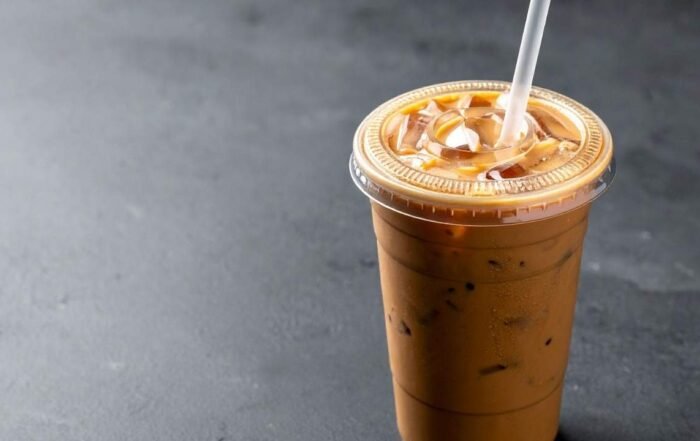
- Iced Doppio Espresso — Ask for your doppio over ice in a tall cup. From there you can add a splash of oat milk or any milk alternative for a budget-friendly iced latte substitute.
- Doppio Macchiato — Two shots with a small dollop of steamed milk and foam on top. Classic, elegant, and far cheaper than a macchiato from the full drinks menu.
Starbucks Doppio Espresso Copycat Recipe
Stop paying café prices for what you can make at home in under 5 minutes.
Classic Hot Doppio (Starbucks Copycat)
Ingredients:
- 18g espresso-roast ground coffee
- ~36g water output (pulled to weight)
- Optional: 1 pump vanilla syrup or simple syrup
Method:
- Pull your double shot into a preheated espresso cup, stopping at 36g yield.
- If adding syrup, stir it in immediately while the shot is hot.
- Drink immediately — espresso oxidizes fast and loses complexity within 30 seconds of sitting.
Cost at Starbucks: ~$2.75 | Cost at home: ~$0.40–0.60 in beans
Iced Doppio Espresso with Oat Milk (Vegan / Dairy-Free)
This is the drink that went viral on TikTok and for good reason — it’s genuinely delicious, under 60 calories, and costs a fraction of the Starbucks version.
Ingredients:
- 2 shots espresso (18g in, 36g out)
- 120ml oat milk (Oatly Barista or Earth’s Own Barista blend work best — regular oat milk separates in cold liquid)
- 4–6 ice cubes
- Optional: 1 pump vanilla syrup
Method:
- Pull your double shot and let it cool for 1–2 minutes, or pull directly over the ice.
- Fill a tall glass with ice.
- Pour the espresso over the ice.
- Add oat milk. Stir gently.
- If you have a milk frother, foam the oat milk first for a better texture.
Calories: ~39–55 kcal depending on oat milk brand | Caffeine: ~120–150mg
My honest oat milk verdict: The barista-edition oat milks are genuinely worth the slight premium. Standard oat milk has a watery texture that slides off the espresso rather than integrating with it. Oatly Barista foams properly and actually blends. The difference is noticeable on the first sip.
Vegan and Dairy-Free Doppio Variations
A straight doppio is already 100% vegan — it’s just coffee and water. Where the dairy comes in is with add-ons. Here are clean swaps:
- Milk: Oat milk (best for frothing), soy milk (closest to dairy texture), almond milk (lightest, slightly nutty), coconut milk (tropical sweetness, works well iced)
- Cream substitute: Coconut cream, cashew cream, or full-fat oat milk
- Simple syrup: Make your own — equal parts sugar and water, simmered for 2 minutes. Or use maple syrup for a warmer flavor note.
The cleanest vegan doppio: just the espresso, over ice, with a splash of barista oat milk. Zero animal products, under 50 calories, genuinely satisfying.
Iced Doppio Espresso: Everything You Need to Know
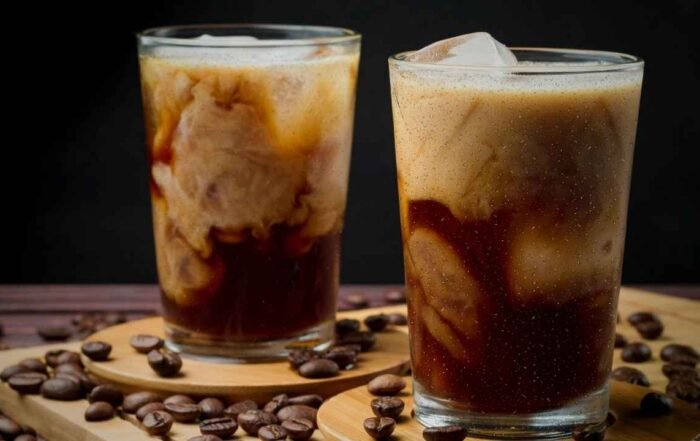
An iced doppio espresso is exactly what it sounds like — your double shot, poured over ice. But there are two schools of thought on how to do it properly.
Method 1: Pull Over Ice
Pull your shot directly into a glass already filled with ice. The shock-chilling stops extraction instantly and locks the flavor in. The downside: rapid temperature change can cause some coffees to taste slightly acidic or sharp.
Method 2: Cool First, Then Ice
Pull your shot normally, let it rest for 60–90 seconds, then pour over ice. This is gentler and often produces a smoother result with lighter-roast beans.
Which is better? For darker roasts, pull over ice. For lighter, fruitier single-origin beans, cool first. Lighter roasts are more volatile and benefit from the slower temperature drop.
The mistake most people make: Using too little ice. Iced espresso needs a full glass of ice — not a few cubes — to chill quickly enough that it doesn’t taste watered-down as the ice melts.
Common Doppio Mistakes and How to Fix Them
After years of pulling shots and helping people troubleshoot their home setups, these are the errors that come up again and again:
Mistake 1: Stopping by Time, Not by Yield
Set your timer as a reference, but stop when you hit your target weight (36g for an 18g dose). Grind inconsistencies mean every shot extracts slightly differently. Time alone is an unreliable guide.
Mistake 2: Using Pre-Ground Coffee
Pre-ground coffee, even quality pre-ground, is stale. Coffee gases off CO₂ after grinding and starts oxidizing immediately. Use a burr grinder and grind within 30 seconds of pulling. The difference between fresh-ground and pre-ground espresso is not subtle — it’s the difference between a shot with a rich, amber crema and a shot that looks grey and tastes flat.
Mistake 3: Not Preheating the Cup
A cold cup drops the espresso temperature by 8–12°C on contact. That’s enough to close off aromatics and make the shot taste flatter. Pour hot water into your cup, let it sit 30 seconds, pour it out, pull your shot.
Mistake 4: Tamping on an Angle
If your tamp isn’t perfectly level, water channels through the high side and over-extracts that area while under-extracting the rest. The result is a shot that tastes bitter AND sour simultaneously. Check your tamp surface by eye — it should be a perfect horizontal disc.
Mistake 5: Using the Wrong Beans
Not all espresso beans are created equal. Dark roasts specifically labeled for espresso work because they’ve been roasted to reduce acidity and develop body. A light-roast single-origin designed for filter brewing can taste sour and hollow as espresso. If you’re new to home espresso, start with a medium-dark espresso blend from a reputable roaster.

Doppio Espresso and Health: What the Research Actually Says
A doppio espresso black is one of the lowest-calorie ways to consume caffeine, and the research on espresso specifically is largely positive for moderate consumers.
Research published in NCBI found that moderate coffee consumption — typically 3–5 cups per day — is associated with reduced overall mortality and lower risk of cardiovascular disease, type 2 diabetes, stroke, and cognitive decline. The bioactive compounds in espresso, including chlorogenic acids, trigonelline, and caffeine, contribute antioxidant and anti-inflammatory effects.
For a plain doppio specifically:
- No added sugar means no blood sugar spike
- No milk means no additional saturated fat
- ~120–150mg caffeine sits within the generally safe range for most adults (FDA guidelines suggest 400mg/day as a reasonable upper limit)
- Pregnant women should limit caffeine to 200mg/day maximum — one doppio is close to that limit, so factor it in
Caveats worth knowing: caffeine sensitivity varies enormously between individuals, and some people with heart conditions or anxiety disorders find even moderate espresso consumption aggravates symptoms. If that’s you, a half-doppio (ristretto) or a single shot might serve you better.
Cost Breakdown: Doppio at Home vs. Café vs. Starbucks
| Source | Average Price | Cost Per Shot |
| Starbucks Doppio | $2.45–$3.25 | ~$1.30 per shot |
| Independent café doppio | $2.50–$4.50 | ~$1.50 per shot |
| Home (quality beans, burr grinder) | $0.40–$0.70 | ~$0.25 per shot |
Setup cost for home espresso: A capable beginner machine like the De’Longhi Dedica costs around $150–200. Add a decent burr grinder ($80–150) and you’re looking at a $250–350 upfront investment. At $4 per doppio saved, that pays back in roughly 75–90 drinks — about 3 months of daily doppios.
If you drink two doppios a day at a café? The break-even is under 6 weeks. The math makes home espresso a very sound investment for regular drinkers.
Recommended Tools and Brands
These are products that genuinely improve the doppio experience — not padding:
- Espresso machine: Breville Barista Express (grinder built in, excellent for beginners), De’Longhi Dedica (compact, reliable), Gaggia Classic Pro (for those who want to go deeper)
- Burr grinder (standalone): Baratza Encore ESP, Eureka Mignon Filtro, Timemore C3 (for manual grinding)
- Digital scale: Any 0.1g-accurate kitchen scale. The Acaia Pearl is the gold standard for espresso; generic options work fine.
- Milk frother (for iced doppio variations): Zulay milk frother (inexpensive, works well), Breville Milk Café (if you want steaming quality)
- Beans for espresso: Intelligentsia Black Cat, Counter Culture Forty-Six, Stumptown Hair Bender — all consistently excellent espresso blends. For Italian-style doppio, try Illy or Lavazza Super Crema.
Frequently Asked Questions About Doppio Espresso
What is a doppio espresso?
A doppio espresso is a double shot of espresso made with approximately 14–20g of ground coffee, yielding around 60ml (2 oz) of liquid. “Doppio” is Italian for “double.” It’s extracted in a double portafilter basket over 25–30 seconds and contains roughly 120–150mg of caffeine. It’s the standard espresso in most modern cafés.
Is a doppio the same as a double espresso?
Yes, completely. Doppio and double espresso are the same drink — doppio is simply the Italian term. Both use double the ground coffee and produce double the yield of a single (solo) espresso. The difference is linguistic, not technical.
How much caffeine is in a doppio espresso?
A doppio espresso typically contains 58–185mg of caffeine, with most well-pulled shots averaging around 120–150mg. Caffeine levels vary based on coffee bean variety (Robusta beans have nearly double the caffeine of Arabica), roast level, dose, and extraction length.
How many calories in a doppio espresso?
A plain doppio espresso contains approximately 5–10 calories. All additional calories come from milk, cream, sugar, or syrups added to the drink. Even with a 30ml splash of whole milk, you’re only adding about 18–20 calories.
What is a doppio at Starbucks?
At Starbucks, a doppio is two shots of espresso served in a small cup. Their version is slightly smaller than the Italian standard — approximately 1.5 oz rather than 2 oz — because Starbucks’ solo shot is 0.75 oz. It costs roughly $2.45–$3.25 and comes in their standard espresso roast or blonde roast.
Can you make a doppio espresso without an espresso machine?
Not a true doppio, no. Authentic espresso requires 8–10 bars of pressure, which only an espresso machine produces. A Moka pot produces a strong concentrated coffee (not technically espresso) that can approximate the flavor for iced drinks or mixed recipes, but the body, crema, and extraction profile will differ noticeably.
What is an iced doppio espresso?
An iced doppio espresso is two shots of espresso served over ice. It’s often combined with a splash of milk or milk alternative for a simple, low-calorie iced coffee. Pour the hot espresso directly over a full glass of ice to shock-chill it. Add oat milk, vanilla syrup, or caramel to customize.
Is a doppio stronger than a regular espresso?
A doppio has more total caffeine than a single espresso because it uses more coffee. However, it’s not more concentrated — if the brew ratio stays the same (e.g., 1:2), each sip has the same intensity as a single shot. You simply have more liquid and more caffeine in total.
What is the difference between a doppio and a lungo?
A doppio uses about 14–18g of coffee to yield 30–40g of espresso. A lungo uses a similar dose but runs more water through — up to 90ml — producing a larger, more diluted, slightly more bitter cup. A doppio is more concentrated and coffee-forward. A lungo is longer and milder.
What is a doppio macchiato?
A doppio macchiato is a double espresso “stained” (macchiato means “stained” in Italian) with a small amount of steamed milk or milk foam. It softens the intensity of the doppio without dramatically altering the coffee flavor. It’s served in a small cup, not a latte glass.
Can I make a vegan or dairy-free doppio?
A plain doppio espresso is already vegan — it’s just coffee and water. For dairy-free variations, replace milk or cream with oat milk, almond milk, soy milk, or coconut milk. Oatly Barista or Earth’s Own Barista oat milks work best because they’re formulated to emulsify with espresso without separating.
How do I store leftover doppio espresso?
Espresso degrades rapidly and tastes noticeably worse within 30 seconds of being pulled. You cannot meaningfully “store” a pulled shot — it’s always best served immediately. If you need to make espresso ahead, pull shots into ice directly to shock-chill and minimize oxidation, then use within 30 minutes. Refrigerated espresso used within a few hours for iced drinks is acceptable but not ideal.
What is a Nespresso Bianco Doppio?
The Nespresso Bianco Doppio is a specific Nespresso pod-based drink — two espresso shots combined with steamed milk for a small flat white-style beverage. It contains approximately 105mg of caffeine in a 2.7 oz serving. The Bianco Doppio is Nespresso’s answer to the traditional doppio macchiato, made convenient for capsule machine users.
What grind size should I use for a doppio espresso?
Use a fine grind — finer than table salt, but not as fine as flour. The exact setting depends on your grinder and beans. Start at your machine’s recommended espresso setting and adjust: if the shot runs in less than 20 seconds, grind finer; if it runs longer than 35 seconds, grind coarser. Dial in by taste and yield weight, not by time alone.
What’s the best espresso machine for making doppio at home?
For beginners, the De’Longhi Dedica ($150–200) or the Breville Barista Express ($700, includes built-in grinder) are the most reliable entry points. For serious home baristas willing to invest, the Gaggia Classic Pro ($400) rewards skill with genuinely excellent espresso. Avoid super-automatic “one-touch” machines if you want to learn and control the process — they produce convenience at the expense of quality.
The Bottom Line
The doppio espresso is both the simplest and most important drink in coffee. It’s the foundation everything else is built on — lattes, cappuccinos, flat whites, Americanos. Once you understand what makes a doppio work, every other espresso drink makes sense.
If you’re ordering at a café, just ask for a doppio and you’ll almost always get the real thing. If you’re brewing at home, invest in a decent burr grinder before you even think about upgrading your machine — the grinder matters more. And if you want the Starbucks iced doppio experience for under a dollar? Pull your shots, fill a glass with ice, splash in some barista oat milk, and honestly? It’s better than what you’d get in the drive-through.
The best doppio is the one you actually make and enjoy. Start simple. Adjust from there.