In this Article
- What Is Ristretto Coffee?
- Ristretto vs. Espresso vs. Lungo: The Full Espresso Spectrum
- What Does Ristretto Coffee Taste Like?
- Is Ristretto Less Acidic Than Espresso?
- Ristretto vs. Espresso: The Caffeine Question (People Get This Wrong)
- Ristretto Calories and Nutrition
- How Many Ounces Is a Ristretto?
- How to Make Ristretto at Home: Step-by-Step
- The Double Ristretto (Doppio Ristretto): Why Most Cafés Use This
- Ristretto at Starbucks: Everything You Need to Know
- Ristretto Latte: How to Make It and Why It’s Worth Ordering
- Ristretto Americano: Does It Make Sense?
- Common Ristretto Mistakes and How to Fix Them
- Ristretto Machine Settings: A Practical Guide
- Ristretto Extraction Ratio Explained
- Best Coffee Beans for Ristretto
- Storing and Making Ahead: Ristretto Practicalities
- Dairy-Free and Vegan Ristretto
- FAQ: Everything Else You Need to Know About Ristretto Coffee
- The Bottom Line on Ristretto Coffee
Ristretto coffee is a short espresso shot made with the same amount of ground coffee as a regular espresso but extracted with roughly half the water — producing 15–20ml of intensely concentrated, naturally sweeter coffee in about 15–20 seconds. If you’ve ever tasted an espresso and thought “almost perfect, but slightly too bitter” — ristretto is what you were looking for, even if you didn’t know the name.
It’s not a complicated drink. But understanding what makes it genuinely different from espresso — and why so many specialty baristas quietly consider it the superior shot — changes how you order and how you brew. This guide covers all of it: the real science of ristretto extraction, how to pull one at home, the Starbucks version, ristretto lattes and americanos, caffeine, calories, and the mistakes that ruin it.
What Is Ristretto Coffee?
Ristretto (pronounced ri-STRET-oh) comes from the Italian word meaning “restricted” or “shortened.” In coffee terms, it describes a short espresso shot where extraction stops early — capturing the first, sweetest compounds the coffee releases before the bitter, astringent ones arrive.
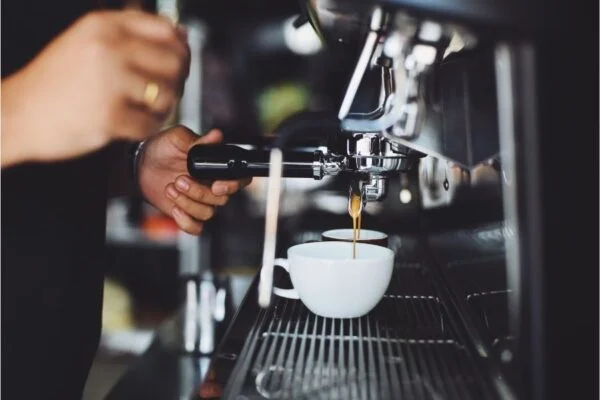
A ristretto uses the same coffee dose as a standard espresso (typically 18–20g) but only half the water volume. Where espresso yields roughly 30ml (1 oz) per shot, a ristretto yields 15–20ml (0.5–0.75 oz). The extraction time drops to approximately 15–20 seconds instead of the 25–30 seconds for espresso.
Quick answer: Ristretto is a short, concentrated espresso shot using the same coffee dose but half the water. It tastes sweeter, more syrupy, and less bitter than regular espresso because it captures only the early, sugar-forward compounds from the coffee — stopping before bitterness develops. It contains slightly less caffeine per shot than espresso.
Ristretto vs. Espresso vs. Lungo: The Full Espresso Spectrum
Most articles treat these three as separate drinks. They’re not. They’re three points on the same extraction spectrum — different brew ratios from the same coffee dose and the same machine.
| Shot Type | Coffee Dose | Water/Yield | Extraction Time | Brew Ratio | Flavor |
| Ristretto | 18–20g | 15–20ml | 15–20 sec | ~1:1 | Sweet, syrupy, intense |
| Espresso (Normale) | 18–20g | 30–36ml | 25–30 sec | ~1:2 | Balanced: sweet, bitter, acidic |
| Lungo | 18–20g | 50–60ml | 40–55 sec | ~1:3 | Bitter, thinner, more dilute |
Think of it as a salami cut through a single shot. The first portion — the ristretto zone — carries the most natural sugar, aromatic oils, and floral or fruity notes. The middle portion adds body and complexity. The final portion brings the bitterness and harsher extraction compounds. Espresso combines all three. Ristretto stops before the bitter end.
This is why ristretto doesn’t taste weaker than espresso — it often tastes more intense. The flavor is more focused. Less volume, more concentrated sweetness.

What Does Ristretto Coffee Taste Like?
This is what most articles skip over, and it’s actually the most useful thing to know before you order or brew one.
A well-pulled ristretto tastes:
- Sweeter than espresso — noticeably so, without any added sugar
- Syrupy in texture — thick, almost viscous, with a mouth-coating richness
- Fruity or floral — particularly with high-quality Arabica beans or lighter roasts
- Low bitterness — significantly less bitter than a standard espresso
- Short, clean finish — it doesn’t linger the way a lungo does
What a bad ristretto tastes like: sour, thin, and underpowered. Under-extraction is the ristretto’s main enemy. Pull it too fast with too coarse a grind, and you get the watery, sour front end of the shot without any of the sweetness you were hunting. That’s not a ristretto failing — it’s a technique failure.
A ristretto made with a single-origin Ethiopian Yirgacheffe will taste dramatically different from one pulled from a dark Italian Robusta blend. The Ethiopian might offer jasmine, stone fruit, and lemon zest. The Italian blend delivers bitter chocolate and dark caramel. Same technique, completely different drink. Ristretto showcases bean character more nakedly than almost any other preparation.
Is Ristretto Less Acidic Than Espresso?
Yes — and this surprises most people who assume less water means more acidity.
Ristretto is less acidic than standard espresso. Here’s why: acids in coffee extract in waves during brewing. Bright, pleasant acids (like citric and malic acid) extract early. The harsher, less pleasant acids extract later — alongside the bitter compounds. A ristretto stops extraction before both the harshest acids and the bitterness fully develop.
The result is a shot that tastes bright and complex without the sharp, lingering acidic edge you sometimes get from a full espresso pull. People who experience acid reflux or stomach discomfort from regular espresso often tolerate ristretto much better. The lower acidity combined with lower total volume means significantly less acid load per serving.
For the research on coffee and gastric acid response, Harvard Health’s review of coffee and digestive health provides useful context on why extraction method and volume both matter.
Ristretto vs. Espresso: The Caffeine Question (People Get This Wrong)
Almost every article online says “ristretto has less caffeine than espresso.” That’s technically true but practically misleading — and the nuance matters.
Per shot:
- Single ristretto: approximately 50–65mg caffeine
- Single espresso: approximately 63–75mg caffeine
The difference per single shot is around 10–15mg — meaningful but not dramatic.
Here’s what people miss: Most cafés and home brewers pull a double ristretto (doppio ristretto) — two ristretto shots pulled simultaneously into one cup, yielding 30–40ml total. That brings total caffeine to 100–130mg, comparable to a standard double espresso.
Starbucks ristretto shots: At Starbucks, a solo ristretto contains approximately 75mg of caffeine — the same as their standard solo shot, because their machine calibration and dose weights are consistent. A doppio ristretto at Starbucks delivers approximately 150mg. The blonde ristretto (lighter roast, paradoxically more caffeine) clocks in slightly higher at 85mg per solo shot.
The caffeine difference between ristretto and espresso is real but small. If you’re choosing ristretto for caffeine reduction, it’s a minor lever, not a dramatic one.
Ristretto Calories and Nutrition
A plain ristretto is virtually calorie-free. All the numbers:
Per single ristretto shot (15–20ml), served black:
- Calories: 5–7
- Fat: 0g
- Carbohydrates: ~0.8g (naturally occurring)
- Protein: ~0.2g
- Sugar: ~0.7g (natural, no added sugar)
The difference in calories between a ristretto and a standard espresso is negligible — both are essentially calorie-free. Where calories enter the picture is in what you add to them.
| Ristretto Drink Variation | Approximate Calories |
| Plain ristretto shot | 5–7 cal |
| Ristretto macchiato (with foam) | 15–20 cal |
| Ristretto latte (12 oz whole milk) | 200–220 cal |
| Ristretto latte (oat milk, 12 oz) | 160–180 cal |
| Double ristretto flat white | 150–200 cal (depending on milk) |
| Starbucks Blonde Ristretto Latte (Grande) | ~250 cal (2% milk) |
How Many Ounces Is a Ristretto?
A single ristretto shot measures 0.5–0.75 oz (15–20ml). A double ristretto (doppio ristretto) measures approximately 1–1.5 oz (30–40ml).
For comparison: a single espresso is 1 oz (30ml); a double espresso is 2 oz (60ml). The ristretto is always shorter — that’s definitional.
At Starbucks, their shots are already slightly smaller than specialty café standards (solo = 0.75 oz), so a Starbucks ristretto shot is proportionally shorter still — closer to 0.5 oz.

How to Make Ristretto at Home: Step-by-Step
A ristretto requires a real espresso machine. You need 7–9 bars of brew pressure — no stovetop method replicates this. The moka pot makes strong coffee; it doesn’t make ristretto.
What You Need
- Espresso machine with a double portafilter basket
- Burr grinder — this is critical; blade grinders can’t produce the consistent fine grind ristretto demands
- Freshly roasted espresso beans (within 2–4 weeks of roast date)
- Kitchen scale (mandatory — eyeballing dose ruins consistency)
- Shot glass or small vessel for measuring yield
- Preheated espresso cup (demitasse, 2–3 oz capacity)
Ristretto Grind Setting
Here’s something most guides bury or skip entirely: ristretto requires a finer grind than standard espresso. The finer grind creates more resistance to water flow, which is partly how you restrict the yield — the water moves through more slowly even though you’re stopping extraction earlier.
If your espresso grind is at “5” on a 10-point scale, start your ristretto attempts at “3” or “4.” Then adjust based on extraction behavior. If your shot gushes out in 8 seconds, go finer. If it barely drips and chokes the machine, go slightly coarser.
Step-by-Step Ristretto Method
Step 1: Preheat everything Run hot water through the portafilter and into your cup. Cold portafilter + cold cup = temperature crash. Ristretto’s small volume loses heat fast.
Step 2: Weigh and grind Use 18–20g of freshly ground coffee — same dose as your normal espresso. Grind finer than usual.
Step 3: Distribute and tamp Distribute grounds evenly across the basket, then tamp with firm, level pressure. Uneven tamping causes channeling — water finds the easy path and you get a streaky, sour shot.
Step 4: Set your target yield Place a small vessel on your scale and tare it to zero. You’re aiming for 15–20g of liquid by weight (roughly equal to 15–20ml). Some baristas watch the shot clock; experienced ones watch the flow behavior and the yield simultaneously.
Step 5: Start extraction and watch closely Start the shot. Count seconds. At roughly 15–18 seconds, check your yield. Stop when you hit your target weight — don’t just guess by color. Pull the portafilter handle or stop the pump.
Step 6: Taste immediately A ristretto is best consumed within 20–30 seconds of pulling. The flavor degrades faster than espresso due to the higher concentration of volatile aromatic compounds.
What Good Extraction Looks Like
A well-pulled ristretto flows slowly — more slowly than espresso. The color should be a deep, dark caramel-brown that doesn’t lighten as dramatically as a full espresso shot. Crema on a ristretto is typically darker, thicker, and more persistent than espresso crema. If your crema is pale and thin, you’re under-extracting. If the shot tastes sour and weak, go finer on the grind.
The Double Ristretto (Doppio Ristretto): Why Most Cafés Use This
Here’s something worth knowing if you order ristretto-based drinks at specialty cafés: when a menu says “double ristretto” or “doppio ristretto,” that’s usually 18–20g of coffee yielding 30–40ml total — essentially two ristretto shots pulled simultaneously from a double basket.
This is the standard serving size for ristretto-based espresso drinks at most quality cafés. A single ristretto at 15–20ml is extremely small — gone in one real sip. The double ristretto gives you a proper drink to experience.
Starbucks flat whites are built on double ristretto shots by default. That’s not arbitrary — the shorter extraction creates a sweeter, less bitter base that integrates beautifully with the silky microfoam of a well-made flat white.
Ristretto at Starbucks: Everything You Need to Know
Starbucks has offered ristretto shots as a customization option for years, and a few drinks use them as the default preparation. Here’s the full breakdown:
Starbucks Ristretto Shot Specifics
- Extraction time: Shorter than their standard 17–21 second regular shot
- Caffeine: ~75mg per solo ristretto (standard dark roast), ~85mg for blonde ristretto
- Flavor impact: Sweeter, less bitter, more concentrated than regular Starbucks espresso
Drinks That Use Ristretto Shots by Default at Starbucks
Flat White: Made with double ristretto shots. This is why the flat white tastes sweeter and more espresso-forward than a latte with the same amount of milk. Most customers don’t realize this is happening.
Starbucks Cortado: Three ristretto shots with steamed whole milk — 230mg of caffeine in a short cup. Intensely coffee-forward.
Eggnog Latte (seasonal): Uses ristretto shots to balance the rich sweetness of eggnog without excessive bitterness.
The Blonde Ristretto: What It Is
A blonde ristretto at Starbucks is a ristretto shot pulled from their Blonde Espresso roast — a lighter-roasted bean with noticeably sweeter, more citrus-forward flavor and marginally more caffeine than the dark Signature Roast.
The blonde ristretto is particularly popular in the Blonde Ristretto Latte — a drink that combines the sweeter, less bitter character of the ristretto with the softer, less intense flavor of the blonde roast. For people who find standard espresso drinks too bitter, this combination is genuinely excellent. The milk brings out vanilla and light caramel notes that the blonde roast carries naturally.
How to order it: On the Starbucks app, select your drink → modify “shot” → select “ristretto” → modify “roast” → select “blonde.” For a ristretto latte specifically, order a latte, customize to ristretto shots, blonde roast.
Can You Make a Starbucks-Style Ristretto at Home?
Yes, fairly closely. Starbucks uses commercial Mastrena machines with automatic shot dispensing — consistent but not artisan. Home replication:
- Use their Starbucks Blonde Espresso Roast beans (available in grocery stores)
- Grind finer than your normal espresso setting
- Pull to 15–18ml for a solo, 30–35ml for a doppio
- Pair with steamed whole milk for a flat white or latte
The flavor difference between a home ristretto on a quality machine and a Starbucks ristretto is more about the beans and your grind than anything else.
Ristretto Latte: How to Make It and Why It’s Worth Ordering
A ristretto latte is simply a latte — espresso and steamed milk — made with ristretto shots instead of standard espresso. The result is a latte that tastes noticeably sweeter, more intensely coffee-flavored, and less bitter than a standard latte.
The math: a ristretto shot uses the same coffee dose but produces less liquid. When you add the same amount of steamed milk, the coffee-to-milk ratio is effectively higher — you get more coffee character per sip.
Ristretto Latte Recipe (Home Version)
Ingredients:
- 18–20g espresso beans, ground fine
- 150–180ml whole milk (or barista oat milk for dairy-free)
Method:
- Pull a double ristretto shot (30–35ml yield from 18–20g dose) into a preheated latte glass
- Steam your milk to 60–65°C — silky microfoam, not thick froth
- Pour milk over the ristretto shot, holding the foam back with a spoon initially, then letting it flow at the end for a small amount of foam on top
- Optional: add a single pump of vanilla syrup if you want to emphasize the natural sweetness of the ristretto
The Baratza Encore or Fellow Ode both handle fine ristretto grinds well at the home level. For frothing, the Breville Bambino Plus has a surprisingly capable built-in steam wand, and the Nanofoamer is an excellent standalone option for quick milk texturing.
Ristretto Americano: Does It Make Sense?
A ristretto americano is a ristretto shot diluted with hot water — similar in concept to a standard americano (espresso + hot water) but built on the sweeter, more concentrated base of ristretto.
The result: a slightly sweeter, less bitter americano that’s more nuanced than the standard version. Some specialty cafés offer this. At Starbucks, you can request it by ordering an Americano and asking for ristretto shots.
Honestly? The ristretto americano is an underrated order. You’re diluting the shot anyway, so you might as well start with the sweeter extraction. The added water volume doesn’t eliminate the sweetness advantage ristretto has over espresso — you still end up with a cleaner, less harsh cup.
Common Ristretto Mistakes and How to Fix Them
Mistake #1: Grind Not Fine Enough
The single most common home ristretto failure. People use their regular espresso grind, pull to 15 seconds, and get a thin, sour, under-extracted shadow of what ristretto should be.
Fix: Go finer. Then go finer again. Keep going until your extraction takes a full 15–20 seconds to yield 15–20ml. The resistance of the fine grind is what creates proper ristretto — not just stopping the shot early.
Mistake #2: Stopping by Time Instead of Yield
Pulling a ristretto for “15 seconds” regardless of how much liquid comes out is a common mistake. Grind variations, humidity, and bean freshness all affect flow rate. A 15-second pull might give you 10ml on a tight grind day and 25ml on a loose grind day.
Fix: Always pull by weight. Set a scale, tare to zero, watch the number. Stop at 15–20g. Time is a secondary check, not the primary variable.
Mistake #3: Using Stale Beans
Ristretto is extremely unforgiving of stale coffee. The shorter extraction captures fewer aromatic compounds overall — meaning stale beans have almost nowhere to hide. A ristretto from beans roasted six weeks ago tastes flat, papery, and often sour.
Fix: Use beans roasted within 10–20 days for ristretto. Give newly roasted beans 5–7 days of degassing before pulling ristretto shots.
Mistake #4: Not Preheating the Cup
A ristretto is 15–20ml of liquid. Pouring it into a cold cup drops the temperature 15–20°C in the first few seconds. You lose aroma compounds immediately, and the syrupy texture gets thinner.
Fix: Run boiling water through your demitasse cup for 30 seconds before pulling the shot. This is non-negotiable for ristretto specifically because the thermal mass of the cup is large relative to the drink volume.
Mistake #5: Pulling a Single Shot and Calling It Done
A single ristretto at 15–20ml is a one-sip experience. Not enough to judge your technique or fully appreciate the flavor profile.
Fix: Always pull a double ristretto (doppio ristretto) — 18–20g dose, 30–40ml yield — especially when starting out. You can evaluate flavor properly, adjust your technique, and actually have a drink worth sitting with.

Ristretto Machine Settings: A Practical Guide
Every espresso machine is different, but here are reliable starting points:
Semi-Automatic Machines (Breville, De’Longhi, Gaggia)
- Grind: 1–2 notches finer than your normal espresso setting
- Dose: Same as espresso — 18–20g
- Target yield: 15–20ml (by weight on a scale)
- Time check: Should complete in 15–20 seconds
- Temperature: 90–93°C — same as espresso or slightly cooler
Super-Automatic Machines (De’Longhi Magnifica, Philips 3200)
Most super-automatics have a “ristretto” or “short espresso” setting that reduces the water dispensed. This gets you close. For a truer ristretto, go into the programming menu and reduce the pre-set volume for espresso mode to 15–20ml. Some machines let you adjust grind fineness independently — go finer if your machine allows it.
Nespresso (Original Line)
Nespresso doesn’t pull true ristretto because the pod determines extraction. However, running a standard espresso pod with the espresso button (40ml setting) and stopping it manually at 20ml gives a rough approximation. The Nespresso Ristretto pods (intensity 10+) are calibrated for a shorter, more concentrated extraction and are the closest the capsule system gets to actual ristretto character.
Ristretto Extraction Ratio Explained
The extraction ratio is the weight of liquid espresso relative to the weight of dry coffee grounds. Understanding this is what separates dialing-in from guessing.
Standard espresso (normale): 1:2 ratio — 18g coffee → 36g liquid Ristretto: 1:1 ratio — 18g coffee → 18g liquid Lungo: 1:3 ratio — 18g coffee → 54g liquid
Some specialty cafés pull “ristretto-style” shots at 1:1.5 — a middle ground that captures the sweetness of ristretto without going to the extremes of a true 1:1. This is worth experimenting with, particularly for milk drinks where the ristretto base gets diluted by steamed milk anyway.
The practical takeaway: ratio is the dial, not extraction time. Time is a result of your grind setting and the resistance of the coffee puck. Ratio is what you’re actually targeting.
Best Coffee Beans for Ristretto
Not all beans perform equally as ristretto. Shorter extraction rewards certain characteristics and punishes others.
Beans that shine as ristretto:
- Ethiopian single-origin (light to medium roast): Florals, fruit, and natural sweetness are amplified. A Yirgacheffe as ristretto can taste like blueberry jam — genuinely.
- Medium-roast Colombian Arabica: Balanced sweetness with caramel and nut notes, forgiving extraction window
- Specialty espresso blends with Arabica-forward profiles: Stumptown Hair Bender, Onyx Monarch, Counter Culture Big Trouble
Beans to approach carefully as ristretto:
- Dark-roasted Robusta blends: The front-end extraction can taste harsh or intensely bitter, even with ristretto’s shorter pull
- Very light “filter roast” beans: These can taste sour and fruity in a challenging way at ristretto ratios — they’re designed for longer, lower-pressure extraction
One honest opinion: if you’ve only ever tried ristretto with dark commercial espresso blends and found it underwhelming, try it with a medium-roast single-origin Ethiopian. It’s a completely different experience. The shorter extraction showcases fruit and floral notes that disappear into bitterness in a full espresso pull from darker beans.
Storing and Making Ahead: Ristretto Practicalities
Ristretto doesn’t store well. At all. The concentrated aromatic compounds oxidize within minutes. A ristretto left to sit for 10 minutes tastes flat, bitter, and harsh — the opposite of what made it great when fresh.
If you want make-ahead concentrated coffee: Brew espresso or ristretto, cool it completely, and store in a sealed glass container in the fridge for up to 24 hours. Use it in iced drinks only — never reheat ristretto if you can avoid it. Microwave reheating destroys the aromatic balance and amplifies bitterness.
For iced ristretto drinks: The espresso ice cube trick works beautifully here. Freeze brewed ristretto in ice cube trays. Use ristretto ice cubes in your iced latte or iced americano — as they melt, they don’t dilute the drink, they concentrate it. Best iced coffee move most people never make.
Dairy-Free and Vegan Ristretto
A plain ristretto is entirely vegan — just coffee and water. For milk-based ristretto drinks, these alternatives perform well:
Oat milk (best for ristretto lattes): Oatly Barista and Minor Figures both steam to silky microfoam and complement ristretto’s natural sweetness without overpowering it. The slight sweetness of oat milk actually pairs beautifully with ristretto’s flavor profile.
Soy milk: Most stable plant milk for steaming. Neutral flavor doesn’t compete with the ristretto. Slightly less creamy than whole milk, but functional.
Almond milk: Fine in iced ristretto drinks. Not ideal for steaming — separates easily and the nut flavor can clash with delicate ristretto notes in Ethiopian-style shots.
Coconut milk (full-fat, canned): Poured cold over a hot ristretto makes a quick iced drink. Rich and slightly sweet — pairs especially well with darker-roasted ristretto shots.
FAQ: Everything Else You Need to Know About Ristretto Coffee
What is ristretto coffee? Ristretto is a short espresso shot made with the same coffee dose (18–20g) as a standard espresso but extracted with roughly half the water (15–20ml vs. 30ml) in 15–20 seconds instead of 25–30. The result is a sweeter, more concentrated, less bitter shot that highlights the best early extraction compounds from the coffee bean.
What is a ristretto shot vs. a regular espresso shot? The key difference is extraction ratio. Espresso uses a 1:2 ratio (18g coffee → 36ml liquid). Ristretto uses a 1:1 ratio (18g coffee → 18ml liquid). Ristretto tastes sweeter and less bitter because extraction stops before the bitter, astringent compounds fully develop. Both use the same grind size and pressure — only the yield differs.
Is ristretto stronger than espresso? Ristretto is more concentrated per milliliter, but contains slightly less total caffeine per shot (approximately 50–65mg vs. 63–75mg for espresso). It tastes more intense and sweeter, but if you’re measuring “stronger” by caffeine, espresso wins narrowly. Per sip, ristretto hits harder.
How many ounces is a ristretto? A single ristretto measures 0.5–0.75 oz (15–20ml). A double ristretto (doppio ristretto) measures approximately 1–1.5 oz (30–40ml). At Starbucks, shots are slightly smaller than specialty café standards, so their ristretto is approximately 0.5 oz per solo.
What is a double ristretto shot? A double ristretto (doppio ristretto) uses a double portafilter basket with 18–20g of coffee yielding 30–40ml of liquid total. It’s the standard serving for ristretto-based drinks at specialty cafés. Starbucks flat whites are made with double ristretto shots by default.
What is a ristretto latte? A ristretto latte is a standard latte — espresso and steamed milk — where the espresso is replaced by ristretto shots. The latte tastes sweeter, less bitter, and more coffee-forward because the ristretto base has naturally sweeter extraction than a full espresso shot.
What is a blonde ristretto at Starbucks? A blonde ristretto at Starbucks is a ristretto shot pulled from their Blonde Espresso roast (lighter roast, naturally sweeter, slightly more caffeine than the dark Signature Roast). It produces a sweeter, more citrusy, less bitter short shot. Popular in lattes and flat whites for customers who find regular espresso too harsh.
Is ristretto less acidic than espresso? Yes. Ristretto extracts fewer of the harsh, late-stage acids along with its reduced bitterness. Bright, pleasant acids extract early; harsher acids extract later. By stopping early, ristretto captures the pleasant fruit-forward acidity without the stomach-challenging edge. Many people with acid reflux or espresso-sensitive stomachs tolerate ristretto better than standard espresso.
What is the ristretto extraction ratio? The standard ristretto extraction ratio is 1:1 — meaning 18g of ground coffee yields 18g of liquid espresso. Some specialty cafés use 1:1.5 for a slightly more forgiving ristretto-style shot. Standard espresso is 1:2. Lungo is 1:3. The ratio determines the character of the shot more than extraction time alone.
How do I order ristretto at Starbucks? Ask for any espresso drink with “ristretto shots” instead of standard shots. On the app, select your drink → Shot tab → select “Ristretto.” You can combine this with blonde roast for a blonde ristretto. Flat whites at Starbucks are already made with ristretto shots by default.
Can I make ristretto without an espresso machine? Not authentically. True ristretto requires 7–9 bars of brew pressure for proper extraction. The closest alternative is an AeroPress with a Prismo adapter and very fine grind, which produces a concentrated shot that approximates ristretto flavor but lacks the true extraction chemistry. Nespresso Original Line with ristretto-calibrated pods (stopped early manually) gets closer.
What is the ristretto pronunciation? Ristretto is pronounced ri-STRET-oh — four syllables, with the emphasis on the second syllable (STRET). The double “t” is pronounced crisply in Italian, similar to how you’d say “retto” in “correct.” Most English speakers drop one “t” sound naturally and still get their order understood anywhere.
Can I make ristretto with Nespresso? Nespresso doesn’t pull true ristretto because capsule pods control extraction parameters. However, Nespresso makes dedicated Ristretto pods (such as the Nespresso Ristretto capsule, intensity 10) calibrated for a shorter, more concentrated extraction. Alternatively, stop any espresso pod at 20ml instead of the standard 40ml for a rough approximation.
What beans work best for ristretto at home? Medium-roast single-origin Arabica beans perform best — particularly Ethiopian (Yirgacheffe, Sidamo) for fruity, floral ristretto shots, or Colombian for balanced caramel sweetness. Avoid very dark roasts for ristretto; the front-end extraction of heavily dark-roasted beans can taste harsh rather than sweet. Freshness matters more for ristretto than almost any other espresso preparation — use beans within 10–20 days of roast date.
How do I fix a sour ristretto? Sourness means under-extraction — the shot ended before enough sweetness and body developed. Solutions: grind finer (increases resistance and extends extraction time for the same yield), increase dose slightly (1–2g more), or check that your water temperature is reaching 90°C+. Also ensure your beans are rested — very fresh beans (roasted less than 5 days ago) often extract sour regardless of technique.
The Bottom Line on Ristretto Coffee
Ristretto is not a complicated drink. It’s one ratio shift and a grind adjustment away from the espresso you’re probably already making. But that shift changes the entire character of the shot — less bitter, more sweet, more syrupy, more focused on what the coffee actually tastes like underneath all the extraction.
The reason specialty baristas gravitate toward ristretto — especially for milk drinks — is that the sweeter, less bitter base shows through the milk instead of fighting it. A flat white with ristretto shots tastes coffee-forward in the best possible way. A latte with ristretto shots is noticeably more interesting than the same drink with standard espresso.
One honest recommendation: before you get deep into the technique, try ordering a ristretto shot at a quality local café first. See if the flavor resonates. If it does — if the sweetness and intensity immediately click — then the home learning curve becomes worth it. If it doesn’t land, a good barista will tell you what went wrong and whether it was the bean, the ratio, or the extraction.
It’s the kind of coffee that makes you want to understand what just happened. That’s usually a good sign.