In this Article
Your coffee packaging is doing one of two things right now: protecting your coffee’s soul — or slowly killing it. The right bag, valve, material, and seal strategy can extend shelf life by months and win customers at the shelf. The wrong choice turns a stellar roast stale before it ever reaches a cup.
Whether you’re a roaster choosing your first custom bag, a brand rethinking your sustainable coffee packaging strategy, or a buyer wondering why your beans taste flat — this guide covers every angle. We tested, compared, obsessed over materials, and talked to roasters who’ve made every mistake so you don’t have to.
What Is Coffee Packaging — And Why It’s Not Just a Bag
Coffee packaging is the complete system that protects roasted or green coffee from its four main enemies: oxygen, moisture, light, and heat. It includes the outer bag or pouch material, internal barrier layers, degassing valves, sealing technology, and — increasingly — the sustainability credentials of every component.
Most people treat packaging as an afterthought. That’s exactly why their coffee tastes worse two weeks off the shelf than it should. The moment coffee is roasted, it begins releasing CO₂ and absorbing oxygen. Without the right barrier structure, oxidation hijacks the aromatic compounds that make specialty coffee worth drinking.
Good coffee packaging isn’t a cost center. It’s flavor insurance.
How Packaging Directly Affects Coffee Freshness
The Oxygen Problem (It’s Faster Than You Think)
Freshly roasted coffee beans start oxidizing within hours of roasting. Oxidation attacks the volatile oils responsible for brightness, sweetness, and complexity — turning a floral Ethiopian into something that tastes like cardboard soaked in old coffee water.
Oxidation is the main factor in causing coffee to become stale and decreasing shelf life. It can mean the difference between a high-quality shelf life of 10 days and four months — and the difference is almost entirely packaging.
The standard: tests have shown it is best to have less than 3% oxygen inside the package. An efficient way of achieving this is flushing with nitrogen to displace nearly all of the oxygen — research on modified atmosphere packaging confirms this gives packaged food products a dramatically longer shelf life by retaining volatile aromatic compounds that would otherwise oxidize.
The CO₂ Situation (Why You Can’t Just Seal and Ship)
Here’s something most packaging guides skip entirely: freshly roasted coffee is gassing. For 24–72 hours after roasting, beans off-gas CO₂ rapidly — enough to burst a sealed bag if there’s no pressure relief. That’s precisely why the one-way degassing valve exists.
The emission of gases begins just after roasting. About 80% of those gases are CO₂. A one-way degassing valve lets that CO₂ escape while blocking oxygen from entering — a small button-sized component that does an enormous job.
By using a one-way valve, the CO₂ escaping actually creates a “positive pressure” environment inside the bag, effectively flushing out any residual oxygen and creating a protective blanket for the beans.
The lesson: skip the valve, and you’re either bursting bags in transit or packaging coffee that’s already degassed its peak aromatics.
Whole Bean vs. Ground: Shelf Life Reality Check
- Whole bean coffee in nitrogen-flushed, valve-equipped packaging: up to 12 months shelf life
- Whole bean in a standard sealed foil bag without nitrogen: 3–6 months
- Ground coffee in the same premium packaging: 3–6 months (much more surface area = faster oxidation)
- Ground coffee in a basic bag: 2–4 weeks before noticeable staling
This matters enormously for how you spec your coffee storage solutions. Ground coffee needs packaging with tighter barriers and better sealing. The larger surface area means the oxidation race starts the moment grinding finishes.

Types of Coffee Packaging: Every Format, Compared Honestly
Side-Fold / Pillow Bags
The oldest and simplest format. Flat on both sides, sealed on three or four edges. Low cost. Works fine for budget retail ground coffee but offers almost zero branding surface and doesn’t stand up on shelf. You’ll see this format on private-label supermarket coffee. If you’re trying to build a specialty brand, start somewhere else.
Stand-Up Pouches (Doy Pouches)
The workhorse of specialty coffee retail. A gusseted bottom lets the bag stand upright. Large printable front and back panels. Resealable zippers are easy to add. Compatible with degassing valves and nitrogen flushing equipment. This is the format most specialty roasters use, and for good reason — it hits the right balance of shelf presence, freshness protection, and cost.
Cost range: $0.25–$1.20 per unit depending on material, size, and order quantity.
Flat-Bottom / Box-Bottom Pouches
A premium variation on the stand-up pouch. The flat base creates a more rigid, almost box-like footprint on shelf. Looks expensive because it is — it costs 15–30% more than a standard stand-up pouch. But the visual impact is significant, especially for single-origin or specialty-tier coffee. Several third-wave roasters use this format exclusively.
Quad-Seal / Four-Seal Bags
Four corner seals create a more structured rectangular shape. Slightly better structural rigidity than standard stand-up pouches. Common in premium whole-bean retail packaging. Works well when you want a clean, architectural look without moving to flat-bottom pricing.
Valve Bags (Traditional)
The classic brick-and-mortar coffee aisle staple — thick foil or poly-foil with a one-way valve, often without a resealable zipper. Still used heavily by larger commercial roasters for grocery retail. Good barrier properties. Less sustainable than modern mono-material alternatives. Not ideal for a brand trying to lead on eco-credentials.
Capsules and Pods
Nespresso-compatible capsules, K-Cups, Dolce Gusto — the single-serve segment that’s exploded over the last decade. Nitrogen-flushed coffee pods can stay fresh for 6 to 12 months, depending on storage. The challenge here is sustainability: most capsules are multi-material and notoriously difficult to recycle. Specialty roasters entering this format face real trade-offs between convenience and eco-credentials.
Stick Packs and Sachets
Primarily for instant coffee and flavored single-serve formats. High-speed production, low per-unit cost. Not typically used for specialty coffee.
Sustainable Coffee Packaging: What Actually Works in 2026
This is the section most packaging guides handle superficially. “Go eco-friendly!” — thanks, incredibly helpful. Let’s go deeper.
The Core Problem with Traditional Coffee Bags
Historically, coffee bags have been made of a 3-layer structure containing PET, aluminium, and polyethylene. While these traditional structures provide a good barrier against oxygen and moisture, they do not meet recycling guidelines.
That multi-layer laminate is what gives most specialty coffee bags their excellent freshness properties. It’s also what makes them essentially unrecyclable — because recycling facilities can’t separate those layers. You’re trading convenience for a landfill contribution with every bag.
The Sustainable Options (Honest Pros and Cons)
Mono-Material Packaging (Best Balance Right Now)
Single-material bags — typically mono-PE (polyethylene) or mono-PP (polypropylene) — are recyclable through standard flexible plastic streams because there’s only one material to process. Leveraging recycle-ready mono-material solutions, brands can offer their customers packaging that is easily recyclable, directly addressing growing consumer demand for a more sustainable coffee experience.
The trade-off: barrier properties aren’t quite as strong as multi-layer foil laminates. You need to engineer this carefully, especially for longer shelf life requirements.
Best for: Roasters wanting recyclable packaging without abandoning freshness performance.
Compostable / Bio-Based Films
Plant-derived materials like PLA (polylactic acid) break down under composting conditions. Sounds ideal — but the catch is significant: most PLA requires industrial composting (specific temperature and humidity conditions found in commercial facilities) rather than home composting. Put it in your kitchen compost bin and it’ll sit there for years.
Bio-based plastic packaging can support sustainability goals by complementing recycled content and reducing fossil carbon dependence. But consumer communication matters enormously here — if your bag says “compostable” without clarifying “industrial,” you’re misleading customers and contributing to greenwashing anxiety.
Best for: Brands with clear communication and customers who have access to industrial composting.
Kraft Paper Bags
Great visual aesthetic, biodegradable, genuinely home-recyclable. The problem: paper alone has essentially no barrier against oxygen or moisture. Any kraft-paper coffee bag needs an inner liner — which often reintroduces the multi-layer problem.
Some brands use kraft with a thin LDPE or PLA inner coating, which is a reasonable compromise but still not perfect. Pure kraft without inner lining works only if the coffee has very high turnover (roasted-to-order, shipped within days).
Best for: Direct-to-consumer, freshness-dated, fast-turnover specialty roasters.
Aluminum-Free Barrier Films
Newer metallized or ceramic-barrier films that approximate the oxygen transmission rates of aluminum without the material complexity. Still emerging but promising for combining recyclability with strong freshness protection.
Consumer Demand Is Real — And Growing
According to Statista Consumer Insights, 54% of consumers worldwide consider eco-friendly — recyclable, non-plastic, and minimal — packaging a critical part of sustainable consumption. A 2024 Consumer Sustainability Survey found that 78% of US Americans consider a product’s environmental impact to be “very important” — and the research connecting packaging waste to environmental health outcomes helps explain why that number keeps climbing. Among younger consumers, 85% of Gen Z and 84% of millennials prioritize sustainability when buying products.
That’s not a niche position anymore. It’s mainstream consumer expectation. And 55% of consumers are highly aware of greenwashing — meaning vague eco-claims won’t cut it. Specific, certifiable sustainability claims are what build trust.
Coffee Packaging Machines: What Roasters Actually Need to Know
You’ve chosen your bag style and material. Now you need to fill and seal those bags reliably, consistently, and at a speed that makes business sense. The right coffee packaging machine is the difference between a smooth operation and a daily headache.
Types of Coffee Packaging Machines
VFFS — Vertical Form Fill Seal
Forms the bag, fills it, and seals it — all from a roll of flat film. Fast, efficient, excellent for high-volume production. Ideal for high-speed, large-scale production, VFFS machines form, fill, and seal bags — pillow, gusseted, or block-bottom — directly from film rolls. Cost-effective and efficient, they’re widely used for retail and bulk coffee, with nitrogen flushing to keep products fresh.
VFFS machines are the backbone of large coffee roasting operations. If you’re producing 500+ bags per day, this is your direction.
Premade Pouch Filling and Sealing Machines
Use pre-manufactured bags (stand-up pouches, flat-bottom bags, zip-lock pouches) that you purchase in advance, then fill and seal on the machine. More flexible for smaller production runs. Easier to switch between bag styles. A fully automatic vertical premade pouch filling and sealing machine is needed if you pack more than 1,000 bags daily — this choice prevents machine wear and saves labor costs.
Semi-Automatic vs. Fully Automatic
Semi-automatic: The operator holds or positions the bag while the machine handles filling and sealing. Good for 50–300 bags per day. More human involvement, more flexibility, more inconsistency.
Fully automatic: Machine handles bag opening, filling, sealing, valve insertion, and often labeling — with minimal human intervention. Best for consistent volume above 300–500 bags per day.
Capsule Filling Machines
Specialized equipment for Nespresso-compatible or K-Cup formats. Fills precise dosing of ground coffee and seals the capsule in one continuous process.
Coffee Packaging Machine Costs: Real Numbers
You should expect to spend between $5,000 and $50,000 for a coffee packaging machine. Small semi-automatic weighers cost around $5,000. Here’s a more complete breakdown:
| Machine Type | Approximate Cost | Good For |
| Manual heat sealer | $200–$800 | Micro-roasters, samples |
| Semi-auto premade pouch | $3,000–$8,000 | Up to 200 bags/day |
| Entry-level fully auto | $8,000–$20,000 | 200–500 bags/day |
| Mid-range VFFS | $20,000–$40,000 | 500–2,000 bags/day |
| High-speed production line | $50,000–$150,000+ | Industrial scale |
If a machine saves you $2,000 a month in labor, a $20,000 machine pays for itself in ten months. Run those numbers for your specific operation before anchoring to the upfront price.
Features You Actually Need in a Coffee Packaging Machine
- One-way degassing valve insertion — non-negotiable for freshly roasted coffee
- Nitrogen flushing capability — critical for any shelf life beyond 3 months
- Resealable zipper applicator — for retail consumer bags
- Accurate fill weight control — multi-head weighers for whole beans, auger fillers for ground coffee
- Quick changeover between bag sizes — if you sell multiple SKUs
Critically: you must send your own bags to the factory for a test run before purchasing. You must ask for a video of the machine running. A machine that runs perfectly with the manufacturer’s film might struggle with your specific sustainable material.

Custom Coffee Packaging: Building a Brand on the Shelf
Custom coffee packaging isn’t just aesthetics. It’s the first moment your coffee communicates to a potential customer who has never tasted it. You have roughly 3 seconds on shelf before their eyes move on.
What Makes Custom Coffee Packaging Actually Work
Color blocking is more powerful than you think. Single, bold dominant colors work better for recognition than complex multi-color designs at actual shelf distance (18–24 inches). When you squint at your design from arm’s length, can you still read the brand name and origin? If not, simplify.
Flavor and origin communicate value. “Medium Roast” is forgettable. “Single-Origin Ethiopian Yirgacheffe | Strawberry, Jasmine, Lemon Zest” tells a story and justifies premium pricing. If your tasting notes aren’t prominent on the front panel, you’re leaving money on the table.
Matte finishes photograph better than gloss. For the Instagram/TikTok era, matte lamination on packaging makes photos pop without glare. Premium perception goes up. Returns on influencer and UGC content go up.
Roast date visibility signals quality. Third-wave roasters who put the roast date prominently on the bag are implicitly communicating freshness commitment. Customers notice. It separates specialty from commodity.
Minimum Order Quantities and Practical Reality
For custom printed coffee bags from most packaging suppliers, MOQs typically start at 500–1,000 units per SKU. Digital printing has lowered this significantly — some suppliers offer fully custom runs from 100–200 bags, though per-unit costs are higher.
For a small roaster starting out, ordering 500 stand-up pouches at $0.60/unit = $300 in packaging inventory. Factor this into your pricing.
Nitrogen Flushing: The Freshness Method Most Guides Explain Poorly
What It Actually Does
Roasted coffee releases CO₂ and is highly susceptible to oxygen. Nitrogen flushing solves the oxygen problem directly: right before sealing, a burst of nitrogen gas displaces the oxygen inside the bag. Since nitrogen is inert — it doesn’t react with coffee’s volatile compounds — the beans sit in a protective nitrogen atmosphere instead of an oxidizing air atmosphere.
Research shows nitrogen flushing may double the shelf life of packaged coffee in certain circumstances — and Serious Eats’ food science analysis of coffee storage confirms that oxygen is the primary enemy of roasted coffee’s aromatic compounds, making an inert-gas environment the gold standard for preservation. It may be even more effective when combined with vacuum sealing and layered packaging that contains degassing mechanisms.
It is estimated that nitrogen flushing leaves a bag of coffee with less than 3% of its original oxygen levels. Compare that to a standard sealed bag, which retains 20%+ oxygen (same as ambient air). That’s the difference between stale and spectacular.
Nitrogen Flushing vs. Vacuum Sealing
Both methods protect against oxidation. Different mechanisms, different trade-offs:
| Method | How It Works | Best For |
| Nitrogen flushing | Replaces air with inert nitrogen | Freshly roasted beans (still off-gassing CO₂) |
| Vacuum sealing | Removes all air from bag | Green/unroasted beans; longer-term storage |
For green, unroasted coffee beans, vacuum sealing is the “best available method of packaging” because it “protects the beans from moisture, odours, and oxygen” and “slows down the ageing process.”
For freshly roasted coffee, vacuum sealing creates a problem: the ongoing CO₂ off-gassing has nowhere to go, and will re-inflate the bag or stress the seals. Nitrogen flushing + one-way valve is the industry standard for good reason.
Packaged Iced Coffee: Different Product, Different Rules
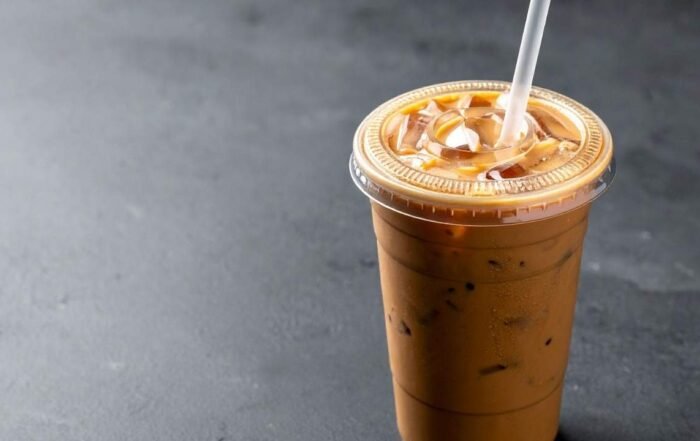
Packaged iced coffee — whether RTD (ready-to-drink) canned or bottled, cold brew concentrate, or shelf-stable tetra-pak formats — faces completely different packaging requirements than dry coffee.
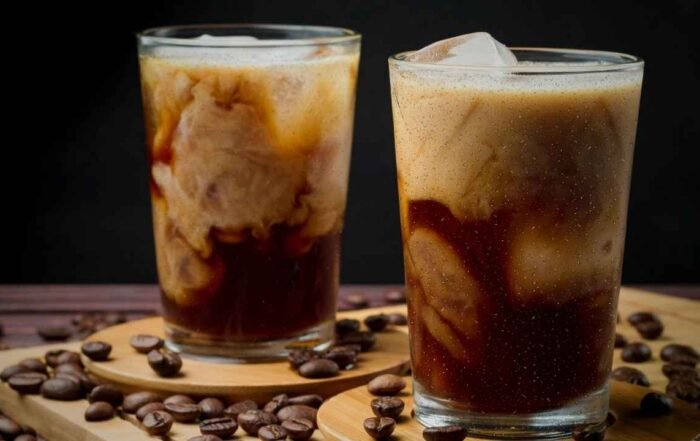
RTD cold brew: Typically packaged in nitrogen-flushed cans or glass bottles. Nitrogen headspace prevents oxidation without carbonation. Shelf life at refrigerated temperatures: 6–12 months unopened. Ambient shelf-stable RTD: requires retort processing or aseptic packaging systems.
Cold brew concentrate pouches: Multi-layer flexible pouches with excellent oxygen barrier. Usually requires refrigeration. Shelf life: 2–4 weeks refrigerated after opening.
Single-serve iced coffee bags: A newer format — essentially a drip bag you steep in cold water. Standard drip-bag packaging rules apply: degassing valve for freshness, good moisture barrier.
The critical mistake in RTD coffee packaging: under-engineering the oxygen barrier for an ambient shelf-stable product. Light-colored transparent packaging with insufficient UV barrier will cause flavor degradation within weeks on shelf.
The Real Cost of Coffee Packaging: Roaster’s Honest Breakdown
Most guides avoid actual numbers. Here’s what you’re actually looking at:
Per-Unit Packaging Costs (Approximate, 2025–2026)
| Format | Material | Cost per Unit (1,000+ MOQ) |
| Stand-up pouch, standard foil | Multi-layer laminate | $0.35–$0.65 |
| Stand-up pouch, mono-PE recyclable | Mono-material | $0.50–$0.90 |
| Stand-up pouch, compostable PLA | Bio-based | $0.70–$1.20 |
| Flat-bottom pouch, custom printed | Premium laminate | $0.80–$1.50 |
| Kraft paper bag, basic | Paper + liner | $0.30–$0.60 |
| Coffee capsule (empty) | Multi-material | $0.08–$0.20 |
Sustainable options typically cost 20–40% more per unit than conventional multi-layer laminates. The business case: if sustainable packaging lets you price your coffee 10–15% higher or improves retention among eco-conscious buyers, the math can work.
Café vs. Roaster: Packaging Economics Differ
A café buying pre-packaged coffee to resell faces different constraints than a roaster packaging their own product. For cafés, branded packaging from a third-party roaster is their norm. For roasters, packaging is a controllable brand asset. Don’t conflate the two.

Common Coffee Packaging Mistakes (And How to Fix Them)
Mistake 1: Packaging Coffee Too Soon After Roasting
Fresh roasted coffee needs 12–72 hours to off-gas CO₂ before sealing, depending on the roast level. Dark roasts off-gas faster and more intensely. Sealing immediately can burst bags or create uneven pressure.
Fix: Implement a resting protocol. Most specialty roasters rest whole beans 24–48 hours before packaging. Some use nitrogen flushing to manage this more precisely.
Mistake 2: Buying the Wrong Degassing Valve for Your Packaging Machine
Not all valves are compatible with all packaging materials. Valve adhesion pressure varies by laminate thickness. A valve rated for foil laminates may not seal properly on a mono-PE film.
Fix: Test your specific valve supplier’s components with your specific film during machine trials. Never assume compatibility.
Mistake 3: Ignoring Oxygen Transmission Rate (OTR)
OTR measures how much oxygen permeates through a packaging material over time. It’s measured in cc/m²/day. Standard multi-layer foil: OTR near zero. Mono-PE: OTR typically 1,000–3,000 cc/m²/day without additional barrier layers. Kraft paper alone: essentially no barrier.
If you switch to sustainable packaging without understanding your new material’s OTR, you may cut your effective shelf life in half without realizing it.
Mistake 4: Using the Same Packaging for Wholesale and Retail
Wholesale bags going to cafés that will use the coffee within 1–2 weeks can use simpler, cheaper packaging. Retail bags sitting on a store shelf for 3+ months need premium barrier properties. Many roasters over-engineer wholesale packaging and under-engineer retail — or vice versa.
Mistake 5: No Roast Date on the Bag
This is a trust signal, not just information. A roast date tells customers this product is managed for freshness. Its absence — especially in specialty coffee — implies you’d rather they not know. Print the date.
Choosing the Best Coffee Packaging: Decision Framework
Use this to cut through the options:
Step 1 — Define your shelf life target.
- Under 4 weeks: kraft or basic flexible packaging may work
- 1–3 months: standard valve bag with foil laminate
- 3–12 months: nitrogen flush + high-barrier film + one-way valve
Step 2 — Define your sustainability priority.
- Maximum freshness performance: multi-layer foil laminate (recyclability trade-off)
- Balanced performance + recyclability: mono-PE or mono-PP with engineered barrier
- Maximum eco-credentials: compostable PLA (with consumer communication investment)
Step 3 — Match your format to your channel.
- Direct-to-consumer e-commerce: flat-bottom pouch, premium matte finish
- Specialty retail: stand-up pouch with zipper and valve
- Grocery / high-volume retail: VFFS pillow bag or valve brick bag
- Wholesale/café supply: simple kraft or foil bag, valve, minimal branding
Step 4 — Align your budget to your volume. Lower volume = higher per-unit cost. At 500 bags/month, custom sustainable packaging will cost more per unit than at 5,000 bags/month. Price your coffee accordingly or start with stock packaging and move to custom as you scale.
Coffee Packaging Sustainability: The Regulatory Landscape Is Shifting
The European Union’s Packaging and Packaging Waste Regulation (PPWR) is setting stricter recyclability targets that will ripple through global supply chains. Brands selling into European markets face real deadlines for packaging recyclability compliance.
Bio-based plastic packaging can support PPWR goals by complementing recycled content and reducing fossil carbon dependence. For roasters exporting to Europe, getting ahead of these requirements now — rather than scrambling to reformulate packaging in two years — is a clear competitive advantage.
The US regulatory environment is catching up. Extended Producer Responsibility (EPR) legislation is active or advancing in California, Oregon, Colorado, and Maine. Coffee brands that ignore packaging sustainability today are building EPR compliance costs into their future.
The environmental impact of coffee extends well beyond packaging — from growing practices to shipping — which is why understanding coffee’s complete carbon footprint matters for brands making genuine sustainability claims.

FAQ: Coffee Packaging — Every Question Answered
What is the best packaging for coffee to stay fresh?
The best combination for maximum freshness is a high-barrier flexible pouch (foil laminate or engineered mono-material) with a one-way degassing valve, nitrogen flushing, and a resealable zipper. For whole beans, this system can maintain peak flavor for 6–12 months. No single element is sufficient on its own — the system works together.
What is a one-way degassing valve and do I need one?
A one-way degassing valve is a small button-like component applied to coffee bags that allows CO₂ to escape from freshly roasted beans while blocking oxygen from entering. You need one for any freshly roasted coffee that hasn’t been fully off-gassed before packaging. Without it, bags inflate and potentially burst in transit, and sealed-in oxygen accelerates staling.
How long does coffee last in different packaging types?
Ground coffee in basic sealed packaging: 2–4 weeks at peak. Ground in nitrogen-flushed foil bag: 3–6 months. Whole beans in a standard valve bag: 3–6 months. Whole beans in nitrogen-flushed, high-barrier packaging: up to 12 months. Green/unroasted coffee in vacuum-sealed packaging: 12–24 months.
Is sustainable coffee packaging worth the extra cost?
For most specialty brands targeting quality-conscious consumers, yes. The cost premium (typically 20–40% per unit versus conventional) is offset by brand differentiation, premium positioning, and increasing consumer preference data — with 78% of US consumers considering environmental impact “very important” in purchasing decisions. The math is harder for commodity-grade coffee where price is the primary competitive lever.
What is nitrogen flushing in coffee packaging? Nitrogen flushing is the process of injecting nitrogen gas into a coffee package before sealing, displacing oxygen and creating a protective atmosphere that dramatically slows oxidation. Nitrogen is inert — it doesn’t react with coffee compounds. Research shows nitrogen flushing can reduce residual oxygen inside the bag to under 3% and may double effective shelf life compared to non-flushed packaging.
What coffee packaging machine do I need as a small roaster?
If you’re producing under 100 bags per day, a semi-automatic premade pouch sealer ($3,000–$8,000) with a separate heat sealer and valve applicator is a reasonable starting point. Over 200 bags per day, look at entry-level fully automatic premade pouch machines ($8,000–$20,000). Always test your specific bags with any machine before purchasing.
What’s the difference between compostable and biodegradable coffee packaging?
Compostable packaging breaks down into non-toxic components under composting conditions within a specified timeframe (typically 90–180 days for industrial compostable). Biodegradable is a broader, less regulated term — a bag can be technically biodegradable while taking 400 years to break down. Always check certifications: look for BPI certification (US) or TÜV/DIN CERTCO (Europe) for industrial compostable claims.
Can I use kraft paper bags for coffee?
Yes, with important caveats. Pure kraft paper has almost no oxygen or moisture barrier — it’s unsuitable for coffee with a shelf life beyond a few weeks. Most “kraft” coffee bags use an inner liner (PE, PLA, or foil) to provide barrier protection. The recyclability of these depends on the liner material. Pure kraft with no liner works only for very high-turnover, freshness-dated direct-to-consumer scenarios.
What is the minimum order quantity for custom coffee packaging?
MOQs vary by supplier and printing method. Digital printing: as low as 100–200 units. Rotogravure or flexographic printing (higher quality, lower per-unit cost at scale): typically 5,000–10,000 units minimum. For most small roasters, 500–1,000 units is a practical starting MOQ with good per-unit pricing.
How does packaging affect the taste of coffee?
Poor packaging allows oxygen in, which oxidizes coffee’s aromatic volatile compounds — the source of brightness, sweetness, and complexity. Oxidized coffee tastes flat, papery, or bitter. Poor moisture barrier allows humidity to affect the beans, accelerating degradation and introducing off-flavors. The packaging itself (if food-safe and properly manufactured) shouldn’t impart taste — but failures in barrier performance absolutely affect what ends up in the cup.
What should I look for on a coffee bag as a consumer?
Roast date (not “best by” date — roast date), one-way valve (means freshly roasted), and any certification marks for the sustainability claims made. Opaque or foil packaging means better light protection than clear or transparent bags. A resealable zipper matters once opened.
Is vacuum-sealed coffee better than valve-bag coffee?
For whole bean freshly roasted coffee: valve bag with nitrogen flushing typically outperforms vacuum sealing because roasted beans continue to off-gas CO₂, which needs somewhere to go. For green coffee or very long-term storage: vacuum sealing is preferred. The two methods serve different needs rather than one being universally superior.
The Bottom Line
Coffee packaging is a system, not a product. The bag matters. The valve matters. The fill gas matters. The barrier rating of your material matters. And increasingly, the sustainability credentials of every component matter to a growing majority of your customers.
There’s no universal “best” — the right answer depends on your shelf life target, your channel, your sustainability commitments, and your budget. But there are clear wrong answers: no degassing valve for fresh coffee, inadequate barrier for a 6-month retail SKU, vague greenwashing claims, and ignoring the roast date.
Start with freshness. Build the system that protects what you’ve worked so hard to roast. Then layer in sustainability choices that are specific, certifiable, and honest. That combination — great coffee, protected properly, packaged responsibly — is what builds a brand people come back to.