In this Article
- What Is Doppio Coffee? (And Why It’s Not Just “Two Espressos”)
- Bianco Doppio vs. Flat White vs. Cortado: Which Is Which?
- What You Need to Make Doppio Coffee at Home
- How to Make Bianco Doppio Coffee: Step-by-Step Recipe
- The Nespresso Bianco Doppio: Everything You Need to Know
- Iced Bianco Doppio Recipe
- Dairy-Free and Vegan Bianco Doppio
- Starbucks Doppio Espresso: How to Order and How to Copycat It
- Caffeine Content and Calorie Count
- Coffee Bean Selection: What Actually Works Best
- Common Mistakes and How to Fix Them
- Storage, Make-Ahead, and Reheating
- Cost Breakdown: Home vs. Café
- The Doppio in Italian Coffee Culture: A Brief History
- FAQ: Everything Else You Were Going to Search
- Final Thoughts
add_action(‘wp_head’, ‘add_doppio_schema’);
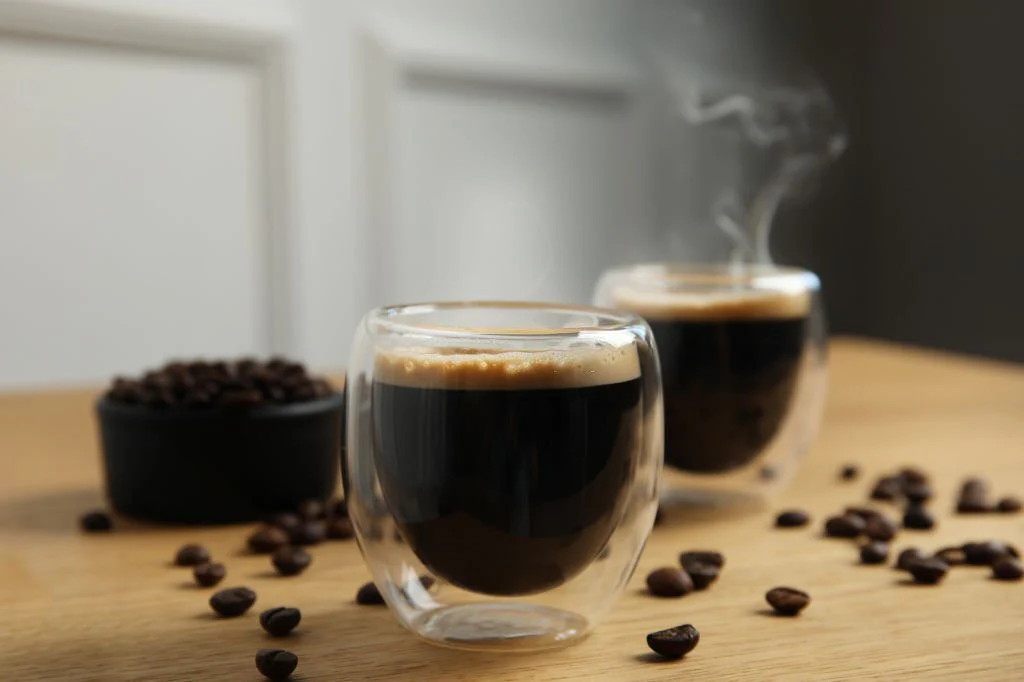
A doppio is a double shot of espresso — 60ml of concentrated, crema-topped coffee pulled from 14–18g of finely ground beans. A bianco doppio takes that same double shot and finishes it with lightly frothed whole milk, landing somewhere between a flat white and a cortado in character. You can make a cafe-quality version at home in under five minutes.
That said, there’s a lot more to this drink than “pull two shots, add milk.” Most recipes online skip the stuff that actually matters — the grind ratio, the milk temperature, why your doppio tastes bitter, and how the Nespresso Bianco Doppio capsule became the cult favorite it is today. This guide covers all of it.
What Is Doppio Coffee? (And Why It’s Not Just “Two Espressos”)
A doppio is extracted differently from two separate solo shots — and that distinction matters more than most people realize.
“Doppio” is Italian for “double.” Specifically, it refers to a double espresso pulled through a single double-basket portafilter in one extraction. You use 14–18g of ground coffee and extract approximately 60ml (2 oz) of liquid espresso in a single 25–35 second pull. According to the standard definition used in barista competitions, the doppio is actually considered the benchmark measurement for espresso quality — not the solo.
This matters because pulling one continuous double shot produces a more balanced extraction than two back-to-back singles. The crema is more stable, the flavors integrate better, and you get a richer body.
A bianco doppio adds one more element: milk. “Bianco” means “white” in Italian, so the name translates literally to “double white” — a double espresso made white with milk. It’s served hot, in a small cup (around 160–200ml total), with a thin microfoam cap. Think of it as the Italian cousin of the flat white, with the espresso pulling more weight.
Quick answer for featured snippets: A doppio is a double shot of espresso containing 14–18g of coffee grounds, yielding ~60ml of espresso in one extraction. A bianco doppio is that same double shot served with lightly steamed whole milk, similar to a flat white but with a stronger espresso presence.
Check out > The Ultimate Guide To Doppio Espresso Starbucks Fans Love
Doppio vs. Double Espresso: Is There Actually a Difference?
Technically? In most modern cafés outside Italy, no. The terms are used interchangeably. But historically, “doppio” specifically implied Italian espresso culture — a short, intense, standing-at-the-bar experience, not the 16oz milked-down version that became normalized in American chains.
Starbucks actually played a significant role in popularizing the word “doppio” in the United States, particularly in Seattle during the 1980s and 1990s — though in other parts of the country, using the term “doppio” in a specialty café might mark you as a Seattle native, a recently arrived Italian, or someone still catching up on industry trends.
In Italy, doppio culture is different entirely. When you order a doppio in Italy, you’ll likely get two separate single espressos served in one cup — and espresso is meant to be consumed immediately after it’s pulled, standing at the bar. No giant cups. No drive-through. No lingering.
Bianco Doppio vs. Flat White vs. Cortado: Which Is Which?
A lot of confusion exists around these small milk-based espresso drinks. Here’s the clearest breakdown you’ll find:
| Drink | Espresso | Milk | Volume | Foam |
| Bianco Doppio | Double shot (60ml) | Lightly frothed | ~180–200ml total | Thin layer |
| Flat White | Double ristretto | Microfoamed whole milk | ~150–170ml total | Thin integrated |
| Cortado | Single or double | Steamed, no foam | ~80–120ml total | None |
| Cappuccino | Single or double | Equal thirds | ~180ml total | Thick foam |
| Latte | Single or double | Mostly steamed milk | ~240–360ml total | Light layer |
The bianco doppio sits closest to a flat white. The key difference: a flat white traditionally uses a ristretto (shorter, sweeter) double pull, while a bianco doppio uses a standard doppio extraction. The result is a slightly more assertive, less sweet espresso character under the milk.
What You Need to Make Doppio Coffee at Home
Ingredients
- Double shot of espresso — using 14–18g of freshly ground coffee beans
- 180ml whole milk (or your preferred milk alternative)
- Optional: flavored syrup, sweetener, vanilla
Equipment
- Espresso machine (or strong Moka pot as a substitute — more on that below)
- Milk frother or steam wand
- Burr grinder (strongly recommended — pre-ground espresso goes stale fast)
- Kitchen scale (for pulling a consistent shot)
- Preheated ceramic cup (150–200ml capacity)
- Thermometer (optional but useful for dialing in milk temperature)
A note on the grinder: this is where most home attempts fail. A burr grinder produces consistent particle sizes, which gives you even extraction. Blade grinders chop coffee unevenly, leading to bitter over-extracted fines mixed with sour under-extracted chunks. The best burr grinders for home espresso don’t need to cost a fortune — even a mid-range hand grinder like the 1Zpresso JX Pro will outperform a $200 blade machine.
How to Make Bianco Doppio Coffee: Step-by-Step Recipe
Prep time: 5 minutes | Servings: 1 | Total time: 5 minutes
Step 1: Dial In Your Grind
Set your grinder to fine — finer than drip coffee, but not powder-fine. The target is a grind that looks like table salt, or just coarser. Espresso does best when it reaches a 1:2 brew ratio (coffee grounds to liquid espresso by weight) in 25–35 seconds. If your shot runs faster than 20 seconds, grind finer. Slower than 40 seconds? Go coarser.
Dose: 14–16g for a standard double basket. Tamp evenly with approximately 30 lbs of pressure. Uneven tamping causes channeling — water finds the easy path, leaving half your puck under-extracted.
Step 2: Preheat Everything
Run a blank shot through your portafilter before brewing. Fill your cup with hot water, let it sit 30 seconds, then discard. Cold cups steal heat from your espresso the moment it hits the ceramic — you’ll lose 8–10°F off the top of your shot immediately. That temperature drop affects both flavor extraction and how well the milk integrates.
Step 3: Pull the Double Shot
Lock the portafilter in, start your timer, and pull. Target parameters:
- Coffee dose: 14–18g ground coffee
- Water temperature: 93°C / 200°F (90–96°C range is acceptable depending on roast)
- Pressure: 9 bars
- Yield: 28–36g of liquid espresso (1:2 ratio)
- Extraction time: 25–35 seconds
Water temperature during extraction is typically between 90–96°C (194–205°F), with 9 bars of pressure — though modern techniques do challenge and adapt these traditional parameters based on deeper understanding of coffee chemistry.
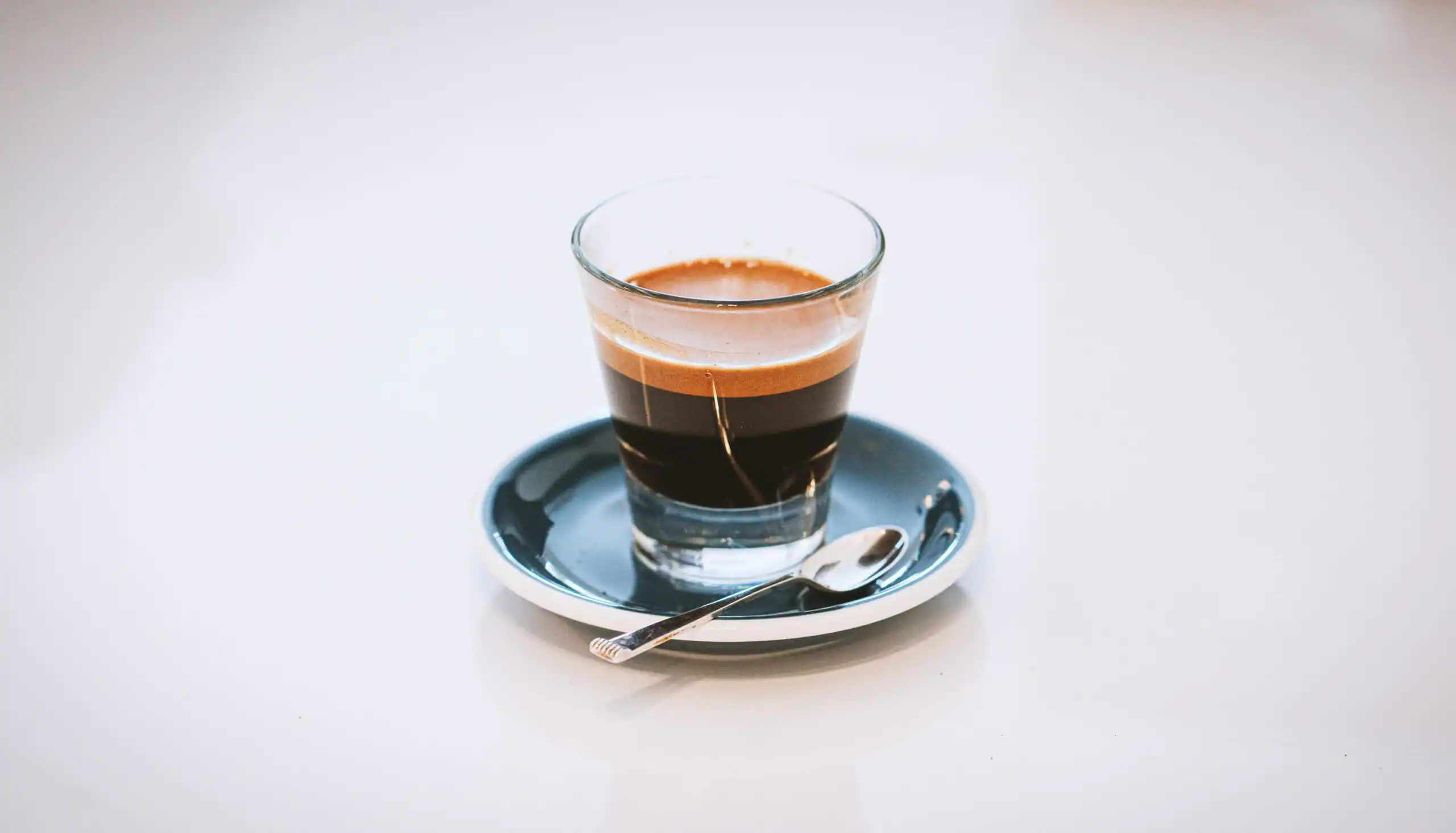
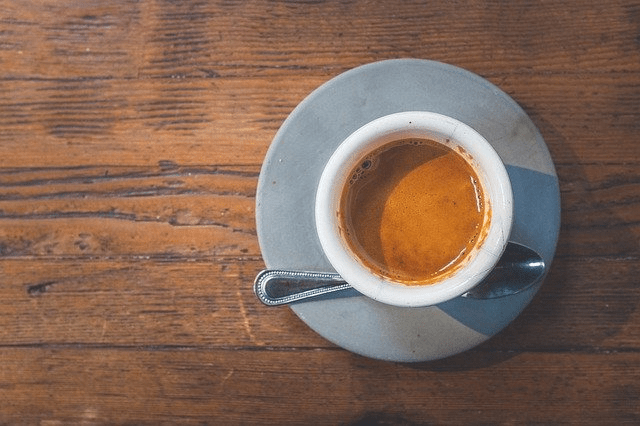
Pull directly into your preheated cup. The crema should be hazelnut-brown, not pale yellow (under-extracted) or dark brown with white gaps (over-extracted).
Step 4: Steam and Froth the Milk
Pour 180ml of whole milk into your frothing pitcher. For a bianco doppio, you want lightly textured microfoam — not the thick foam of a cappuccino. The goal is silky and pourable with a thin foam cap.
Steam wand method:
- Submerge the wand tip just below the milk surface
- Open the valve — you should hear a gentle hiss, not a loud screaming
- Stretch the milk (introduce air) for the first 3–4 seconds only
- Submerge the tip deeper and swirl the milk to integrate
- Stop at 60–65°C / 140–150°F — this is the sweet spot where milk sugars taste sweetest
The right temperature for steamed milk is between 135–155°F — as Serious Eats explains, in this range, the fats and proteins in the milk are in the ideal state to form the bubbles that give frothed milk its structure, and the natural sweetness of the milk is enhanced.
If you don’t have a steam wand: Use an electric handheld milk frother. Heat the milk first to 60°C in a small saucepan or microwave (about 45–50 seconds), then froth. It won’t produce the same integrated microfoam, but it gets 80% of the way there.
Step 5: Combine and Serve
- Hold your cup on a slight angle
- Pour the frothed milk in a slow, steady stream starting from close to the surface
- As the cup fills, raise your pitcher slightly to let the thin foam sit on top
- Stop when you have a 3–5mm layer of foam on the surface
- Serve immediately — espresso oxidizes fast
The finished bianco doppio should be layered in your cup: espresso-dark at the bottom, lightening through milk in the middle, with a pale foam crown on top. When you sip it, you should taste the espresso first, then the creaminess, then a gentle sweetness at the finish.
The Nespresso Bianco Doppio: Everything You Need to Know
The Nespresso Bianco Doppio capsule is a Vertuo-line pod designed specifically to produce a double-shot flat white style drink. Nespresso describes it as having caramel and sweet biscuit notes, crafted for a double-shot flat white — and their official recipe involves extracting the capsule into a cup, then pouring hot lightly frothed milk to create a thin sliver of foam on top, followed by hot flat milk to fill near the brim.
The pod itself is an intensely roasted medium-dark blend. It’s not a single-origin showcase — it’s designed to cut through milk without turning harsh, which it does well.
How to Make a Nespresso Bianco Doppio at Home
- Insert the Bianco Doppio Vertuo capsule into your machine
- Brew the largest Vertuo setting (doppio espresso, ~60ml) directly into your cup
- While it brews, heat and froth 130–160ml of whole milk to 60–65°C
- Pour the lightly frothed milk over the espresso, allowing a thin foam layer to form
- Top with remaining flat warm milk to just below the rim
Customization people actually like:
- Add 1 tsp caramel sauce to the cup before brewing — the espresso dissolves it perfectly
- Use half whole milk, half heavy cream for an ultra-rich texture
- Swap vanilla syrup into the milk before frothing for a sweeter version
If you’re trying to replicate the Bianco Doppio flavor without the Nespresso machine, the capsule’s flavor profile (caramel sweetness, biscuit finish, medium roast depth) is closest to a medium-dark Italian espresso blend. Look for blends that describe caramel or chocolate notes rather than fruity or floral.
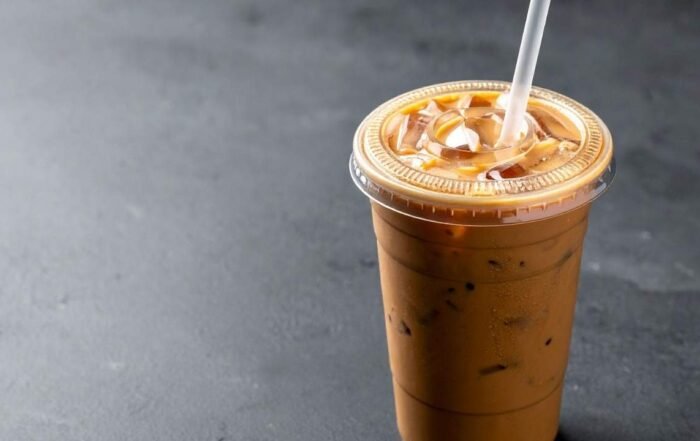
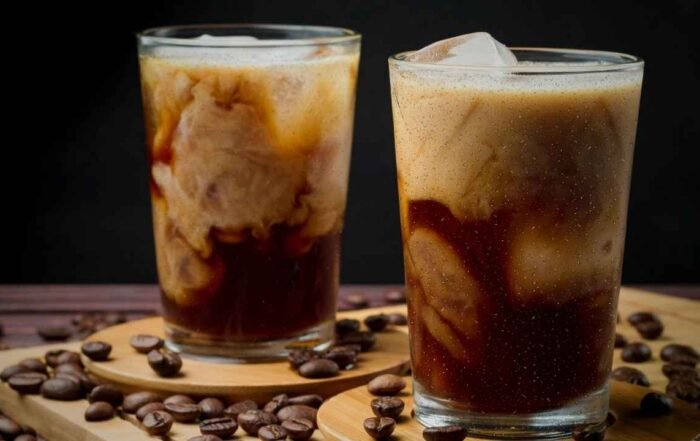
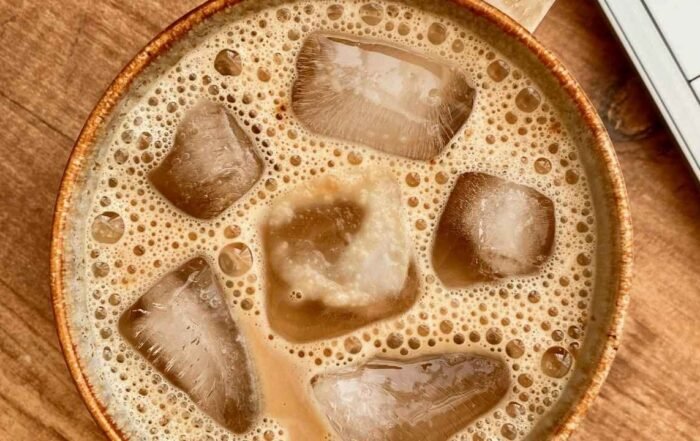
Iced Bianco Doppio Recipe
Hot drinks aren’t always the call. The iced version of this drink is genuinely excellent — and wildly underrepresented in existing recipes online.
Ingredients:
- Double shot of espresso (or Bianco Doppio capsule) — pulled hot, then cooled
- 1 cup of ice
- 120–150ml cold whole milk (or oat milk barista blend)
- Optional: vanilla syrup, caramel drizzle
Steps:
- Pull your double shot into a small pitcher or glass
- Let it cool for 2–3 minutes at room temperature, OR pour over a few ice cubes in a separate container to flash-chill
- Fill your serving glass with fresh ice
- Pour the cooled espresso over the ice
- Add cold milk — pour slowly over the back of a spoon to create a layered look, or just pour directly and stir
- Add syrup if desired, stir once, and serve
Oat milk is excellent here. Barista-edition oat milks (Oatly Barista, Earth’s Own Barista Blend) have added oils that prevent the milk from splitting when it hits cold espresso — an issue with standard oat milk and many nut milks.
The iced version has about 39–45 calories with oat milk, making it one of the more calorie-friendly café-style drinks out there.
Dairy-Free and Vegan Bianco Doppio
You don’t need whole milk to make a great bianco doppio. You do need the right substitute.
| Milk Alternative | Frothing Performance | Flavor Match | Best For |
| Oat milk (Barista edition) | Excellent | Neutral-sweet | Best overall substitute |
| Full-fat coconut milk | Good | Coconut undertone | Adds richness |
| Soy milk (barista) | Good | Slightly beany | Classic dairy-free option |
| Almond milk (barista) | Fair | Light, nutty | Iced version works better |
| Cashew milk | Fair | Very neutral | Underrated, worth trying |
The key is barista-edition formulations — they’re specifically engineered to handle heat and integrate with espresso without separating. Standard grocery-store oat milk will often curdle or turn watery when steamed.
For a fully vegan bianco doppio, pair your espresso with oat barista milk and skip any sweetener that contains honey. The drink itself contains no animal products as long as your milk is plant-based.
Starbucks Doppio Espresso: How to Order and How to Copycat It
At Starbucks, a “doppio” is simply two shots of their standard espresso blend — no milk, no extras, served in a short cup with crema on top. It contains approximately 150mg of caffeine and about 10 calories in its pure form.
The Starbucks version most people recognize is the Iced Doppio Espresso — ordered in a grande or venti cup, filled with ice, with a splash of milk (usually oat milk) added. This became a DIY hack for getting a strong, relatively low-calorie iced coffee at a fraction of the price of a latte.
Starbucks Iced Doppio Copycat Recipe
- 2 shots of espresso (or 60ml strong Moka pot brew)
- 1 cup ice
- 2–3 tablespoons oat milk or whole milk
- Optional: 1–2 pumps vanilla syrup
Pull shots → pour over ice → add milk → done. Cost at home: approximately $0.40–$0.80 per drink versus $5–7 at Starbucks. The savings over a month are embarrassingly significant.
Caffeine Content and Calorie Count
Caffeine
A doppio espresso typically contains between 58–185mg of caffeine, averaging around 150mg — which sits below a standard 8oz drip coffee in range, but delivers that energy in a tighter, richer format.
For context:
- Single espresso (solo): 58–75mg caffeine
- Doppio: 100–150mg caffeine (average)
- Drip coffee (8oz): 95–200mg caffeine
- Starbucks Doppio at Starbucks: ~150mg caffeine
For most adults, consuming up to 2–3 double shots of espresso (around 240–300mg of caffeine) per day is generally considered safe — Healthline notes that up to 400mg of caffeine daily is within the safe range for most healthy adults, though exceeding that threshold regularly can lead to insomnia, jitteriness, or elevated heart rate.
Calories
- Plain doppio (black): ~8–10 calories
- Bianco doppio with whole milk (180ml): ~110–120 calories
- Bianco doppio with oat milk: ~70–85 calories
- Bianco doppio with skim milk: ~70–80 calories
- Iced bianco doppio with oat milk: ~39–50 calories
Adding flavored syrups adds approximately 20–40 calories per pump. One vanilla syrup pump at Starbucks = 20 calories.
Coffee Bean Selection: What Actually Works Best
Most guides just say “use Arabica” and move on. That’s barely useful. Here’s what actually matters for a bianco doppio:
Roast level: Go medium to medium-dark. Light roasts pull beautifully as single origin shots but often taste sharp and acidic when combined with milk — the milk amplifies that brightness in a way that can feel sour. Dark roasts can be good but watch for over-roasted, ashy notes that become unpleasant when steamed milk sweetens them.
Bean origin for bianco doppio:
- Brazilian beans — low acidity, chocolate-nutty, excellent with milk
- Colombian — balanced, mild fruit, plays nicely with whole milk
- Italian espresso blends (Arabica/Robusta mix) — classic choice; Robusta adds crema and body, Arabica adds flavor complexity
Arabica vs. Robusta: Pure Arabica is more nuanced and sweet. Robusta has double the caffeine and produces denser crema. Many Italian-style blends use 80/20 or 70/30 Arabica/Robusta ratios for this reason — you get the best of both.
Freshness is non-negotiable. Espresso tastes best between 4–14 days post-roast. Buy from local roasters with visible roast dates whenever possible. Supermarket espresso often has no roast date at all — if it says “best by” with no roast date, assume it’s old.
Common Mistakes and How to Fix Them
The Espresso Tastes Bitter
Cause: Over-extraction — either the grind is too fine, the water is too hot, or the shot ran too long.
Fix: Coarsen your grind by one click. Check water temperature — anything above 96°C starts burning the oils in lighter-roasted beans. If the shot ran longer than 35 seconds, coarsen the grind.
The Espresso Tastes Sour/Thin
Cause: Under-extraction — grind too coarse, water too cool, or shot too fast.
Fix: Fine down the grind. Verify your machine is actually reaching 90–93°C at the brew head (not just the thermostat setting). A shot that finishes in under 20 seconds is almost always under-extracted.
The Milk Foam Is Too Thick/Bubbly
Cause: Too much air was introduced, or you stopped frothing too early before bubbles integrated.
Fix: Only introduce air (the hissing, surface-breaking technique) for the first 3 seconds. Then submerge the wand and swirl. Any visible bubbles should be knocked out by tapping the pitcher on the counter and swirling in a circular motion before pouring.
The Drink Tastes Watery
Cause: Too much milk, not enough espresso concentration, or grind too coarse.
Fix: Reduce milk to 150ml or increase your dose to 18g. A weak doppio doesn’t benefit from more milk — it just becomes a pale imitation of itself.
The Crema Disappears Immediately
Cause: Coffee is stale. Period. Fresh espresso holds crema for 1–3 minutes. Stale coffee produces barely any.
Fix: Get fresher beans. This one doesn’t have a technique workaround.
Storage, Make-Ahead, and Reheating
Can you make doppio coffee ahead of time?
Sort of. You can pre-pull espresso shots and refrigerate them for up to 24 hours — they’ll lose crema and some aromatics, but the flavor base survives. This works well for iced drinks. Pour the shots into a sealed container and refrigerate; add milk fresh.
For hot bianco doppio, make it fresh. Reheated steamed milk loses its texture entirely — it becomes flat and slightly grainy. Takes 5 minutes to make fresh. Worth it.
Can you freeze espresso shots?
Yes, in ice cube trays. Espresso ice cubes are genuinely useful for iced drinks — they dilute with flavor rather than water. Use them in your iced bianco doppio or as a base for coffee smoothies. Freeze within 30 minutes of pulling and use within 2 weeks.
Cost Breakdown: Home vs. Café
| Item | Cost at Café | Cost at Home |
| Plain doppio | $3–4 | $0.30–0.60 |
| Bianco doppio (hot) | $4.50–6 | $0.50–0.90 |
| Iced bianco doppio | $5–7 | $0.40–0.80 |
| Nespresso Bianco Doppio (with pod) | $5–7 | $0.85–1.20 |
Home equipment cost amortized over 2 years:
- Entry-level espresso machine + frother: $300 → roughly $0.13 per drink if you make one daily
- Mid-range setup: $700 → roughly $0.30 per drink
The math becomes obvious quickly. If you’re buying one bianco doppio a day at $5, that’s $1,825 per year. A solid home setup pays for itself in under six months.
The Doppio in Italian Coffee Culture: A Brief History
The espresso machine has a specific origin. In 1884, Italian inventor Angelo Moriondo patented what is now considered the earliest espresso machine — a steam-powered apparatus designed to brew coffee quickly by forcing heated water through grounds under pressure. Then in 1901–1903, Luigi Bezzera improved that design and patented a machine capable of single-serve extraction; Desiderio Pavoni purchased the patent and commercialized it, introducing what became the first widely recognized espresso machines in cafés.
The doppio as a distinct drink emerged naturally from Italian espresso culture — where a single shot was considered the baseline, and ordering a double was simply requesting more of the same thing. No fuss, no ceremony. The term moved into mainstream coffee culture globally through the 1980s and 1990s, primarily via the specialty coffee wave in the United States.
Today, at most cafés outside of Italy, a doppio is the standard shot — and it’s considered the benchmark in barista competitions, where four single espressos are made using two double portafilters to judge espresso quality.
FAQ: Everything Else You Were Going to Search
What is doppio coffee?
A doppio is a double shot of espresso — 14–18g of ground coffee extracted as a single continuous pull, yielding approximately 60ml of liquid espresso. “Doppio” is Italian for “double.” It serves as the base for many milk-based espresso drinks including the bianco doppio, flat white, and most lattes.
What is bianco doppio coffee?
Bianco doppio is a doppio (double espresso) served with lightly steamed and frothed whole milk. “Bianco” means “white” in Italian, so the name means “double white.” It’s served in a small cup (~180–200ml total), similar to a flat white but with a standard doppio rather than a ristretto base.
How much caffeine is in a doppio?
A standard doppio contains approximately 100–150mg of caffeine, with most pulling around 130–150mg depending on the beans, roast level, and extraction variables. Starbucks’ doppio contains approximately 150mg.
How many calories are in a bianco doppio?
A bianco doppio made with whole milk contains approximately 110–120 calories. Made with oat milk, it’s around 70–85 calories. The plain doppio espresso itself contains only 8–10 calories.
Can you make doppio coffee without an espresso machine?
You can get close with a Moka pot. Use a 3-cup Moka pot filled to the max line with finely ground coffee, which produces a strong double-shot equivalent. It won’t have the crema of a true espresso, but the intensity and character are similar enough to work in a bianco doppio. A Moka pot bianco doppio is a genuine option, not a compromise.
What’s the difference between a doppio and a double espresso?
In most cafés, they’re the same thing. Technically, a doppio is a double shot pulled through a double-basket portafilter in a single extraction. The distinction matters more for purists — two consecutive single shots can produce slightly different flavors due to temperature drift between pulls.
How do you make a vegan/dairy-free bianco doppio?
Replace whole milk with a barista-edition oat milk (Oatly Barista or Earth’s Own Barista Blend are the best options). These are formulated to froth well and resist separating when combined with hot espresso. The flavor profile is slightly different — nuttier, a touch sweeter — but genuinely excellent.
What’s the best milk for bianco doppio?
Whole milk is the traditional choice and produces the most stable, creamy microfoam due to its fat content. For plant-based options, oat barista blend is the closest equivalent. Avoid skim milk if you want any textural richness — it froths to a harsh, thin foam that collapses quickly.
How does bianco doppio compare to a flat white?
Very similar. The key difference: flat white traditionally uses a ristretto double (shorter extraction, sweeter, more concentrated), while bianco doppio uses a standard doppio extraction. The bianco doppio tastes slightly more bitter and espresso-forward; the flat white is sweeter and smoother.
What is the Nespresso Bianco Doppio?
It’s a Vertuo-line Nespresso capsule designed to produce a double espresso base for milk drinks. The pod has a medium-dark roast profile with caramel and sweet biscuit tasting notes, and it’s used to make a Nespresso-style flat white by adding lightly frothed milk over the brewed capsule.
Can I make bianco doppio iced? Yes — and it’s excellent. Pull your doppio hot, let it cool slightly, pour over a full glass of ice, and add cold oat or whole milk. Barista-edition oat milk is particularly good here because it won’t split on contact with ice-cold espresso. See the full iced bianco doppio recipe section above.
Can I make doppio coffee ahead of time? Doppio shots can be refrigerated for up to 24 hours and are excellent in iced drinks. For hot bianco doppio, make fresh — reheated steamed milk loses its texture and the drink suffers significantly.
What grind size is best for doppio espresso?
Fine — resembling table salt or slightly coarser. The shot should complete in 25–35 seconds at a 1:2 coffee-to-espresso ratio. Adjust by one click at a time: finer if the shot runs too fast (under 20 seconds), coarser if it runs too slow (over 40 seconds) or tastes bitter.
How do I fix a bitter doppio?
Bitter espresso is almost always over-extracted. Try coarsening your grind, lowering your water temperature slightly (from 95°C toward 92°C), or shortening extraction time by adjusting the grind finer rather than coarser (counterintuitive, but a faster shot through finer grounds can sometimes taste cleaner). Also check bean freshness — stale beans extract bitterness faster.
Final Thoughts
The bianco doppio is one of those drinks that looks deceptively simple and hides a genuinely high ceiling. A mediocre version is just espresso with warm milk. A well-made version — pulled at the right ratio, frothed to microfoam, poured carefully — is one of the most satisfying small coffees you can put in front of someone.
Start with fresh beans. Dial in your grind before you touch the milk. Keep your milk between 60–65°C. Everything else is adjustable.
And if you’re using a Nespresso Bianco Doppio capsule, don’t overthink it — the pod is genuinely well-designed for what it does. Add a splash of caramel sauce to your cup before brewing and thank me later.