
Learning how to brew drip coffee at home is the simplest way to get a consistent, well-balanced cup every morning. Drip coffee is still the most widely used brewing method: it is simple, trustworthy and delivers consistent results without any barista training. Whether you use an automatic drip machine or brew manually, this guide covers the ratio, grind, temperature and cleaning routine you need.
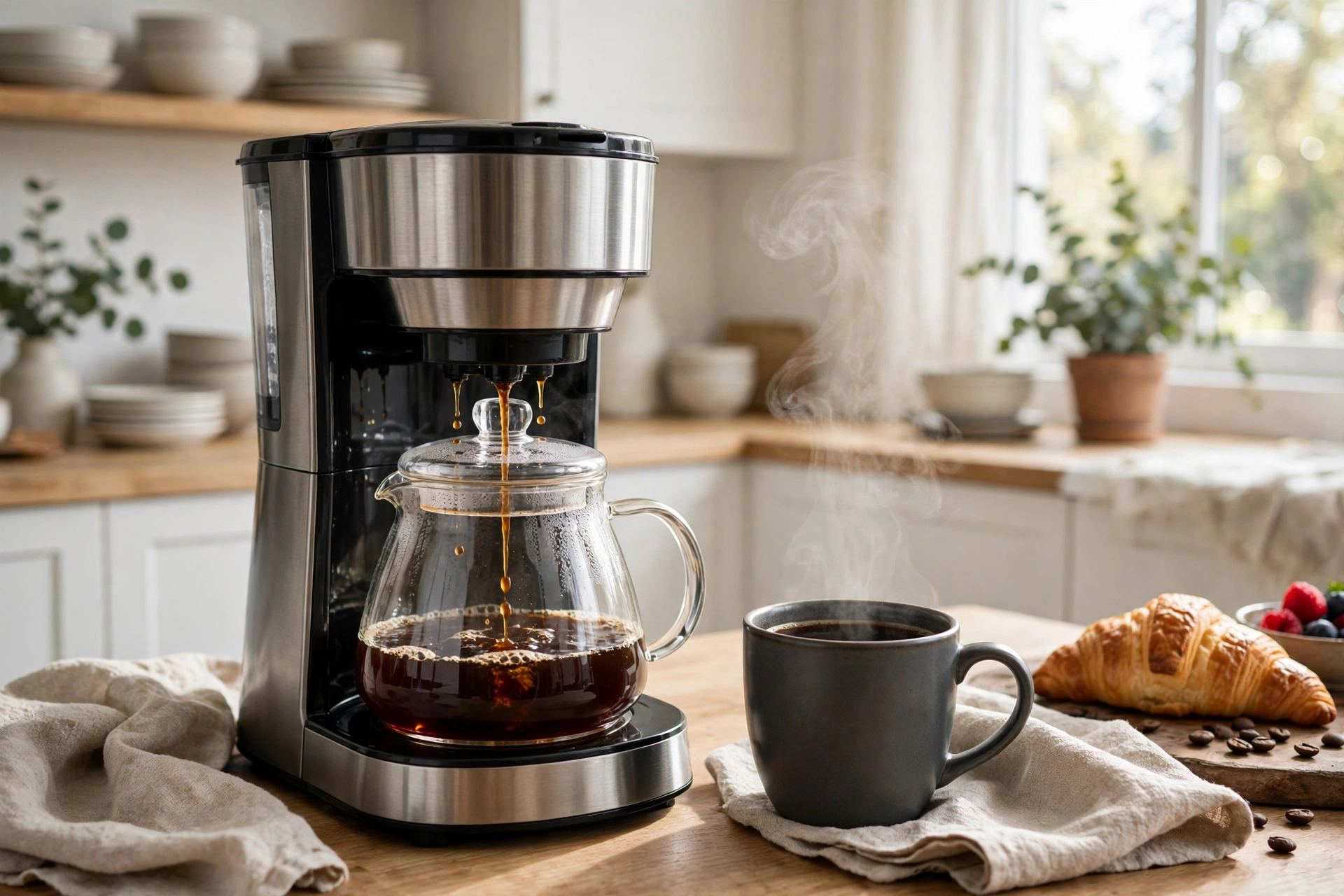
How to Brew Drip Coffee at Home in 5 Steps
When you learn how to brew drip coffee at home, start with this simple idea: hot water passes once through coffee grounds. Bloom first: pour just enough hot water to wet all the grounds, wait 30-45 seconds, then continue with the full brew. Blooming releases gas and helps the water extract more evenly.
- Fill the reservoir with fresh, filtered water. Use cold, filtered water where possible, and avoid distilled or softened water.
- Place a paper filter in the basket, rinse it with hot water and discard that rinse water, then add medium grind coffee and shake gently to level the bed.
- Use the drip coffee ratio below: 1–2 tablespoons of ground coffee for every 6 oz of water, or 60–65 g per litre.
- Heat your water to 195–205°F, or just off the boil, and start the brew cycle. An automatic machine should take about 5 minutes in total.
- When brewing is complete, stir the pot gently, serve at once and enjoy. Do not leave coffee sitting on a hot plate for hours.
The Drip Coffee Ratio
When you learn how to brew drip coffee at home, getting the ratio right makes the difference between a good cup and a disappointing one. Start with 1:15 to 1:17, that is 1 g coffee for every 15-17 g water, or about 60-65 g coffee per litre of water. Carafe cup vs mug: a carafe cup is often only about 150 ml (5 oz), smaller than a typical 240-350 ml mug, so measure water in ml or oz rather than by carafe cups alone, or the brew can come out weak.
Medium Grind Coffee and Water Temperature
Use medium grind coffee for drip brewing, about the texture of kosher salt. A grind that is too fine can over-extract and taste bitter, while a grind that is too coarse can under-extract and taste weak. Water temperature matters just as much: aim for 195–205°F. Let boiling water sit for about 30 seconds before pouring, so it cools to the right range and extracts evenly. For detailed guidance on grind size and method, see the National Coffee Association’s drip coffee guide.
Drip Coffee vs Pour Over
Drip coffee vs pour over is a common question, because both methods pour hot water over grounds in a filter. The main difference is control: an automatic drip machine controls the water flow and temperature for you, which makes it forgiving and easy to scale up for several cups. A manual pour-over gives you more control over pouring speed and timing, but it needs more attention. If you want convenience and consistency, choose drip; if you enjoy a hands-on ritual, try pour-over.
Drip Coffee vs Black Coffee
Drip coffee vs black coffee is not a choice between two methods: drip describes how the coffee is brewed, while black describes how it is served, without milk or sugar. So drip coffee can be black coffee, and black coffee can be made by drip, pour-over, French press or espresso. If you drink it plain, a clean drip brew with a medium grind and fresh beans shows the bean’s flavour best.
How to Clean Drip Coffee Maker
Knowing how to clean a drip coffee maker keeps every cup tasting fresh. After each brew, discard used grounds, wash the carafe and basket, and wipe the hot plate if your machine has one. Stale coffee oils left behind can make future cups taste bitter, so do not leave old grounds in the basket. Every one to three months, descale following the manufacturer’s instructions, then rinse with two cycles of fresh water. If your machine has an external water filter, follow the manufacturer’s guidance for replacing it.
Troubleshooting: Why Is My Drip Coffee Bitter and Why Is My Drip Coffee Weak?
When you learn how to brew drip coffee at home, two questions come up most. Why is my drip coffee bitter? The usual causes are over-extraction, water that is too hot, a grind that is too fine, stale beans or a dirty machine. Try a slightly coarser grind, check that your water is 195-205°F, and clean and descale the machine. Why is my drip coffee weak? The usual causes are under-extraction, too little coffee, a grind that is too coarse or water that is too cool. Try a little more coffee, a slightly finer grind and freshly ground beans, and change only one variable at a time.
A Note on Cold Coffee
For cold coffee, see our separate cold brew coffee guide. That guide uses a long cold steep, not this hot drip method, so it is kept separate and is not repeated here.
For a creamy alternative, try how to make a latte at home, or explore more methods in our Brewing Guide.
Now you know how to brew drip coffee at home: use medium grind coffee, a 1:15-1:17 drip coffee ratio, 195-205°F water, a rinsed filter and a level bed, and bloom before the full brew. When you brew drip coffee at home this way, taste and adjust only one variable at a time until the cup suits you.