
Learning how to make a latte at home is easier than it looks. A latte is an espresso-based drink made with steamed milk and a thin layer of foam, and it can be served hot or cold. This guide shows you the classic hot latte, with precise measurements, silky microfoam and simple flavour variations, so your home-made latte tastes as good as a coffee-shop version.
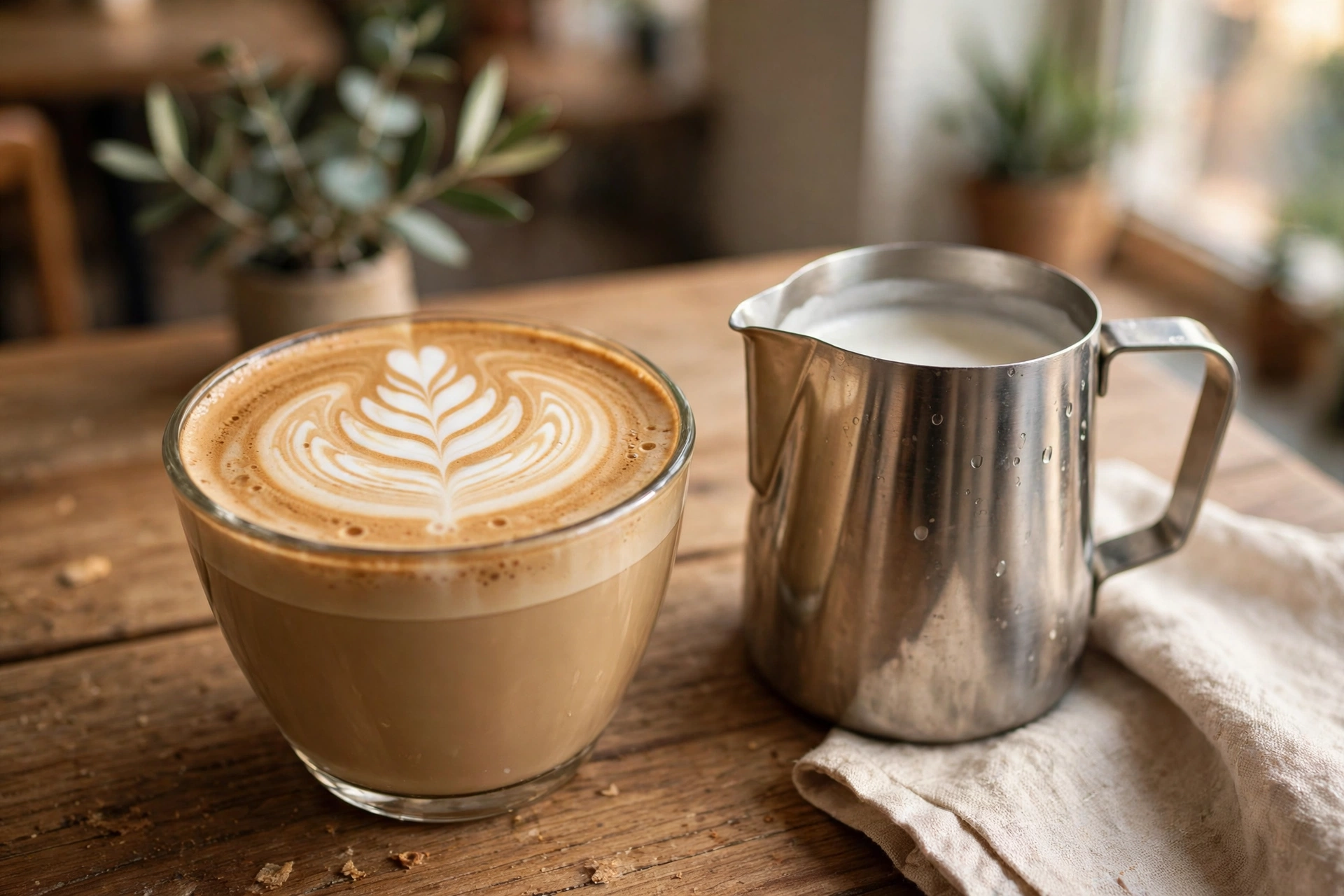
How to Make a Latte at Home in 5 Steps
You need: 18 g freshly ground coffee for a double shot, extracted in about 25-30 seconds to about 60 ml espresso, and about 180 ml cold whole milk. Preheat your cup with hot water, then empty it before you pull the shot, so the finished latte stays hot.
- Pull two fresh shots of espresso directly into your latte cup. If you do not have an espresso machine, see the no-machine method below.
- Pour 6–8 oz of cold whole milk into a steaming pitcher.
- Steam the milk to 140–155°F, creating silky microfoam with tiny bubbles.
- Tap the pitcher on the counter and swirl it to break any large bubbles and polish the milk.
- Pour the milk slowly into the espresso, starting from a height of about 3 inches to break through the crema, then bringing the pitcher closer to finish. Enjoy your latte right away, while the milk is still hot and creamy.
The Latte Coffee Ratio: 1:3 Espresso to Milk
The classic latte ratio is 1:3, one part espresso to three parts milk. Scaling by cup size: for a small 240 ml cup, use a double shot with about 180 ml milk at 1:3. For a large 360 ml cup, either keep one double shot with about 240 ml milk at 1:4 for a milkier drink, or use two double shots to stay near 1:3 and keep the coffee flavour strong. In short, 1:3 is more coffee-forward and 1:4 is gentler and milkier; choose by taste.
How to Steam Milk for Silky Microfoam
Learning how to steam milk is the skill that turns a milky coffee into a real latte. Keep the steam wand tip just below the surface at first, to introduce a little air, then lower the pitcher slightly so the milk rolls and heats evenly. Aim for milk at 140–155°F: hot enough to be comforting, but not so hot that it tastes scalded. The finished milk should look like wet paint, with tiny bubbles and a glossy shine. For more background on espresso, see the National Coffee Association’s espresso guide.
Pouring Your Latte
Pour espresso first, then milk. Starting from a height helps the milk pass through the crema, and finishing close to the cup lets the foam sit on top. Do not wait too long before pouring, and avoid pouring too slowly or too quickly. Keep the frother or steam wand in the right position while foaming, so you do not create large, stiff bubbles.
Latte vs Cappuccino: What Is the Difference?
Latte vs cappuccino comes down to milk and foam. A latte has more steamed milk and only a thin layer of foam, so it tastes smooth and milky. A cappuccino uses roughly equal parts espresso, steamed milk and foam, so it is lighter, airier and stronger-tasting. If you like a creamy drink, choose a latte; if you like more foam and a bolder coffee flavour, choose a cappuccino.
Best Milk for Latte
The best milk for latte is whole milk, because its fat and protein create stable, silky foam and a rich taste. For a dairy-free option, choose a barista-style oat milk, which is made to steam well and holds its texture better than most other plant milks. Semi-skimmed milk also works, but the foam is usually thinner.
How to Make a Latte at Home Without an Espresso Machine
For a latte without espresso machine equipment, brew very strong coffee with a Moka pot, AeroPress or French press, using finely ground coffee and less water than usual. Heat milk in a saucepan to 140–155°F, then froth it with a handheld frother, a French press plunger or a whisk. Pour the frothed milk over the strong coffee in the same 1:3 ratio, and you will still get a creamy, café-style drink.
Latte Flavour Variations: Vanilla Latte, Caramel Latte and More
Add flavour before pouring the milk. A vanilla latte needs one tablespoon of vanilla syrup in the espresso; a caramel latte uses caramel syrup or sauce in the same way. You can also make a pumpkin spice latte, a gingerbread latte or a mocha latte by adding spiced syrup or chocolate to the espresso first. Garnishing with nuts, spices or whipped cream is totally optional and up to you.
Best Coffee Beans for a Latte and Mistakes to Avoid
Choosing the right coffee beans matters for taste and flavour. A dark roast gives a bold, bitter taste that stands up well to milk, while a medium roast works well in almost all recipes and keeps more of the bean’s origin character. Avoid these common mistakes: waiting too long before pouring the milk, pouring milk too slowly or too quickly, and misplacing the milk frother or steam wand while making foam. Always use high-quality ingredients and precise measurements for the best result.
If you enjoy milk-based drinks, you may also like our cold brew coffee guide, or try how to brew drip coffee at home for a simpler everyday brew. You can find both in our Brewing Guide.
FAQ and troubleshooting: When you learn how to make a latte at home, three questions come up most. Why is my milk bubbly? Large bubbles usually mean too much air was added or the milk was not swirled and tapped, so add air only briefly at the start.
Keep the tip just below the surface. Why does my latte taste weak? Use the full double shot, keep the ratio near 1:3, and do not over-dilute with extra milk. Sweet spot: steam to 140-155°F, aiming for about 150°F, hot without tasting scalded. If you have no thermometer, stop when the pitcher is too hot to hold comfortably for more than a second or two. That is the short version of how to make a latte at home well, every time. Follow those points and you will know how to make a latte at home with confidence.
Pingback: How to Make Cold Brew Coffee at Home in 5 Steps | Coffee Treasures
Pingback: Best De'Longhi Coffee Machines of 2026 | Coffee Treasures