How to Brew Drip Coffee

Learning how to brew drip coffee at home is the simplest way to get a consistent, well-balanced cup every morning. Drip coffee is still the most widely used brewing method: it is simple, trustworthy and delivers consistent results without any barista training. Whether you use an automatic drip machine or brew manually, this guide covers the ratio, grind, temperature and cleaning routine you need.
How to Brew Drip Coffee at Home in 5 Steps
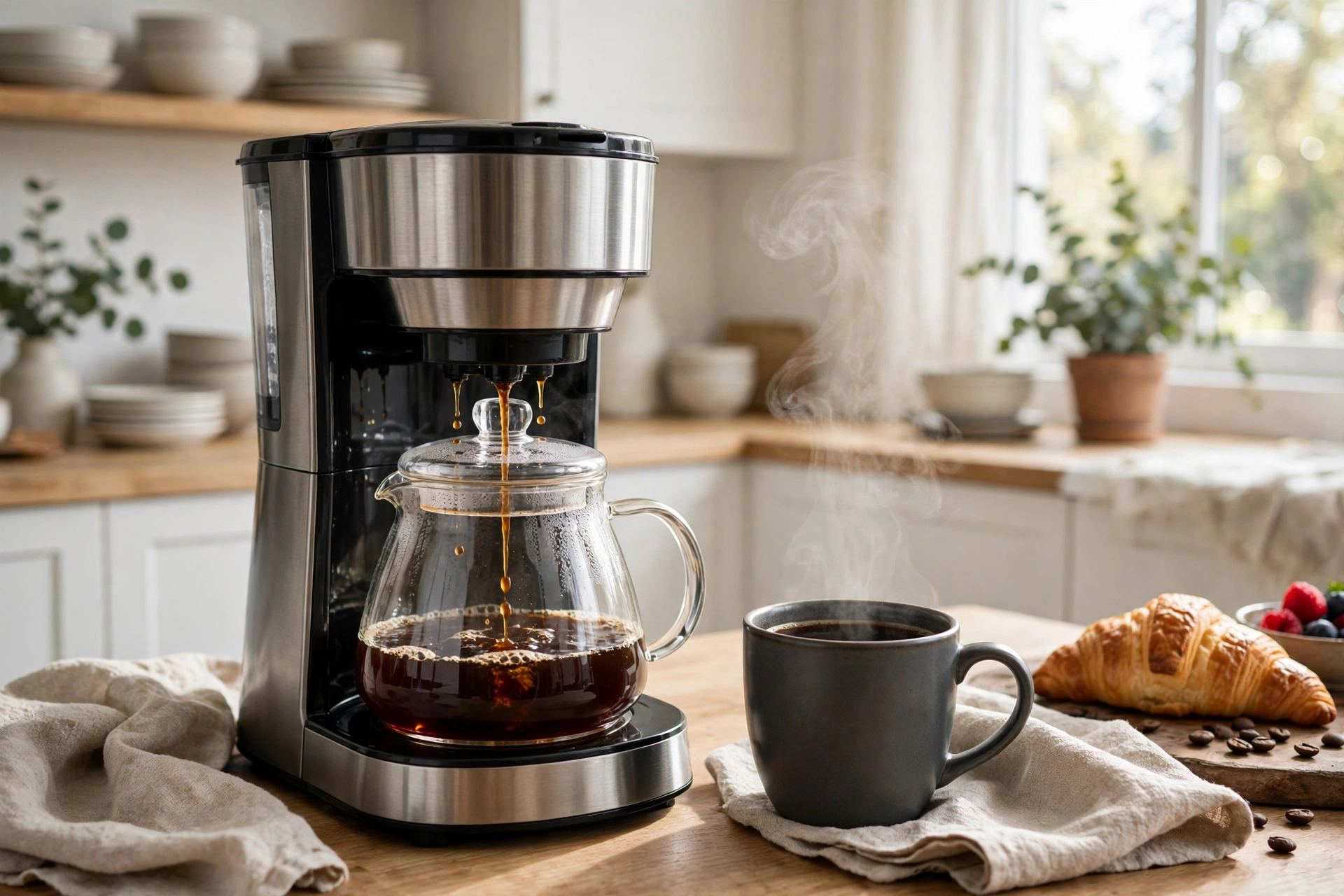
When you learn how to brew drip coffee at home, start with this simple idea: hot water passes once through coffee grounds. Bloom first: pour just enough hot water to wet all the grounds, wait 30-45 seconds, then continue with the full brew. Blooming releases gas and helps the water extract more evenly.
- Fill the reservoir with fresh, filtered water. Use cold, filtered water where possible, and avoid distilled or softened water.
- Place a paper filter in the basket, rinse it with hot water and discard that rinse water, then add medium grind coffee and shake gently to level the bed.
- Use the drip coffee ratio below: 1–2 tablespoons of ground coffee for every 6 oz of water, or 60–65 g per litre.
- Heat your water to 195–205°F, or just off the boil, and start the brew cycle. An automatic machine should take about 5 minutes in total.
- When brewing is complete, stir the pot gently, serve at once and enjoy. Do not leave coffee sitting on a hot plate for hours.
The Drip Coffee Ratio
When you learn how to brew drip coffee at home, getting the ratio right makes the difference between a good cup and a disappointing one. Start with 1:15 to 1:17, that is 1 g coffee for every 15-17 g water, or about 60-65 g coffee per litre of water. Carafe cup vs mug: a carafe cup is often only about 150 ml (5 oz), smaller than a typical 240-350 ml mug, so measure water in ml or oz rather than by carafe cups alone, or the brew can come out weak.
Medium Grind Coffee and Water Temperature
Use medium grind coffee for drip brewing, about the texture of kosher salt. A grind that is too fine can over-extract and taste bitter, while a grind that is too coarse can under-extract and taste weak. Water temperature matters just as much: aim for 195–205°F. Let boiling water sit for about 30 seconds before pouring, so it cools to the right range and extracts evenly. For detailed guidance on grind size and method, see the National Coffee Association’s drip coffee guide.
Drip Coffee vs Pour Over
Drip coffee vs pour over is a common question, because both methods pour hot water over grounds in a filter. The main difference is control: an automatic drip machine controls the water flow and temperature for you, which makes it forgiving and easy to scale up for several cups. A manual pour-over gives you more control over pouring speed and timing, but it needs more attention. If you want convenience and consistency, choose drip; if you enjoy a hands-on ritual, try pour-over.
Drip Coffee vs Black Coffee
Drip coffee vs black coffee is not a choice between two methods: drip describes how the coffee is brewed, while black describes how it is served, without milk or sugar. So drip coffee can be black coffee, and black coffee can be made by drip, pour-over, French press or espresso. If you drink it plain, a clean drip brew with a medium grind and fresh beans shows the bean’s flavour best.
How to Clean Drip Coffee Maker
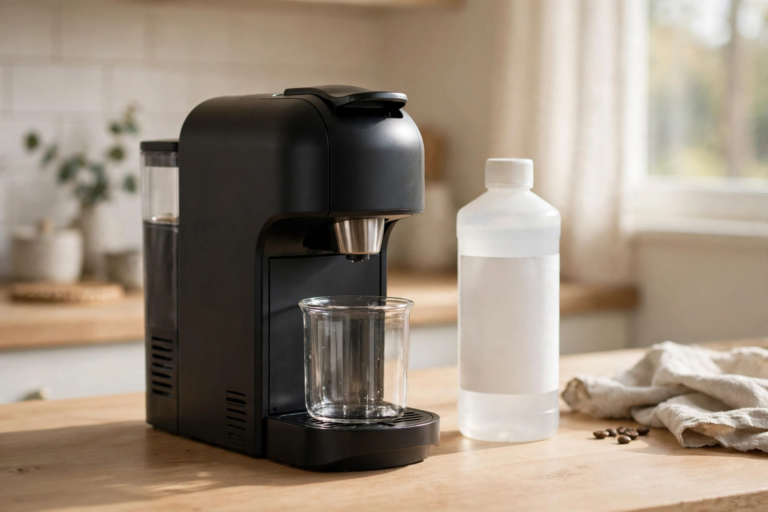
Knowing how to clean a drip coffee maker keeps every cup tasting fresh. After each brew, discard used grounds, wash the carafe and basket, and wipe the hot plate if your machine has one. Stale coffee oils left behind can make future cups taste bitter, so do not leave old grounds in the basket. Every one to three months, descale following the manufacturer’s instructions, then rinse with two cycles of fresh water. If your machine has an external water filter, follow the manufacturer’s guidance for replacing it.
Troubleshooting: Why Is My Drip Coffee Bitter and Why Is My Drip Coffee Weak?
When you learn how to brew drip coffee at home, two questions come up most. Why is my drip coffee bitter? The usual causes are over-extraction, water that is too hot, a grind that is too fine, stale beans or a dirty machine. Try a slightly coarser grind, check that your water is 195-205°F, and clean and descale the machine. Why is my drip coffee weak? The usual causes are under-extraction, too little coffee, a grind that is too coarse or water that is too cool. Try a little more coffee, a slightly finer grind and freshly ground beans, and change only one variable at a time.
A Note on Cold Coffee
For cold coffee, see our separate cold brew coffee guide. That guide uses a long cold steep, not this hot drip method, so it is kept separate and is not repeated here.
For a creamy alternative, try how to make a latte at home, or explore more methods in our Brewing Guide.
Now you know how to brew drip coffee at home: use medium grind coffee, a 1:15-1:17 drip coffee ratio, 195-205°F water, a rinsed filter and a level bed, and bloom before the full brew. When you brew drip coffee at home this way, taste and adjust only one variable at a time until the cup suits you.
For cold coffee, use our cold brew coffee guide instead of this hot method, and for the medium grind, see our best coffee grinders guide.
Once your drip grind is dialed in, try a coarse grind next in our French press coffee guide, and keep your beans fresh between brews with our guide to storing coffee beans.
What Trusted Sources Agree On — and Where They Differ
When you compare the trusted sources on drip coffee, they agree on the basics before they differ on anything else. The National Coffee Association’s drip guide gives the Golden Ratio: 1 to 2 tablespoons of ground coffee for every 6 ounces of water, a medium grind like kosher salt, and about 5 minutes of brew time. Its pour-over guide shares the same foundations — a medium grind and water at 93 ± 3 degrees Celsius — but states them as a weight ratio of 1:13 to 1:16 and a contact time of 2 to 4 minutes.
Where they differ is in control and measurement. A drip machine automates the pour, so the brewer’s choices narrow to ratio, grind, and keeping the machine clean; a pour-over brewer controls the pour itself, which is why its guide gives a weight ratio and a shorter time window. This guide’s 1:15–1:17 ratio sits across the pour-over range and just beyond its weaker end, and its 195 to 205 degrees Fahrenheit converts to about 91 to 96 degrees Celsius, matching the association’s 93 ± 3 degrees. The two methods agree far more than they disagree.
Prima Coffee’s Learning Center and Stumptown’s Brew Guides organize their advice by method rather than prescribing one machine, so they help you judge a drip brewer by the same standards: the right grind, the right ratio, and water in the shared temperature range. The recommendation that follows is to use the tablespoon ratio when you have no scale, the gram ratio when you do, and this guide’s cleaning routine either way, because a dirty machine ruins both.
Drip Coffee Ratio Table: From 2 Cups to 12 Cups
Use this ratio table when you learn how to brew drip coffee at home and scale the recipe to your pot. One machine cup here means 6 ounces of water, the same unit the association’s Golden Ratio uses, and the gram figures follow this guide’s 1:15–1:17 ratio. Start from fresh beans chosen well, and the table does the rest.
| Machine cups (6 oz each) | Water | Coffee (tablespoons) | Coffee (grams) |
|---|---|---|---|
| 2 | 12 oz | 2–4 tbsp | 21–24 g |
| 4 | 24 oz | 4–8 tbsp | 42–47 g |
| 8 | 48 oz | 8–16 tbsp | 84–95 g |
| 12 | 72 oz | 12–24 tbsp | 125–142 g |
A Note Worth Keeping
Two sentences are worth keeping beside this guide. “Simply put, ‘drip coffee’ is what many people think of when they think of coffee. It’s probably the most common starting point for people learning how to make coffee.” — National Coffee Association, Drip coffee. And on choosing between methods: “Coffee is personal. The best brewing method is the one that results in your favorite coffee to drink!” — National Coffee Association, Brewing. Judge a drip brewer by its everyday pot, not its first one.
More Questions About How to Brew Drip Coffee at Home
Can I use pre-ground coffee for drip? Yes. Choose a bag ground for drip machines, which means a medium grind, and use it within a week or two of opening, since ground coffee stales faster than whole beans. Grinding fresh just before brewing gives a fresher cup, but pre-ground coffee at the right ratio still makes a good pot.
Paper filter or permanent filter: which is better for drip? Paper, for most drinkers. Paper filters absorb more of the coffee’s oils, which the National Coffee Association links to a cleaner cup, and this guide rinses the paper filter first to remove any papery taste. A permanent metal filter lets more oils through for a heavier cup, but it needs thorough cleaning after every brew.
Does drip coffee have more caffeine than espresso? Per cup, yes. An 8-ounce cup of brewed coffee has about 96 milligrams of caffeine, while a 1-ounce espresso shot has about 63 milligrams, on Mayo Clinic figures. That is why our caffeine comparison guide counts milligrams per drink rather than judging by strength of taste.
Closing Note: Judge a Drip Brewer by Its Everyday Pot
Judge a drip brewer by its everyday pot, not its first one. If the pot is consistent from Monday to Friday, the ratio holds, the grind stays medium, and the machine stays clean, the brewer has done its job — and if a pot tastes off, the table above says whether the ratio or the grind moved first, so you know what to fix next time you learn how to brew drip coffee at home.

17 Comments