
Am I Addicted to Caffeine? A Caffeine Addiction Guide

If you cannot start the day without coffee, you may have asked yourself: am I addicted to caffeine? Caffeine is a natural stimulant found in coffee, tea and chocolate. It blocks adenosine, the brain chemical that makes you feel tired, which is why it improves alertness for a few hours. This guide explains the difference…
If you cannot start the day without coffee, you may have asked yourself: am I addicted to caffeine? Caffeine is a natural stimulant found in coffee, tea and chocolate. It blocks adenosine, the brain chemical that makes you feel tired, which is why it improves alertness for a few hours. This guide explains the difference between caffeine dependence and habit, the common caffeine addiction signs, caffeine withdrawal symptoms, and how to cut back on caffeine gradually. This is general information only, not medical advice, and it cannot diagnose you.
Caffeine dependence or just a habit?
Dependence and habit are not the same thing, although they often appear together. Physical dependence means your body has adapted to regular caffeine: you need more for the same effect, which is called tolerance, and you feel unwell when you miss your usual dose. A habit is a routine tied to cues, such as drinking coffee first thing, on the way to work, or whenever you need to focus. You can have a strong habit without physical dependence, and you can be dependent without much of a routine. Working out which one applies to you is a better starting point than asking, am I addicted to caffeine, as if there were only one answer.
Caffeine addiction signs
Common caffeine addiction signs include needing larger amounts to feel awake, feeling tired, headachy or irritable without caffeine, finding it hard to concentrate, and sleeping poorly even when you stop drinking coffee hours before bed. Continuing to drink a lot of caffeine even though you want to cut back, and feeling uneasy or unable to work when you cannot get coffee, are further signs worth noting. One sign on its own does not mean you are dependent; a pattern across several of these, over time, is what matters. If you recognise several of these signs and keep asking, am I addicted to caffeine, the next section explains withdrawal and a gradual taper.
Caffeine withdrawal symptoms
Caffeine withdrawal symptoms usually start 12 to 24 hours after the last dose, peak around day one or two, and ease for most people within 7 to 10 days, although milder symptoms can linger for up to two weeks. Headaches, tiredness, low mood, irritability and difficulty concentrating are the most commonly described symptoms. How strong they feel depends on how much caffeine you usually drink, so experiences vary a great deal. If symptoms are severe or do not ease, speak to a clinician rather than pushing through. If you are asking, am I addicted to caffeine, these symptoms are a useful check, not a diagnosis.
How to cut back on caffeine: a gradual taper plan
Stopping suddenly tends to make withdrawal worse, so a gradual taper usually works better. Reduce your intake by about a quarter each week. As an example, if you drink four cups a day, try three cups a day for a week, then two, then one, then switch the remaining cup to half-caffeinated or decaffeinated coffee. Keep a simple daily note of what you drink, and set a cut-off time in the afternoon, for example no caffeine after 2 pm, to protect your sleep. Replace the ritual rather than just removing it: a walk, a glass of water, herbal tea or a proper breakfast can take the place of the habitual cup.
During the taper, keep asking, am I addicted to caffeine, and note whether the urge is physical discomfort or simply the old routine.
When to speak to a clinician
Speak to a doctor or another qualified clinician if caffeine is affecting your sleep, mood or daily life, if you have anxiety, a heart condition or another health condition, if you take regular medication, or if you are pregnant. During pregnancy, many doctors advise keeping caffeine low, so ask your doctor what limit suits you rather than relying on a general figure. Seek prompt advice if you notice a racing heartbeat, persistent anxiety or other worrying symptoms. If you keep asking, am I addicted to caffeine, a clinician can help you work out the answer for your situation.
Frequently asked questions
How much caffeine is too much per day? The US Food and Drug Administration (FDA) cites 400 milligrams a day, roughly two to three 12-ounce cups of coffee, as an amount not generally associated with dangerous effects for most healthy adults. Individual sensitivity varies, so this is a general guide, not a personal limit.
Can I quit caffeine if I am pregnant? Do not stop abruptly without advice. A gradual reduction is usually preferred, and you should speak with your doctor for guidance suited to you. If you are asking, am I addicted to caffeine, while pregnant, get personal advice before changing your intake.
Will I gain weight if I stop drinking caffeine? Some people notice short-term changes in appetite or activity while they adjust, but weight usually settles as energy and sleep return to normal. If weight changes worry you, discuss them with a clinician. If you are asking, am I addicted to caffeine, focus on the overall pattern rather than one short-term change.
In short, if you keep asking yourself, am I addicted to caffeine, look at the pattern: tolerance, withdrawal and drinking despite wanting to stop point towards dependence, while a fixed routine points towards habit. Cut back gradually, protect your sleep, and ask a clinician if you are unsure. For a balanced look at coffee and health, read our health benefits of coffee guide, and browse the Coffee Health category for more.
A gradual taper checklist
Use this checklist to put the taper plan above into practice, step by step:
- Reduce your intake by about a quarter each week, rather than stopping suddenly.
- Follow the example in the plan: from four cups a day to three, then two, then one, then switch the remaining cup to half-caffeinated or decaffeinated coffee.
- Keep a simple daily note of what you drink, so you can see the pattern over time.
- Set an afternoon cut-off time, for example no caffeine after 2 pm, to protect your sleep.
- Replace the ritual, not just the drink: a walk, a glass of water, herbal tea or a proper breakfast can take the place of the habitual cup.
- During the taper, note whether the urge is physical discomfort or simply the old routine.
Related guides on this site: how to make a latte at home, how to make cold brew coffee at home, and best coffee grinders.
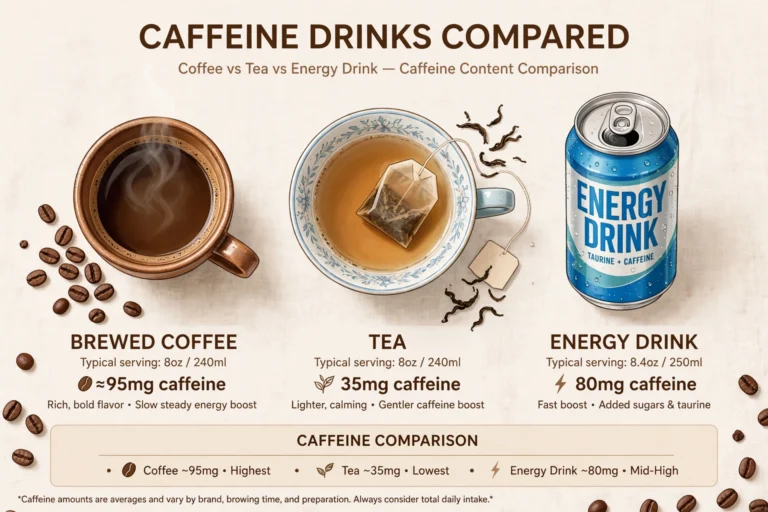
For the amounts in different drinks, see our comparison of caffeine in coffee, tea and energy drinks.


One Comment