
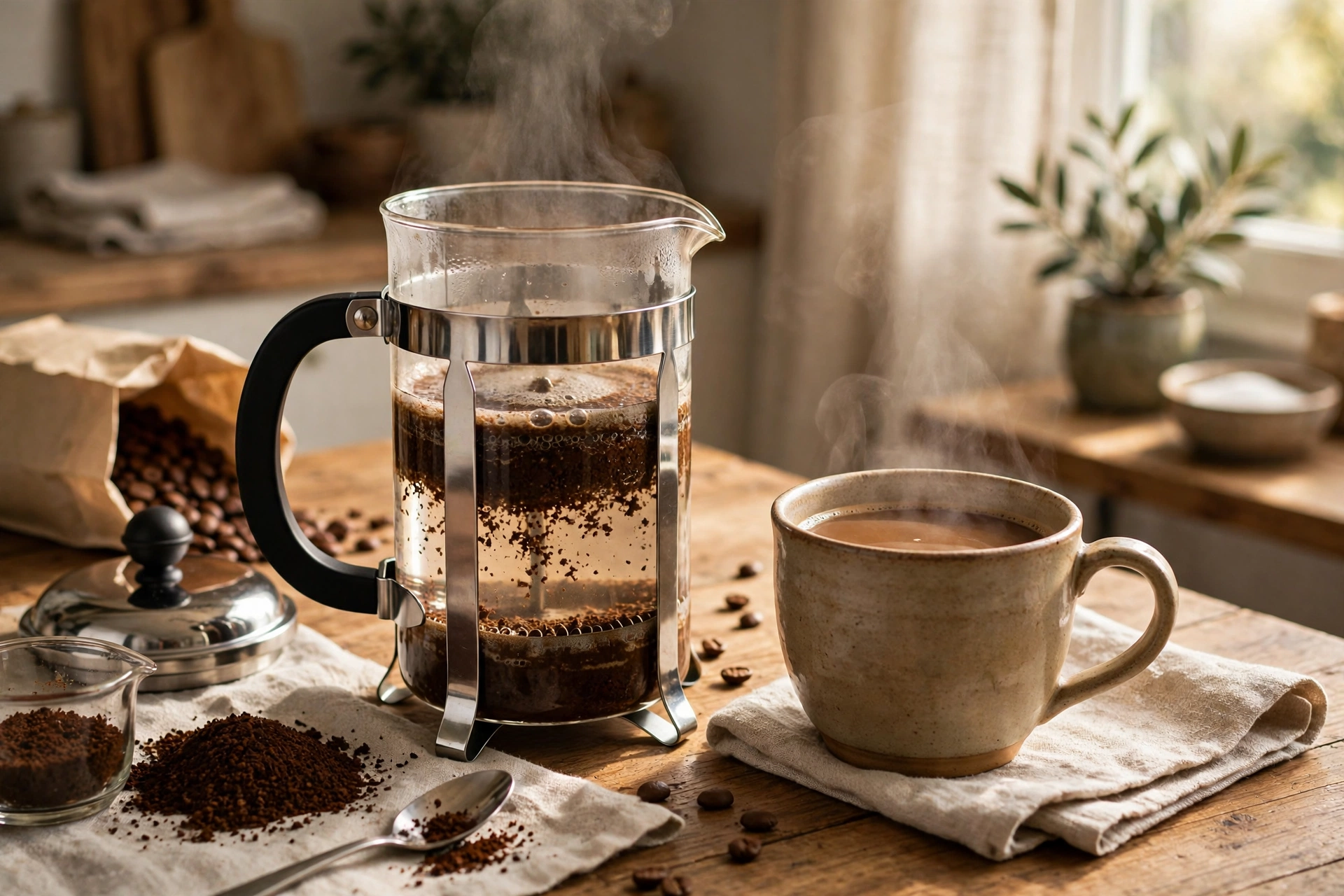
How to Make French Press Coffee at Home

Learning how to make French press coffee at home is simple: use a 1:15 coffee-to-water ratio, a coarse grind, water at about 93°C (200°F), and a 4-minute steep. That starting point gives a full-bodied, smooth cup without a paper filter stripping out the oils that give French press its character.
This guide gives you a repeatable recipe, a size table for different presses, and fixes for the two most common problems: bitter, muddy coffee and weak, sour coffee. Once you can make the basic version well, small changes to grind, time, and dose are much easier to judge.
What You Need
If you are learning how to make French press coffee at home for the first time, keep the kit simple and focus on grind, ratio, and time rather than buying extra equipment.
- A French press, rinsed with hot water first
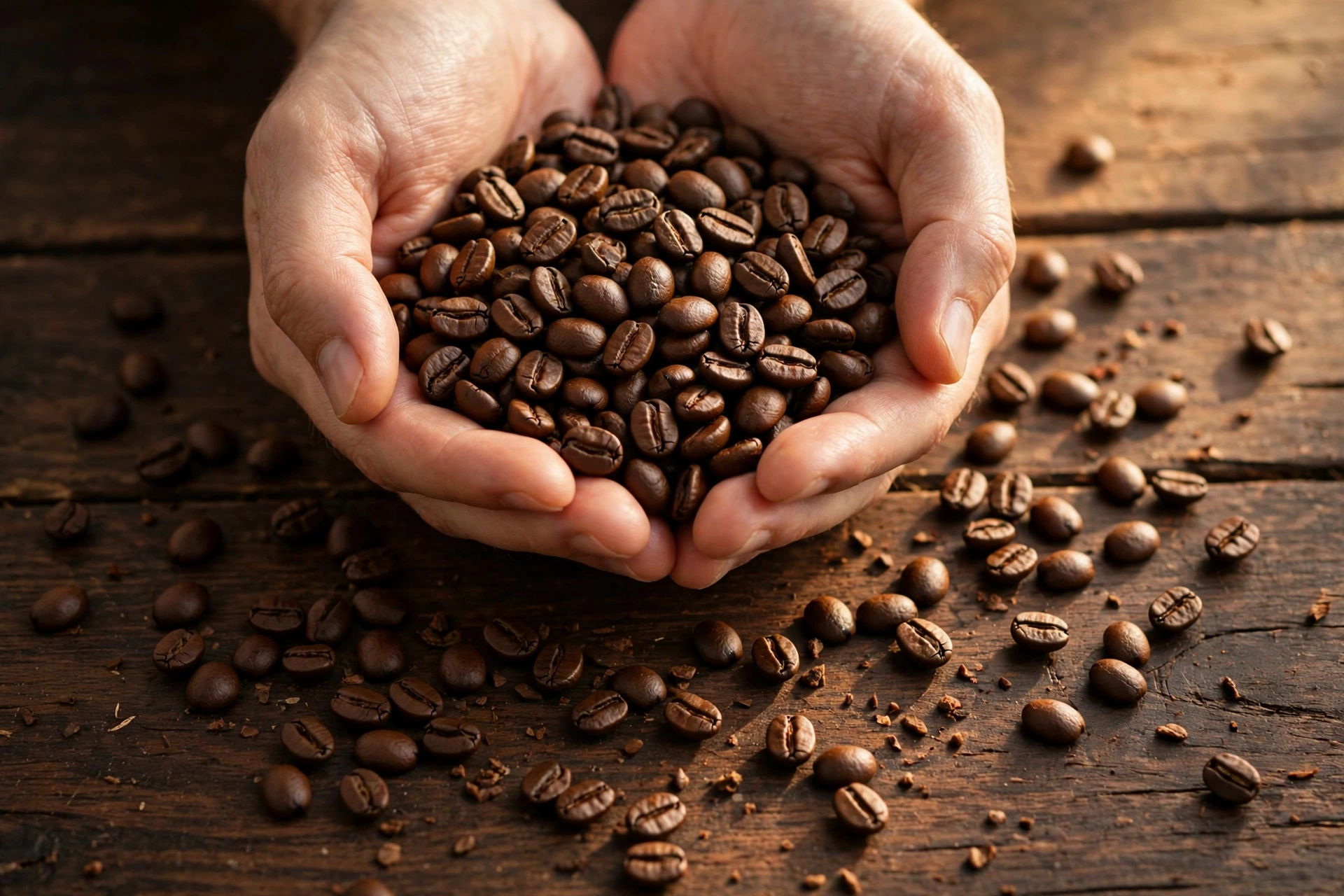
- Freshly ground coffee, coarse — about the texture of coarse sea salt
- Freshly boiled water, left to cool briefly to about 93°C (200°F)
- A kitchen scale, a timer, and a spoon
- A mug, warmed if you have time
Weighing the coffee and water is the single biggest improvement for most home brewers. Spoons vary, beans vary, and a scale removes that guesswork. If you are choosing equipment, see the best coffee grinders guide for burr grinders that give a more even coarse grind.
French Press Ratio and Sizes
Start with 1 gram of coffee for every 15 grams (millilitres) of water. The National Coffee Association gives a broader French press range of 1:10 to 1:16, with a brewing temperature of 93 ± 3°C and a time of about 4 minutes, so 1:15 sits comfortably inside that range.
| Press / serving | Coffee | Water |
|---|---|---|
| Single mug, about 300 ml | 20 g | 300 ml |
| Two mugs, about 450 ml | 30 g | 450 ml |
| Large press, about 750 ml | 50 g | 750 ml |
| Full litre press, about 1,000 ml | 67 g | 1,000 ml |
French press “cups” on the box are often small, about 120 ml, not a full mug. Measure by weight or volume for your press rather than trusting the cup marking, and adjust to taste after your first brew: use more coffee for a stronger cup, not a much longer steep.
How to Make French Press Coffee at Home, Step by Step
- Preheat the press. Rinse the glass or steel beaker and your mug with hot water, then tip it out. This helps the brew stay hot during the steep.
- Grind coarse. Grind just before brewing. Coarse grounds reduce fine sediment and slow extraction, which suits a 4-minute immersion brew.
- Add the coffee. Put the ground coffee in the empty, warm press and level it gently.
- Bloom for 30 seconds. Pour in about twice the coffee’s weight in water (for 30 g, about 60 ml), stir gently, and wait 30 seconds. The coffee will bubble and swell as gas escapes.
- Add the rest of the water. Pour slowly to your target weight, stir once more so no dry grounds are left on top, then put the lid on with the plunger raised.
- Steep for 4 minutes. Start the timer when the main pour begins, not after the bloom. Keep the press still and away from a cold draft.
- Press slowly and evenly. Press straight down with steady, gentle pressure. If it feels hard to push, the grind is probably too fine; do not force it.
- Pour it all out. Serve immediately and do not leave coffee sitting on the grounds. Coffee left in the press keeps extracting and turns bitter.
For more detail on the method from an industry source, see the National Coffee Association’s French press coffee guide.
Troubleshooting: Bitter, Weak, or Muddy Coffee
Most problems when you make French press coffee at home come from grind size, water temperature, or leaving the coffee on the grounds too long, not from the beans alone.
If it tastes bitter or harsh
Grind a little coarser, check that the water is not still boiling, and shorten the steep slightly. Pour the coffee out promptly, and clean the mesh filter: old oils trapped in the screen can add a stale, bitter note.
If it tastes weak or sour
Use a little more coffee, grind a touch finer, or make sure the water is hot enough. A thin, sour cup is often under-extracted, not simply “weak,” so changing only the dose or only the grind, one at a time, helps you find the cause.
If there is a lot of sediment
Grind coarser and press slowly. A small amount of fine sediment is normal for French press, because there is no paper filter, but a thick, gritty layer usually means the grind is too fine or uneven. A burr grinder helps here more than any pouring trick.
Variations Worth Trying
French press with milk
Brew as above, then add warm milk to taste. Because French press coffee is already full-bodied, it stands up well to milk without needing a stronger dose.
Iced French press coffee
For iced coffee, brew a little stronger — about 1:13 — and pour the hot coffee over ice in a heatproof jug, then chill it. This is not the same as cold brew, which steeps in cold water for many hours; compare the two in how to make cold brew coffee at home.
Choosing beans and roast
Medium roasts are a good starting point: they keep enough sweetness and body without the sharper edge a very dark roast can add in immersion brewing. Fresh beans, ground just before brewing, matter more than chasing a single “best” origin.
Cleaning and Care
Take the plunger apart after brewing, rinse the mesh, and wash the beaker with warm soapy water. Let everything dry before reassembling it. A press that is rinsed but never properly cleaned will eventually taste stale, however good the beans are.
Frequently Asked Questions
How long should French press coffee steep?
Four minutes is a reliable starting point. Shorter steeps can taste thin, and much longer steeps usually add bitterness without adding useful sweetness.
Can I use pre-ground coffee?
Yes, if it is ground for French press or coarse. Fine, espresso-style grounds will pass through the mesh, over-extract, and make the cup muddy.
Should I stir after adding all the water?
One gentle stir is enough to wet all the grounds. Vigorous or repeated stirring can increase fine sediment and make the cup taste rougher.
Conclusion and Next Steps
That is how to make French press coffee at home reliably: start with 30 g of coarse coffee, 450 ml of water at about 93°C, a 30-second bloom, and a 4-minute steep. Taste it, change one variable at a time, and keep notes for a few brews. If you want a lighter, cleaner cup next, try how to brew drip coffee at home, and if your grinder is holding you back, revisit the grinder guide above.
By Rizwan, Coffee Treasures.
Quick Checklist
Before you start, run through this checklist for how to make French press coffee at home: preheat the press, grind coarse, weigh at 1:15, bloom for 30 seconds, steep for 4 minutes, press slowly, and pour it all out. Once that routine is familiar, how to make French press coffee at home becomes a habit, not a guess.
Is French press coffee strong?
Strength depends mainly on dose, not on the method alone. When you learn how to make French press coffee at home using the 1:15 ratio above, the cup is full-bodied, but you can use a little less coffee for a lighter result.
What Trusted Sources Agree On — and Where They Differ
When you learn how to make French press coffee at home, the sources agree on the core settings. The National Coffee Association gives a French press ratio range of 1:10 to 1:16, water at 93 ± 3°C, a steep of about 4 minutes, and a coarse grind like rock salt. Retailer brew guides point the same way: Stumptown lists French press among its method guides, and the Prima Coffee Learning Center treats immersion brewing as a beginner-friendly path rather than a precision exercise.
Where they differ is in what they emphasize beyond those numbers. The NCA adds practical advice the recipe alone does not cover: match the press size to the batch, because a small batch in a large device loses quality; prefer a double-walled press, which holds a steadier temperature and keeps coffee hot longer; and serve the coffee at once after plunging. This guide’s single 1:15 starting point sits comfortably inside the NCA range, so the recommendation is to keep 1:15 as the default and move within the range only when taste says to: toward 1:12 for a heavier cup, toward 1:16 for a lighter one, changing nothing else at the same time.
French Press Troubleshooting: Muddy, Bitter, Sour, or Cold
Use this table when you are learning how to make French press coffee at home and a cup goes wrong. Change one thing at a time, starting with the fix in the right-hand column.
| Problem | Likely cause | What to change |
|---|---|---|
| Muddy, sediment-heavy cup | Grind too fine, or plunging too fast | Go coarser, toward rock salt size, and press slowly and steadily; check the grind advice in our coffee grinders guide |
| Bitter or harsh | Steeped too long, or coffee left sitting in the press | Keep the steep near 4 minutes and pour everything out right after plunging |
| Sour or weak | Grind too coarse, or too little coffee | Check the 1:15 ratio first, then grind slightly finer or steep a little longer |
| Coffee cools too fast | Cold press, or a thin single-wall carafe | Rinse the press with hot water before brewing; a double-walled press holds temperature better |
A Note Worth Keeping
“If left in a French press, coffee will continue to brew and turn bitter.” — National Coffee Association, French press coffee
More Questions About How to Make French Press Coffee at Home
What roast works best in a French press?
Medium to dark roasts tend to work well, according to the National Coffee Association, because the press keeps the coffee’s oils and body in the cup. That said, the same page encourages experimenting with different roasts, so treat medium-dark as a starting point, not a rule, and choose beans with our fresh beans guide in mind.
Why does my French press coffee taste bitter even at 4 minutes?
Two common culprits sit outside the steep time: coffee left sitting in the press after plunging keeps brewing and turns bitter, and old coffee oil left on the filter can make the next cup taste bitter. Pour everything out at once, and wash the filter properly after each brew.
Can I brew a small batch in a large French press?
You can, but the National Coffee Association warns that quality suffers when the batch does not match the device. If you usually brew one mug, a smaller press will give a more consistent result than a large one run half full.
Closing Note: Judge a French Press by Its Last Cup
If the first mug tastes good and the last mug tastes bitter, the recipe was probably fine and the coffee simply sat too long in the press. That is the most useful lesson in learning how to make French press coffee at home: the press is a brewer, not a serving pot, so pour it out and enjoy it fresh.

10 Comments