
How to Store Coffee Beans to Keep Them Fresh

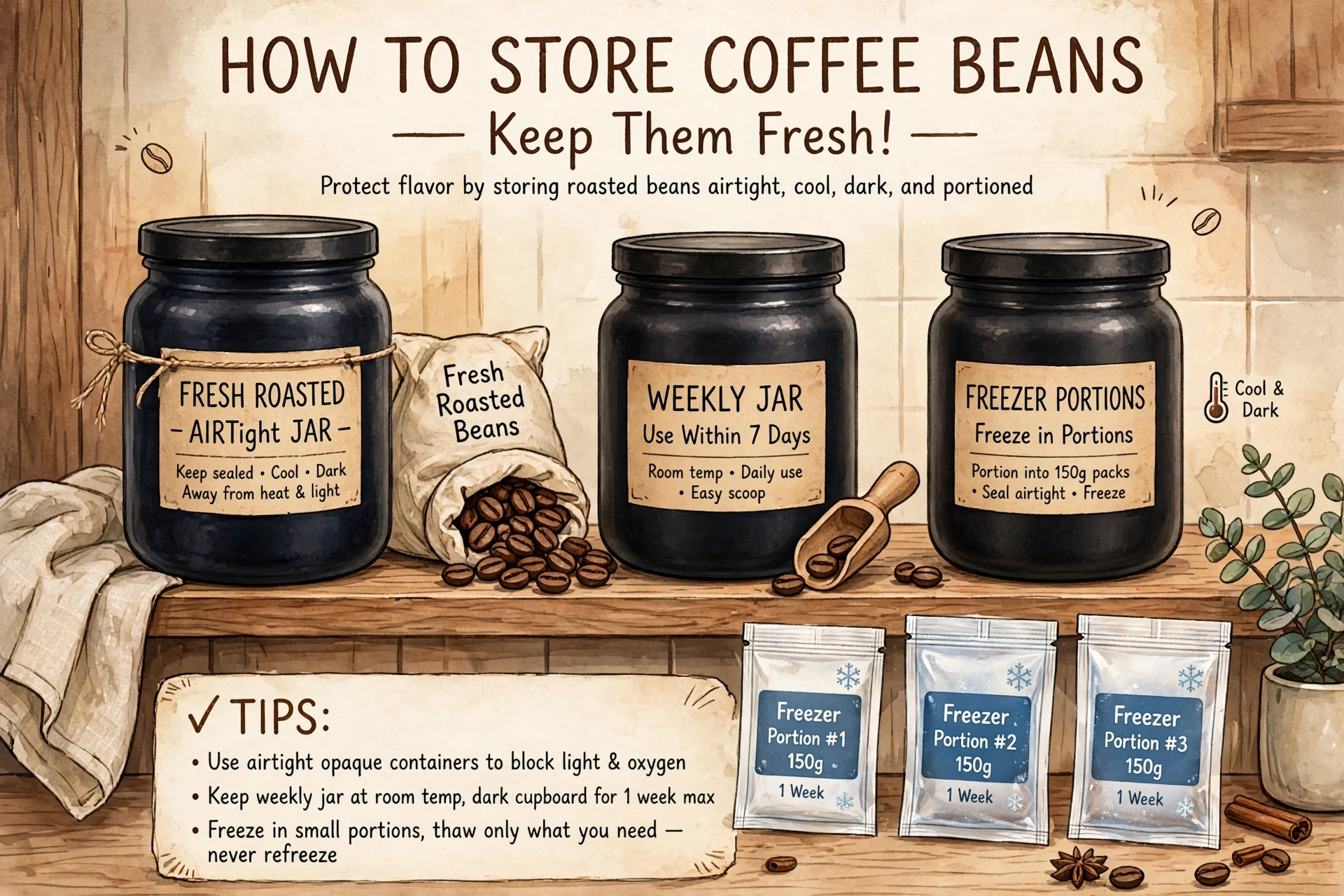
The best way to learn how to store coffee beans to keep them fresh is to stop thinking about the perfect container first, and start with a simple system: buy a size you can use in time, keep one small jar for the week, and freeze the rest in portions. Fresh beans lose flavor mainly to air, light, heat, and moisture, so every step below is about limiting those four enemies, not about buying a special jar.
The National Coffee Association (NCA) gives a useful starting point: store coffee in an airtight, cool place, buy smaller batches, use opaque containers because clear containers let in light, keep coffee away from heat such as an oven or strong afternoon sun, and grind only just before brewing. The NCA also notes that coffee is hygroscopic, meaning it takes up moisture, which is why a truly airtight container matters if you refrigerate or freeze it.
How to Store Coffee Beans to Keep Them Fresh: The System
Use three places, not one. The weekly jar is the only container you open every day. The rest stays sealed, either in its original bag if that bag is airtight and opaque, or in freezer portions. This stops the common mistake of opening the whole bag every morning, letting fresh air in, and then wondering why the last cups taste flat.
- Buy the right size. If you brew about 30 g a day, a 250 g bag lasts about eight days, which fits the freshness window below. A 1 kg bag will not stay at its best for a single household unless you freeze portions. Buy smaller, more often, when you can.
- Set up a weekly jar. Put about one week of beans in a small, opaque, airtight jar, in a dark, cool cupboard away from the stove and dishwasher. Use that jar daily, and leave the rest sealed.
- Freeze the rest in portions. Divide the remaining beans into weekly portions in truly airtight bags or containers, label them with the date, and freeze them. Take out one portion at a time, and do not return opened beans to the freezer.
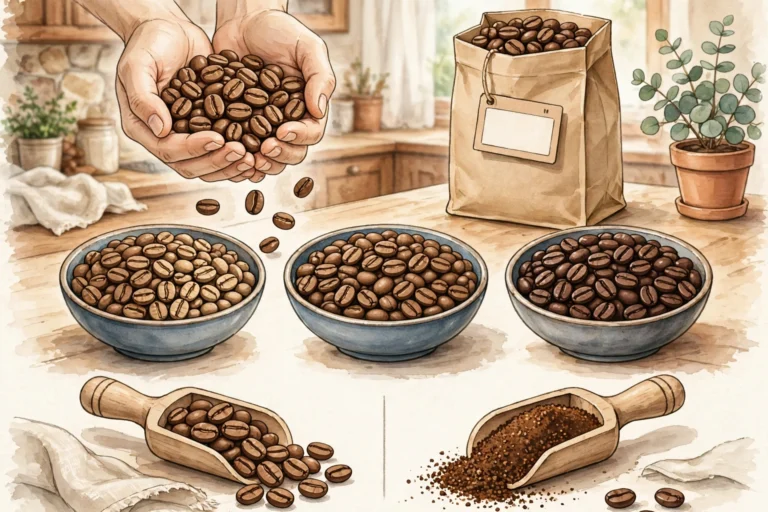
- Grind just before brewing. Whole beans keep longer than ground coffee, because ground coffee has far more surface area exposed to air. A good grinder, as covered in the best coffee grinders guide, matters here: grind only what you need for that brew.
Storage Methods Compared
| Method | Typical freshness (NCA) | Best for | Watch out for |
|---|---|---|---|
| Room temperature, airtight opaque jar | Roasted beans: 1 to 3 weeks; ground coffee: 1 to 2 weeks | Your weekly supply | Light, heat, and daily opening of a large bag |
| Original bag, unopened | Until the best-by date | Beans you have not started yet | Once opened, the clock starts, and a non-airtight bag is not long-term storage |
| Refrigerated, truly airtight | Roasted beans: 2 weeks | Short-term overflow only | Moisture and food odors; coffee takes up both, so the container must be truly airtight |
| Frozen in portions, truly airtight | Roasted beans: 3 to 4 months | Larger bags you cannot use in a few weeks | Repeated freezing and thawing, and condensation when a cold portion is opened |
Source: National Coffee Association, Storage and shelf life, via aboutcoffee.org. Those times are typical ranges, not guarantees for every bean, roast, or package.
Why the Fridge Is Usually the Worst Choice
The fridge sounds cool and dark, but it is humid, full of food odors, and opened many times a day. The NCA gives refrigerated roasted beans only 2 weeks, shorter than frozen beans and not clearly better than a good room-temperature jar for a weekly supply. If you do refrigerate, use a truly airtight container, keep the beans in one small portion you will use quickly, and do not move the same beans in and out of the fridge.
Freezing Without Ruining the Beans
Freezing works when it is done once, in portions, and in a truly airtight container. The mistakes are freezing a large bag and opening it repeatedly, which lets in moist air and creates condensation, and freezing in a bag that is not sealed well enough to keep out freezer odors. When you take a portion out, let it come to room temperature before you open it, if you can, so moisture does not condense on cold beans. Then use that portion as your weekly jar, and do not refreeze what is left.
That last point is the heart of how to store coffee beans to keep them fresh for larger bags: the freezer is a store, not a daily cupboard. One portion in, one portion out, no round trips.
Common Mistakes
Keeping beans in a clear jar on the counter
Light and heat from a sunny kitchen speed up staling. A clear jar looks good, but an opaque jar in a cupboard keeps beans fresher.
Grinding the whole bag at once
Ground coffee in the NCA table lasts only 1 to 2 weeks at room temperature, compared with 1 to 3 weeks for whole beans. Grind per brew, or at most per day, and keep the rest whole.
Buying on price alone in bulk
A large bag that sits for two months is not a saving if the last half tastes stale. Buy a size that matches your weekly use, or freeze portions on day one.
Storing beans above the stove or next to the dishwasher
Heat and steam are enemies, even if the jar is airtight. Move the jar to a cool, dark cupboard, away from appliances that give off heat.
How to Tell If Beans Are Stale
Stale beans often smell flat or papery rather than fragrant, and the brewed coffee tastes dull, woody, or bitter without sweetness, even when grind and ratio are right. There is no reliable way to restore stale beans, so use them for a cold or milky drink if you do not want to waste them, and start a fresh bag for your best cups. If the coffee tastes sour or weak, check grind and ratio first, because staleness is not the only cause.
Frequently Asked Questions
Should I store coffee beans in the fridge?
Usually no. The fridge is humid and full of odors, and the NCA gives refrigerated beans only 2 weeks. A cool, dark, airtight jar at room temperature is better for a weekly supply, and the freezer is better for longer storage, in portions.
Can I freeze coffee beans?
Yes, in truly airtight portions, for 3 to 4 months for roasted beans in the NCA table. Do not freeze and thaw the same beans repeatedly, and do not open a cold portion until it has warmed, if you can avoid it.
Does an airtight jar alone keep beans fresh for months?
No. An airtight jar slows staling, but beans still age at room temperature. The NCA range for roasted beans at room temperature is 1 to 3 weeks, so a jar helps for a weekly supply, not for indefinite storage.
Should I keep beans in the bag they came in?
An unopened bag is fine until its best-by date. Once opened, move a week of beans to an opaque airtight jar, and freeze the rest in portions, unless the bag itself is airtight, opaque, and reseals well, and you will use it within a few weeks.
Conclusion and Next Steps
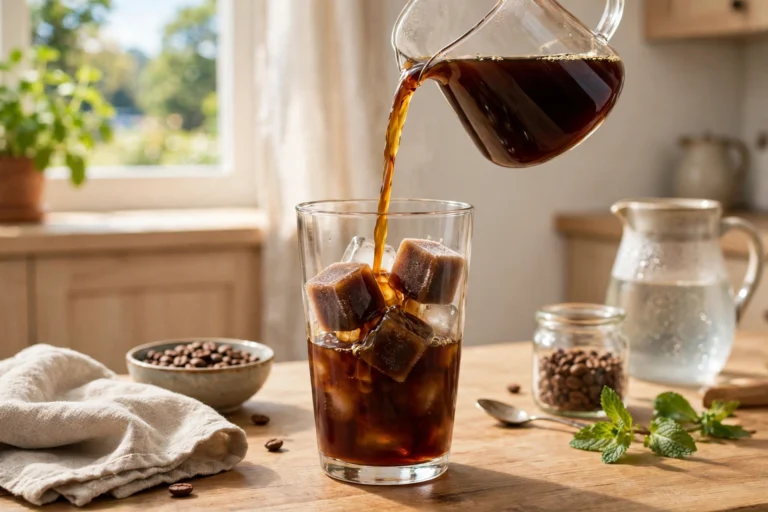
To keep beans fresh, buy a size you can use in time, keep one small opaque airtight jar for the week, freeze the rest in portions, and grind just before brewing. That system protects beans from air, light, heat, and moisture without needing a special container, and it works whether you brew by French press, cold brew, or drip.
For brewing with fresh beans, see the French press guide, the cold brew guide, and the grinder guide. For the source ranges used here, see the National Coffee Association storage page.
By Rizwan, Coffee Treasures.
Further Reading
- Best Coffee Grinders
- How to Make French Press Coffee at Home
- How to Make Cold Brew Coffee
- How to Brew Drip Coffee
- National Coffee Association: Storage and shelf life
How to Store Coffee Beans: Quick Checklist
If you remember only one part of how to store coffee beans, make it this: keep a small amount accessible and the rest sealed. That is how to store coffee beans so the jar you open every day is not the bag you are trying to protect.
- Buy a size you can use in a few weeks, or freeze portions on day one.
- Keep one small, opaque, airtight jar in a cool, dark cupboard for the week.
- Freeze the rest in truly airtight weekly portions, and do not refreeze opened beans.
- Grind just before brewing, and keep beans away from heat, light, and moisture.
Learning how to store coffee beans well is mostly about size and timing, not about buying a new container for every bag. Once you know how to store coffee beans in a weekly jar and freezer portions, the routine takes less time than choosing a container, and the coffee you brew stays closer to how it tasted when the bag was opened.
What Trusted Sources Agree On — and Where They Differ
When you are deciding how to store coffee beans, the sources agree on the basics: buy smaller batches, keep beans in an airtight, opaque container in a dark, cool place, and grind just before brewing. The National Coffee Association gives the most detailed version of that advice, with freshness windows of 1 to 3 weeks for roasted beans at room temperature, 2 weeks refrigerated, and 3 to 4 months frozen, plus the warning that coffee absorbs moisture and odors from the air around it.
Where they differ is on cold storage. The NCA itself notes that there are differing views on freezing and refrigerating coffee, because condensation and odors are real risks unless the container is truly airtight and only a week’s portion is removed at a time. Retailer learning hubs such as Prima Coffee’s Learning Center and Stumptown’s Brew Guides focus on brewing fresh coffee rather than settling storage durations, so they reinforce the grind-fresh point without giving a competing storage table. The recommendation for how to store coffee beans is therefore to use the NCA windows for storage decisions and retailer brew guidance for grind and brewer choice. If a source gives no storage window, it is not disagreeing with the NCA; it is simply answering a different question. Sources: National Coffee Association — Storage and shelf life, Prima Coffee — Learning Center, Stumptown — Brew Guides. For buying the right bag size in the first place, see our guide to choosing fresh coffee beans.
Storage Decision Table: Which Method for Which Bag
Use this table when you are learning how to store coffee beans and the bag in front of you does not match the weekly-jar plan above.
| What you bought | Best storage choice | Why |
|---|---|---|
| 250 g bag, used within 1 to 2 weeks | Weekly jar at room temperature | Fits the NCA 1 to 3 week window for roasted beans without freezing |
| 500 g to 1 kg bag | Freeze in weekly portions on day one | The bag will outlast the room-temperature window, so portioning protects the later weeks |
| Pre-ground coffee | Buy small and use within 1 to 2 weeks | Ground coffee stales faster than whole beans, so a big bag is the worst choice here |
| Bag already opened for weeks | Freeze the remainder in portions now | Freezing will not restore lost freshness, but it slows further decline; do not refreeze an opened portion |
A Note Worth Keeping
“Coffee storage is a key step in enjoying your best cup.” — National Coffee Association, Storage and shelf life. Storage is not a side detail of brewing; it decides whether the beans you bought still taste like the beans you chose.
More Questions About How to Store Coffee Beans
Does freezing coffee beans ruin their flavor?
Not when it is done once, in truly airtight portions. The risk is condensation and absorbed odors when a container is opened repeatedly or is not airtight, which is why the NCA advises removing only about a week’s portion at a time.
How long do coffee beans last in an airtight container?
At room temperature, roasted beans keep for about 1 to 3 weeks and ground coffee for about 1 to 2 weeks, according to the NCA. An airtight container slows staling; it does not stop it.
Should I store ground coffee differently from whole beans?
Yes. Buy ground coffee in smaller bags, keep it airtight and opaque, and use it within 1 to 2 weeks. Wherever possible, grind whole beans just before brewing instead; see our best coffee grinders guide for grind sizes by method.
Closing Note: Judge Storage by the Last Cup of the Bag
If the last cups from a bag taste flat while the first cups tasted good, the storage plan was wrong for that bag size, not the brewer. Buy a smaller bag next time, or freeze portions on day one, and the last cup will taste much closer to the first.

8 Comments