
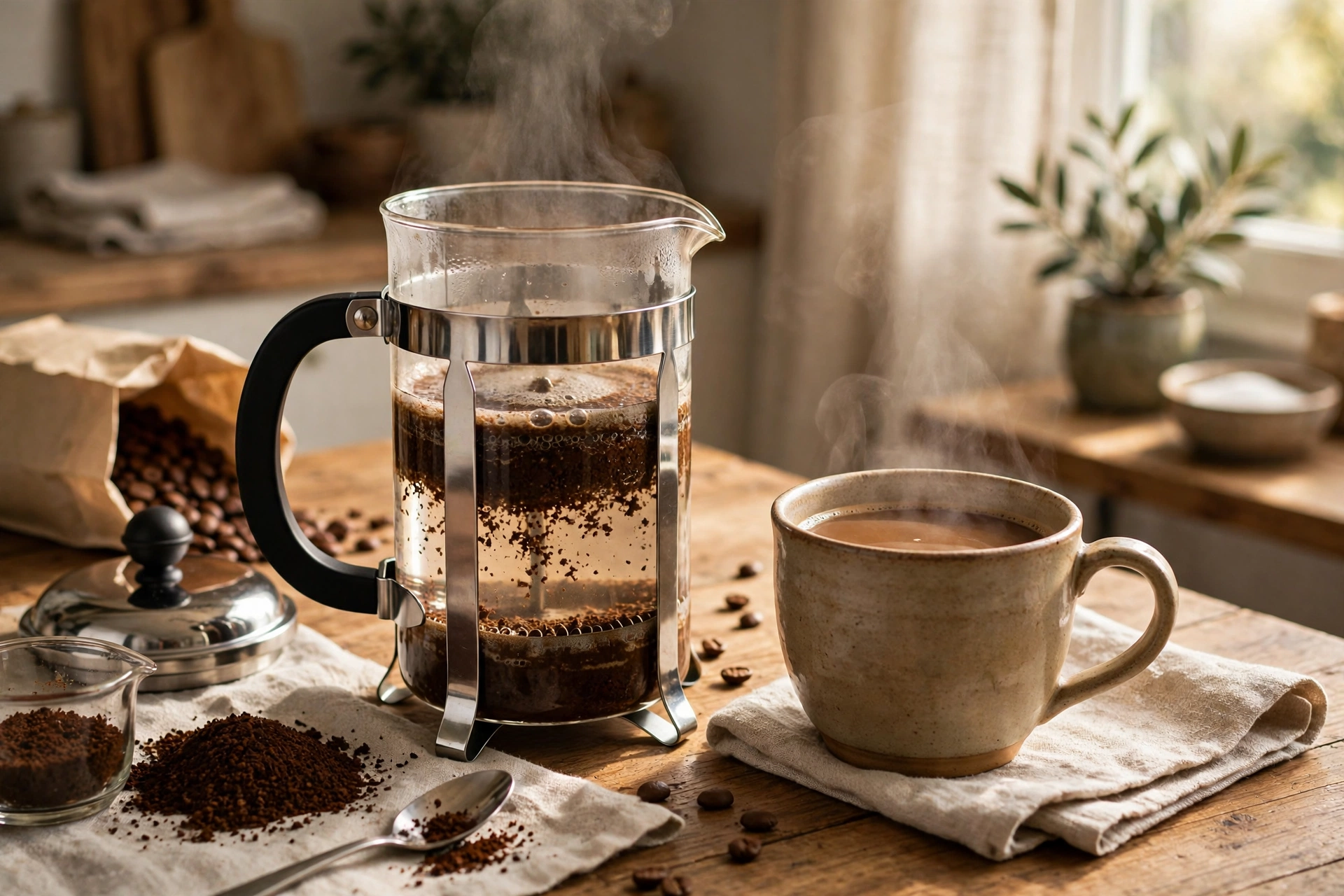
How to Make French Press Coffee at Home

Learning how to make French press coffee at home is simple: use a 1:15 coffee-to-water ratio, a coarse grind, water at about 93°C (200°F), and a 4-minute steep. That starting point gives a full-bodied, smooth cup without a paper filter stripping out the oils that give French press its character. This guide gives you a…
Learning how to make French press coffee at home is simple: use a 1:15 coffee-to-water ratio, a coarse grind, water at about 93°C (200°F), and a 4-minute steep. That starting point gives a full-bodied, smooth cup without a paper filter stripping out the oils that give French press its character.
This guide gives you a repeatable recipe, a size table for different presses, and fixes for the two most common problems: bitter, muddy coffee and weak, sour coffee. Once you can make the basic version well, small changes to grind, time, and dose are much easier to judge.
What You Need
If you are learning how to make French press coffee at home for the first time, keep the kit simple and focus on grind, ratio, and time rather than buying extra equipment.
- A French press, rinsed with hot water first
- Freshly ground coffee, coarse — about the texture of coarse sea salt
- Freshly boiled water, left to cool briefly to about 93°C (200°F)
- A kitchen scale, a timer, and a spoon
- A mug, warmed if you have time
Weighing the coffee and water is the single biggest improvement for most home brewers. Spoons vary, beans vary, and a scale removes that guesswork. If you are choosing equipment, see the best coffee grinders guide for burr grinders that give a more even coarse grind.
French Press Ratio and Sizes
Start with 1 gram of coffee for every 15 grams (millilitres) of water. The National Coffee Association gives a broader French press range of 1:10 to 1:16, with a brewing temperature of 93 ± 3°C and a time of about 4 minutes, so 1:15 sits comfortably inside that range.
| Press / serving | Coffee | Water |
|---|---|---|
| Single mug, about 300 ml | 20 g | 300 ml |
| Two mugs, about 450 ml | 30 g | 450 ml |
| Large press, about 750 ml | 50 g | 750 ml |
| Full litre press, about 1,000 ml | 67 g | 1,000 ml |
French press “cups” on the box are often small, about 120 ml, not a full mug. Measure by weight or volume for your press rather than trusting the cup marking, and adjust to taste after your first brew: use more coffee for a stronger cup, not a much longer steep.
How to Make French Press Coffee at Home, Step by Step
- Preheat the press. Rinse the glass or steel beaker and your mug with hot water, then tip it out. This helps the brew stay hot during the steep.
- Grind coarse. Grind just before brewing. Coarse grounds reduce fine sediment and slow extraction, which suits a 4-minute immersion brew.
- Add the coffee. Put the ground coffee in the empty, warm press and level it gently.
- Bloom for 30 seconds. Pour in about twice the coffee’s weight in water (for 30 g, about 60 ml), stir gently, and wait 30 seconds. The coffee will bubble and swell as gas escapes.
- Add the rest of the water. Pour slowly to your target weight, stir once more so no dry grounds are left on top, then put the lid on with the plunger raised.
- Steep for 4 minutes. Start the timer when the main pour begins, not after the bloom. Keep the press still and away from a cold draft.
- Press slowly and evenly. Press straight down with steady, gentle pressure. If it feels hard to push, the grind is probably too fine; do not force it.
- Pour it all out. Serve immediately and do not leave coffee sitting on the grounds. Coffee left in the press keeps extracting and turns bitter.
For more detail on the method from an industry source, see the National Coffee Association’s French press coffee guide.
Troubleshooting: Bitter, Weak, or Muddy Coffee
Most problems when you make French press coffee at home come from grind size, water temperature, or leaving the coffee on the grounds too long, not from the beans alone.
If it tastes bitter or harsh
Grind a little coarser, check that the water is not still boiling, and shorten the steep slightly. Pour the coffee out promptly, and clean the mesh filter: old oils trapped in the screen can add a stale, bitter note.
If it tastes weak or sour
Use a little more coffee, grind a touch finer, or make sure the water is hot enough. A thin, sour cup is often under-extracted, not simply “weak,” so changing only the dose or only the grind, one at a time, helps you find the cause.
If there is a lot of sediment
Grind coarser and press slowly. A small amount of fine sediment is normal for French press, because there is no paper filter, but a thick, gritty layer usually means the grind is too fine or uneven. A burr grinder helps here more than any pouring trick.
Variations Worth Trying
French press with milk
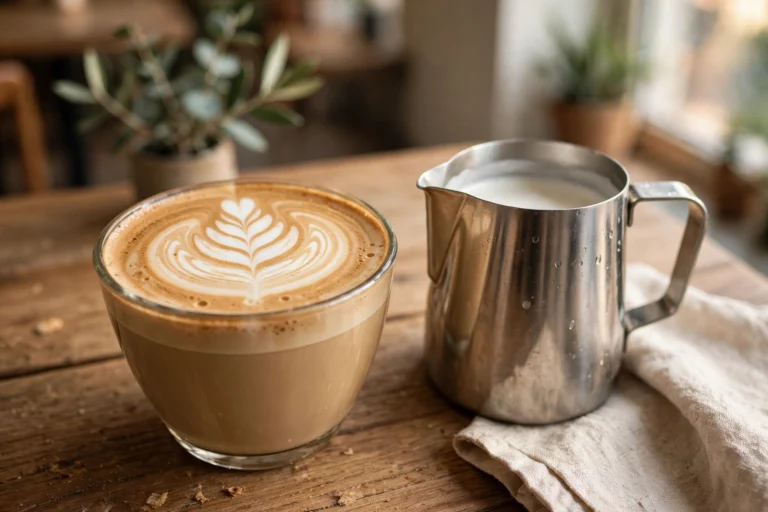
Brew as above, then add warm milk to taste. Because French press coffee is already full-bodied, it stands up well to milk without needing a stronger dose.
Iced French press coffee
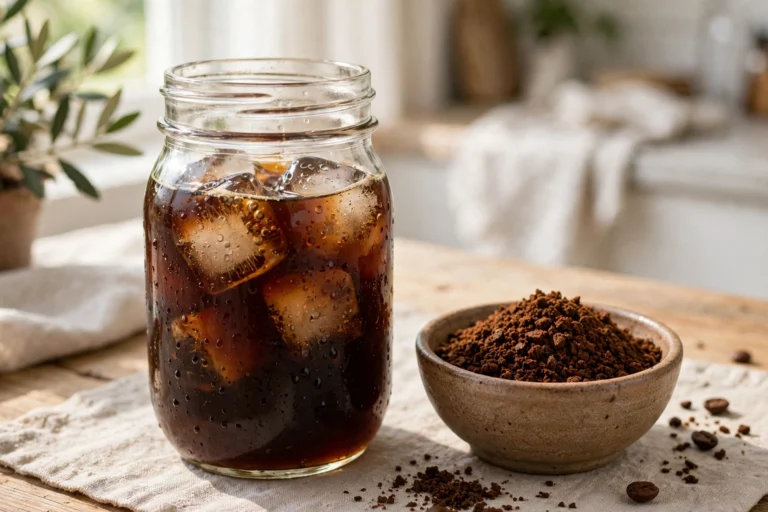
For iced coffee, brew a little stronger — about 1:13 — and pour the hot coffee over ice in a heatproof jug, then chill it. This is not the same as cold brew, which steeps in cold water for many hours; compare the two in how to make cold brew coffee at home.
Choosing beans and roast
Medium roasts are a good starting point: they keep enough sweetness and body without the sharper edge a very dark roast can add in immersion brewing. Fresh beans, ground just before brewing, matter more than chasing a single “best” origin.
Cleaning and Care
Take the plunger apart after brewing, rinse the mesh, and wash the beaker with warm soapy water. Let everything dry before reassembling it. A press that is rinsed but never properly cleaned will eventually taste stale, however good the beans are.
Frequently Asked Questions
How long should French press coffee steep?
Four minutes is a reliable starting point. Shorter steeps can taste thin, and much longer steeps usually add bitterness without adding useful sweetness.
Can I use pre-ground coffee?
Yes, if it is ground for French press or coarse. Fine, espresso-style grounds will pass through the mesh, over-extract, and make the cup muddy.
Should I stir after adding all the water?
One gentle stir is enough to wet all the grounds. Vigorous or repeated stirring can increase fine sediment and make the cup taste rougher.
Conclusion and Next Steps
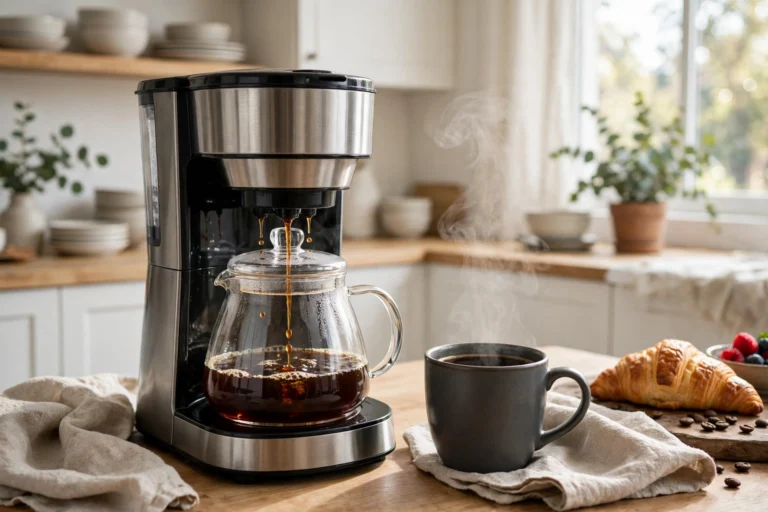
That is how to make French press coffee at home reliably: start with 30 g of coarse coffee, 450 ml of water at about 93°C, a 30-second bloom, and a 4-minute steep. Taste it, change one variable at a time, and keep notes for a few brews. If you want a lighter, cleaner cup next, try how to brew drip coffee at home, and if your grinder is holding you back, revisit the grinder guide above.
By Rizwan, Coffee Treasures.
Quick Checklist
Before you start, run through this checklist for how to make French press coffee at home: preheat the press, grind coarse, weigh at 1:15, bloom for 30 seconds, steep for 4 minutes, press slowly, and pour it all out. Once that routine is familiar, how to make French press coffee at home becomes a habit, not a guess.
Is French press coffee strong?
Strength depends mainly on dose, not on the method alone. When you learn how to make French press coffee at home using the 1:15 ratio above, the cup is full-bodied, but you can use a little less coffee for a lighter result.

One Comment