Best Espresso Machine Under $200: 5 Real Picks for 2026

You do not need to spend $500 to make real espresso at home. If you are hunting for the best espresso machine under $200, what you need is a machine with an actual pump, a steam wand that works, and — more than anything — fresh coffee going into the basket. Under $200, your options are limited, but they are far better than coffee snobs would have you believe.
This guide covers five machines that are genuinely worth buying in 2026, chosen for their specs, features, and consistently strong expert and owner feedback. Every machine below was verified as a real, currently sold product on its manufacturer’s official site. Prices move around, so treat any price here as “at time of writing” and check the current price before you buy.
What $200 actually buys you (a reality check)
Let’s be honest about the trade-offs, because every competitor roundup glosses over them:
- You get a real pump. Every pick here has a true pump (15-bar rated), not a steam toy. That means genuine espresso extraction with crema — not strong coffee pretending to be espresso.
- You get pressurized baskets. Budget machines use pressurized (dual-wall) portafilter baskets that forgive imperfect grinds and tamping. The trade-off: they cap how good the espresso can get. You will not outgrow them in year one, which is the point.
- You do not get temperature stability. A $150 machine cannot hold brew temperature like a $500 one. Your first shot of the morning will taste better than the rushed third.
- You do not get a fast steam-to-brew switch. Going from pulling a shot to steaming milk takes a minute or two on most of these. Plan your lattes accordingly.
If those trade-offs sound fine, keep reading. If they sound unacceptable, save for the $300 tier instead of buying twice.
How to choose: the 4 things that actually matter
1. Pump pressure: 15 bar rated is the baseline
Espresso brews at around 9 bar of pressure. Manufacturers advertise 15 or even 20 bar — that is the pump’s maximum rating, not the pressure at the coffee puck. Do not pay extra for “20 bar” thinking it means better espresso; it is marketing. What matters is that the machine has a real pump at all. All five picks do.
2. Boiler type: stainless steel beats aluminum
A stainless steel boiler lasts longer and is easier to descale than an aluminum thermoblock at this price. The De’Longhi picks below use stainless steel boilers, which is part of why they survive years of daily use.
3. Portafilter size and baskets
Most budget machines use 51 mm portafilters with pressurized baskets. That is fine — pressurized baskets are forgiving for beginners using pre-ground coffee. Just know that if you later buy a good grinder and want to chase better shots, a 51 mm pressurized system is where the upgrade path ends.
4. The grinder matters more than the machine
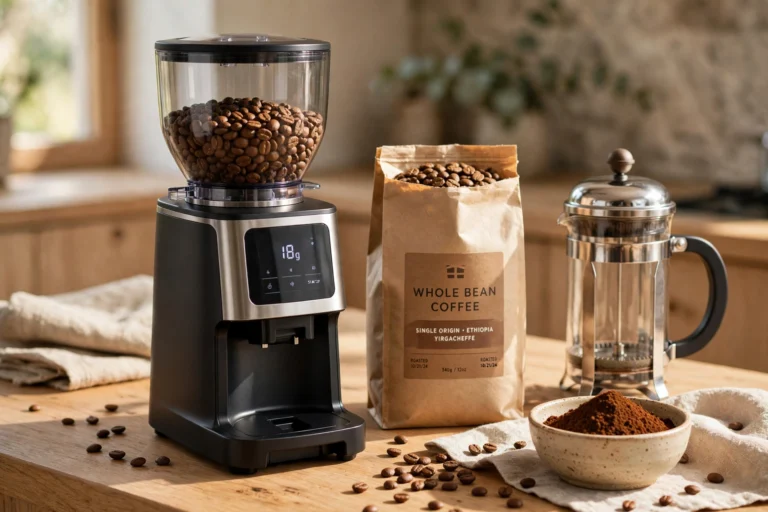
This is the section other roundups underplay. A $140 espresso machine paired with freshly ground coffee from a decent burr grinder will beat a $400 machine fed with stale pre-ground coffee, every single time. If your total budget is $200, consider spending around $100–$130 on the machine and putting the rest toward a grinder — or at minimum, buy whole beans and have them ground fresh. Our guide to the best coffee grinders explains what to look for.
The 5 best espresso machines under $200 for 2026
1. De’Longhi Stilosa EC260BK — Best overall for beginners
Who it’s for: Anyone making their first real espresso setup on a tight budget. If you want to learn the craft — dosing, tamping, steaming — without a big investment, start here.
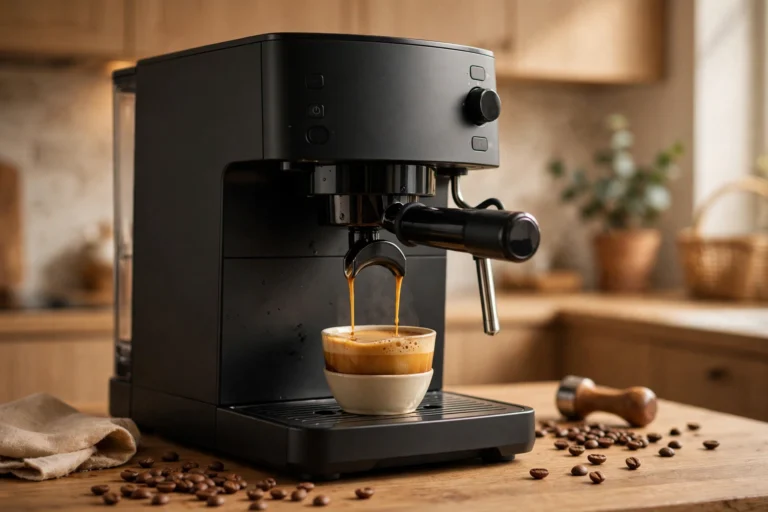
Key specs (verified on delonghi.com): 15-bar pump pressure; stainless steel boiler; manual milk frother (cappuccino system) for mixing steam and milk; two-tiered drip tray fitting cups up to 110 mm; compact footprint. Typically sells for around $100–$150 at time of writing — check the current price.
Why it wins: It is the consensus pick across nearly every budget roundup for a reason: a real 15-bar pump, a stainless steel boiler, and a working steam wand from a brand with decades of espresso heritage, at the lowest price in this guide. It is also the machine we know best — see our De’Longhi coffee machine guide for more on the brand’s lineup.
Honest drawbacks: Heat-up and the switch from brewing to steaming are slow. The included plastic tamper is flimsy — budget a few dollars for a metal one. Pressurized baskets mean you will eventually hit a quality ceiling.
Who should skip it: Anyone who mainly wants one-touch milk drinks with zero learning curve (see the Mr. Coffee pick below), or anyone who already owns a good grinder and wants room to grow — save for the $300 tier.
2. CASABREWS CM5418 — Best features for the money
Who it’s for: Beginners who want the most machine for the least money — and who like a pressure gauge to learn on.
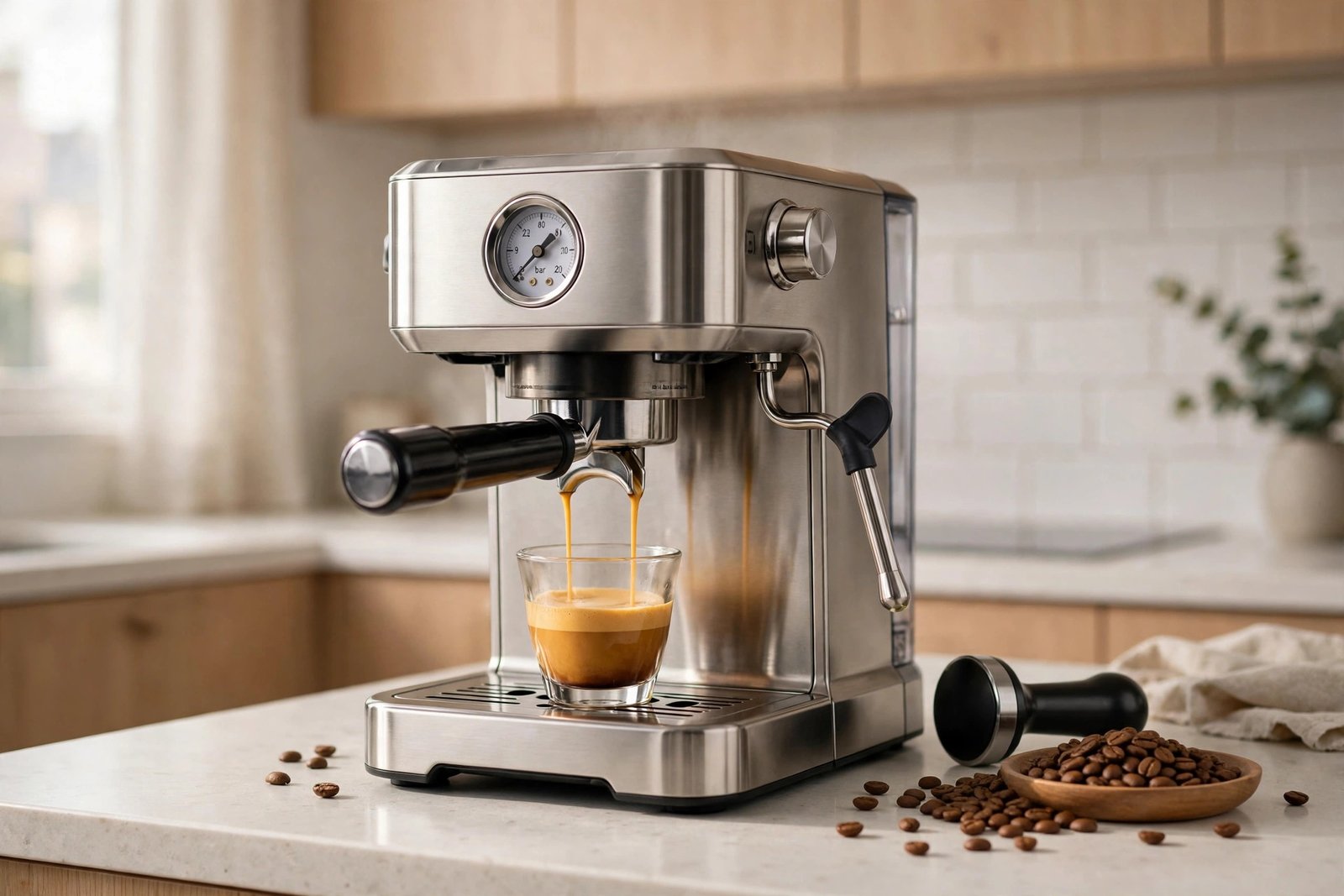
Key specs (verified on casabrews.com): 20-bar rated pump (remember: marketing number; it brews like the rest); 1350 W; 34 oz water tank; stainless steel housing; built-in pressure gauge; pre-infusion function; milk frother steam wand. Priced around $140 at time of writing, in stock on the official site.
Why it wins: No other machine at this price gives you a pressure gauge and pre-infusion — two features that genuinely help a beginner learn what a good extraction looks like. It is also one of the best-looking budget machines, with a stainless body that does not scream “cheap.”
Honest drawbacks: CASABREWS is a young brand without De’Longhi’s decades of service network; long-term parts availability is less certain. The 20-bar badge invites unrealistic expectations — judge it on the cup, not the number.
Who should skip it: Buyers who prioritize brand longevity and easy servicing over features per dollar — the Stilosa is the safer long-term bet.
3. Mr. Coffee Café Barista — Easiest milk drinks, one touch
Who it’s for: Latte and cappuccino lovers who want the drink, not the hobby. If the idea of manually steaming milk sounds like a chore, this is your pick.
Key specs (verified on mrcoffee.com): 15-bar pump; one-touch control panel with espresso, cappuccino, and latte selections; automatic milk frother with a removable milk reservoir; froth control knob (cappuccino setting = most froth, latte = least); 15-minute energy-saving sleep mode. Typically lands right around the $200 mark — check the current price before buying.
Why it wins: It is the only pick here that froths milk automatically. Press one button and it brews the espresso and froths the milk for you. For a household that just wants daily lattes with minimal fuss, that convenience is worth real money.
Honest drawbacks: Convenience costs control — you cannot texture milk the way a manual wand allows, so latte art is off the table. The milk reservoir needs cleaning after every use (it has a clean cycle; use it). It is also the bulkiest pick here.
Who should skip it: Anyone who wants to learn real espresso technique, or straight-espresso drinkers paying for an automatic frother they will never use.
4. Flair Classic — Best espresso quality, period
Who it’s for: The flavor-obsessed beginner who does not mind a hands-on ritual. If you care more about what is in the cup than about convenience, read carefully.
Key specs (verified on flairespresso.com): Fully manual lever press — no pump, no electricity; 6–9 bar of real brew pressure generated by the lever; integrated pressure gauge; two portafilters included (bottomless 2-in-1 and flow-control); up to 18 g dose yielding a 40 ml shot; cast aluminum and stainless steel build; 3-year warranty. Priced around $159 at time of writing, in stock.
Why it wins: A manual lever gives you something no $150 pump machine can: direct control over pressure and flow during the shot. In the cup, a well-pulled Flair shot beats every electric machine on this list. No electronics also means almost nothing to break.
Honest drawbacks: It is a ritual, not an appliance. You need a kettle for boiling water (it has no heater) and — critically — a good espresso-capable grinder; the bottomless portafilter is unforgiving of bad grinds. It makes one or two shots at a time, not a round for guests. No steam wand, so milk drinks need a separate frother.
Who should skip it: Anyone who wants push-button convenience, households making many milk drinks daily, or anyone without a capable grinder — without one, the Flair will frustrate you.
5. De’Longhi Dedica EC685 — Best upgrade if you catch it under $200
Who it’s for: Buyers who can stretch the budget and want the slimmest, fastest-heating machine on this list.
Key specs (verified on delonghi.com): 15-bar pump; Thermoblock heating for fast heat-up at a stable temperature; adjustable cappuccino system (steam or foam); only 15 cm wide — the slimmest machine here; two-tiered drip tray for cups up to 12 cm; illuminated button controls.
The price catch — read this: The Dedica usually sells above $200 (often around $230 at major retailers). It only belongs on this list when you find it on sale under $200, which happens regularly. Do not pay over $200 for it and call it a budget win — at full price, compare it against the $300 tier instead.
Why it wins (on sale): Thermoblock heat-up is genuinely fast — under a minute — and switching between brewing and steaming takes seconds rather than minutes. The slim 15 cm body fits kitchens where the Stilosa will not.
Honest drawbacks: At full price it breaks the budget premise of this article. The slim body means a smaller 1.1 L water tank. Like the Stilosa, it uses pressurized baskets.
Who should skip it: Anyone paying full retail — at that point you are in no-man’s-land between budget and mid-range.
Side-by-side comparison
| Machine | Best for | Pump | Key extras | Around |
|---|---|---|---|---|
| De’Longhi Stilosa EC260BK | Beginners on a budget | 15-bar | Stainless steel boiler, manual frother | $100–$150 |
| CASABREWS CM5418 | Most features per dollar | 20-bar rated | Pressure gauge, pre-infusion | ~$140 |
| Mr. Coffee Café Barista | One-touch milk drinks | 15-bar | Automatic milk frother | ~$200 |
| Flair Classic | Best-tasting shots | Manual lever, 6–9 bar | Pressure gauge, 2 portafilters | ~$159 |
| De’Longhi Dedica EC685 | Slim upgrade (on sale) | 15-bar | Thermoblock, 15 cm wide | Under $200 on sale |
Prices move — check the current price before buying.
The grinder warning (do not skip this)
Every machine above ships with pressurized baskets, which means they are forgiving of pre-ground coffee. “Forgiving” is not the same as “great.” The single biggest upgrade to any budget espresso setup is fresh coffee, ground just before brewing, at espresso fineness. A blade grinder cannot do this — the particles are too uneven and the pressurized basket can only hide so much.
You do not need a $200 grinder on day one. But know this going in: when your shots taste sour or bitter and you have tried everything, the grinder is the culprit nine times out of ten. Read our best coffee grinders guide before you spend the last of your budget on accessories.
Keeping a budget machine alive
Budget machines die early for one reason: scale. Descale every 2–3 months (more often with hard water) using the manufacturer’s recommended descaler — vinegar can damage internal seals. Backflush with water weekly if your machine allows it. Purge the steam wand before and after every use and wipe it immediately; dried milk is the fastest way to kill a frother. Empty and rinse the drip tray daily. None of this is difficult; all of it is skipped.
Frequently asked questions
What is the best espresso machine under $200?
For most beginners, the De’Longhi Stilosa: a real 15-bar pump, stainless steel boiler, and manual steam wand at the lowest price from an established brand. If you want more features per dollar, the CASABREWS CM5418 adds a pressure gauge and pre-infusion for around $140.
Can you actually make good espresso for under $200?
Yes — real espresso with crema, not imitation. What you give up versus $500 machines is temperature stability, speed switching between brewing and steaming, and upgrade headroom. Paired with fresh coffee and a decent grinder, a $150 machine makes genuinely enjoyable espresso.
Do I need a separate grinder with a budget espresso machine?
Strictly speaking, no — pressurized baskets are designed to work with pre-ground coffee. But a grinder is the highest-impact upgrade you can make later. If you buy pre-ground, buy small bags, use them within two weeks of opening, and store them airtight. Our coffee grinder guide covers budget options.
Pump machine vs. pod machine under $200?
A pump machine (like the Stilosa) gives you real espresso technique and cheaper per-cup costs with fresh beans. A pod machine is more convenient and more consistent with zero learning. Pods cost roughly $0.70–$1.00 per cup versus $0.25–$0.40 for beans — over a year of daily coffee, the pump machine pays for the difference.
How long do budget espresso machines last?
With descaling and basic care, 3–5 years of daily home use is realistic for the established brands here. What usually kills them is neglect — hard water scale and milk residue — not the price tag.
Is a 20-bar machine better than a 15-bar machine?
No. Espresso brews at around 9 bar; 15- and 20-bar figures are the pump’s maximum rating, not brewing pressure. Treat “20-bar” as marketing and compare machines on boiler, build, and features instead.
What does Reddit recommend for a cheap espresso machine?
The r/espresso community consensus for a first machine on a tight budget consistently lands on the De’Longhi Stilosa — it is the default starter recommendation because it is cheap, widely available, and uses standard 51 mm accessories. The same community’s other constant advice: spend your next dollars on a grinder before upgrading the machine. No forum replaces your own research, but when hundreds of owners independently name the same starter machine, it is worth noting.
Is there a good espresso machine under $200 with a built-in grinder?
Honestly, no. Built-in grinders at this price are blade grinders or low-quality burr sets that cannot grind fine or consistent enough for espresso — the very thing that matters most. Every pick in this guide assumes a separate grinder (or fresh pre-ground coffee to start). A $150 machine plus a $50–$80 hand grinder will outperform any $200 all-in-one, every time.
Nespresso vs a real espresso machine under $200 — which should I buy?
It depends on what you value. Nespresso wins on convenience and consistency: push a button, get the same cup every time, no learning curve. A pump machine like the Stilosa wins on taste ceiling, per-cup cost (roughly $0.25–$0.40 for beans vs $0.70–$1.00 per pod), and the ability to use any coffee you like. If you want to learn espresso, buy the pump machine. If you want coffee with zero effort, buy the Nespresso and skip this guide.
Is the Gevi espresso machine any good?
The Gevi Compact Espresso Machine (gevi.com, 20-bar rated, milk frother) is a legitimate budget contender — it sells direct for around $130 at the time of writing, undercutting the Stilosa, and independent testing labs have rated its price-to-performance among the best in the class. As an “also consider”: it is worth shortlisting if the price gap holds when you buy, but Gevi is a younger brand than De’Longhi with a thinner accessory ecosystem, so the Stilosa remains the safer default pick. Check the current price before deciding — budget-machine pricing moves constantly.
Are cheap espresso machines worth it?
If “worth it” means real espresso with crema for the price of two months of coffee-shop lattes — yes. If it means café-identical shots with zero effort — no machine under $200 does that. The honest middle: a $130–$180 pump machine plus fresh beans and a basic grinder makes genuinely enjoyable espresso, and it teaches you the technique that carries over when you eventually upgrade.
The bottom line
If you want the safe, proven starting point: De’Longhi Stilosa. If you want the most features per dollar: CASABREWS CM5418. If you want lattes at the touch of a button: Mr. Coffee Café Barista. If you want the best-tasting shot and enjoy the ritual: Flair Classic. And if you spot the Dedica EC685 on sale under $200, grab it.
Whichever you choose, put fresh coffee and a capable grinder at the top of the priority list — the machine is only half the equation. Then learn how to pull a proper espresso shot at home, and practice steaming milk for lattes with our step-by-step guides.