Ristretto Caffeine: How Strong Is a Ristretto, and How to Make One

Short answer: Ristretto caffeine is a tale of two measures. Per millilitre, a ristretto is stronger than a normal espresso, because the same coffee dose is dissolved in less water. Per cup, though, it usually carries a similar amount of caffeine, or a little less, because the drink is smaller and the extraction is cut…
Short answer: Ristretto caffeine is a tale of two measures. Per millilitre, a ristretto is stronger than a normal espresso, because the same coffee dose is dissolved in less water. Per cup, though, it usually carries a similar amount of caffeine, or a little less, because the drink is smaller and the extraction is cut short. This guide explains the difference, gives you a step-by-step ristretto method, and compares ristretto with espresso and lungo.
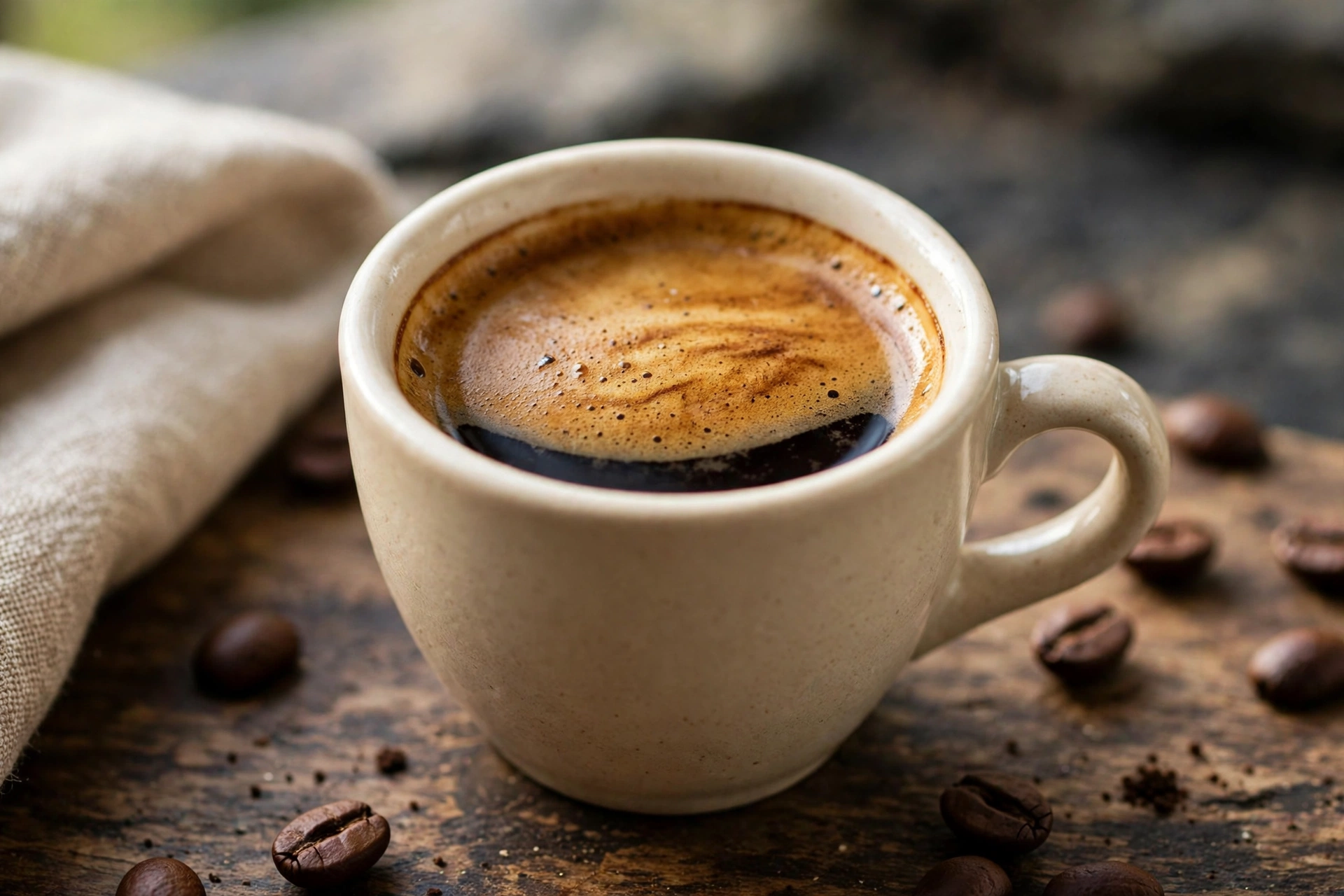
The word ristretto is Italian for restricted, and that one word tells you the whole method. You do not change the beans or the dose. You change how much water you let through, and when you stop. The result is a smaller, sweeter, heavier shot — the part of the extraction that most people enjoy most, without the thinner, more bitter tail. It is also why ristretto caffeine is one of the most asked-about questions in espresso.
What a Ristretto Actually Is
A ristretto uses the same dose as a normal espresso but stops the shot early, so less water passes through the coffee. The drink that results is short, syrupy, and intense, with the sweet, heavy flavours of the first part of the extraction and less of the bitterness that comes later. You may also see a blonde ristretto on cafe menus; it is the same restricted method made with a lighter roast.
Ristretto Caffeine: Stronger Per Sip, Not Per Cup
Here is the confusion, stated plainly. Caffeine dissolves early in the extraction, so the first part of the shot already carries most of the caffeine. Cutting the shot short therefore concentrates what is there into less liquid: each sip tastes stronger and is, millilitre for millilitre, stronger than a normal espresso.
But the cup as a whole is a different story. A double ristretto is only about 20 to 40 ml, against about 60 ml for a normal double, so there is simply less drink — and often less total caffeine — than a full double. Dose and bean still matter more than the name: a ristretto made with a larger dose can out-caffeinate a small normal espresso, and a light roast can differ from a dark one. The name alone never settles the number.
How to Make a Ristretto at Home: The Recipe
| Item | Starting point |
|---|---|
| Coffee dose | 18 g, finely ground |
| Espresso out | 20-40 ml (double ristretto) |
| Grind | Fine, like table salt |
| Cup | Small, preheated |
| Cut-off point | When the stream turns pale and blond |
| Yield | 1 double ristretto |
The 20 to 40 ml range for a double ristretto comes from Crema Coffee Garage’s ristretto guide, and the fine grind, warmed cup, and 20 to 30 second espresso window follow the National Coffee Association’s espresso guidance. Start near the middle of the range, about 30 ml, and move up or down by taste: less water means sweeter and heavier, more water means closer to a normal espresso.
How to Make a Ristretto at Home in 7 Steps
- Weigh 18 grams of fresh beans and grind them fine, like table salt. A consistent grind matters more than a fancy tamper.
- Preheat a small cup with hot water, then empty it. A cold cup chills a small drink fast.
- Dose the double basket, level the grounds, and tamp firmly and evenly.
- Lock in the portafilter and start the shot at once, with the scale and cup already in place.
- Watch the colour: the stream should start dark and syrupy, then turn golden with tiger striping.
- Stop as soon as the stream turns pale and blond, at about 20 to 40 ml for a double. Do not let it run thin.
- Stir briefly and drink at once, or pour it over milk if it is the base for a short milk drink.
Ristretto vs Espresso vs Lungo
| Drink | Method | Result |
|---|---|---|
| Ristretto | Same dose, water cut short | 20-40 ml double, sweetest and densest |
| Espresso | Same dose, full 1:2 extraction | About 60 ml double, balanced |
| Lungo | Same dose, extra water | Longer, more diluted, more bitter notes |
The three drinks are one dose pulled three ways. Shorten the water and you get sweetness and body; run the full ratio and you get balance; push extra water through and you get length at the cost of bitterness. When people ask about ristretto caffeine, they usually mean the first row of this table — the sweet, dense shot — rather than the other two.
Troubleshooting: What Went Wrong and What to Change
| Problem | Likely cause | Try this first |
|---|---|---|
| Sour or sharp | Cut off too early or grind too coarse | Let a little more water through, or grind finer |
| Bitter and harsh | Ran too long | Stop at the first sign of paling |
| Thin and watery | Dose too low or grind too coarse | Check the 18 g dose, then grind finer |
| No sweetness | Beans too dark or stale | Try fresher beans, or a lighter roast |
| Uneven flow or spurting | Channelling | Level and tamp evenly, then retry |
| Tastes like a normal espresso | Output too high | Cut the output back toward 20 to 30 ml |
Change one thing at a time. If you change the grind, the dose, and the cut-off point together, you will not know which change fixed the shot. Work through this table in order, and give each change two or three shots before you judge it.
What Other Guides Say About Ristretto Caffeine
Crema Coffee Garage puts the idea in one line: “A ristretto is an espresso that has been restricted or limited in some way” — restricted so that you capture the tastiest part of the shot and leave bitterness behind. The guide describes three ways to do it: the common cut-off method, where a normally dosed basket is stopped before its natural end; a selective method that keeps only the middle of the shot; and a syrupy method that restricts the water flow with a larger dose.
The same guide notes that the syrupy version is likely lower in total caffeine and dissolved solids, because it is a much smaller drink — the same per-cup logic as above. The National Coffee Association’s guidance supplies the base method: a 1:2 coffee-to-espresso ratio, a 20 to 30 second brew time, a fine grind, and a warmed cup. Ristretto is what happens when you deliberately stop short of that full ratio.
Frequently Asked Questions
Does a ristretto have more caffeine than espresso?
Per millilitre, yes — the same dose in less water is more concentrated. Per cup, usually no: a double ristretto is only 20 to 40 ml, so its total is similar to, or a little below, a full 60 ml double. Dose matters more than the name.
Is a ristretto stronger than an espresso?
It tastes stronger, because it is denser and sweeter, with less dilution. Strength of flavour and total caffeine are different things, and a ristretto wins the first while roughly tying the second. If you want the numbers across drinks, see our guide to caffeine in coffee, tea, and energy drinks.
How do I make a ristretto at home?
Use your normal double dose, about 18 grams, ground fine, and stop the shot early — around 20 to 40 ml for a double — as soon as the stream turns pale. Start with the recipe above, then adjust the cut-off point by taste rather than by the clock.
A Final Note
A ristretto caffeine question is really a question about what “strong” means. If strong means flavour in each sip, the ristretto wins. If it means total caffeine in the cup, the smaller drink roughly ties or loses. Knowing which one you mean makes the choice easy — and makes the method easy too, because all you are doing is stopping sooner.
From here, the same 1:2 method sits behind our espresso guide, and the same shot becomes the base for a latte, a cappuccino, or an americano. Our moka pot guide uses a different brewer for a similar strong cup, and if you want the numbers across drinks, our caffeine comparison and our decaf coffee guide are the next stops.
Sources
- Crema Coffee Garage, ristretto caffeine guide — three methods, the 20 to 40 ml range for a double, and the syrupy method’s lower total caffeine and dissolved solids; research described with the University of Newcastle’s Chemistry department.
- National Coffee Association, espresso guidance — 1:2 coffee-to-espresso ratio, 20 to 30 second brew time, fine grind, warmed cup.