
How to Make Cappuccino at Home: 7 Easy Steps to a Better Cup

Learning how to make cappuccino at home is easier than most people expect. You do not need a cafe or a fancy machine to get a good result. You need a strong coffee base, cold milk, and a little patience while you froth. This guide shows you the classic method with an espresso machine, a…
Learning how to make cappuccino at home is easier than most people expect. You do not need a cafe or a fancy machine to get a good result. You need a strong coffee base, cold milk, and a little patience while you froth. This guide shows you the classic method with an espresso machine, a simpler method without one, and the fixes for the most common mistakes, so your first homemade cappuccino already tastes balanced.
What Is a Cappuccino?
A cappuccino is a small, strong milk coffee topped with a thick cap of foam. It is traditionally described in equal thirds: one part espresso, one part steamed milk, and one part thick foam. That thick foam is what sets a cappuccino apart. A latte uses much more steamed milk and only a thin layer of foam, so it tastes milkier and softer. A cappuccino keeps the coffee flavor front and center, with the milk there to soften and sweeten it, not to bury it.
At home, do not worry about measuring thirds exactly. Use one espresso and a small amount of milk, then let the foam build the top layer of the cup. A 5 to 6 ounce cup is ideal. A large mug makes the drink hard to balance, because you end up adding far too much milk to fill it.
What You Need to Make Cappuccino at Home
- Fresh coffee beans, ground fine for espresso, or a strong moka pot brew
- An espresso machine with a steam wand, or a moka pot plus a French press for frothing
- Cold whole milk, or a barista-style plant milk that froths well
- A small metal milk pitcher
- A 5 to 6 ounce cappuccino cup, warmed with hot water first
Start with cold milk straight from the fridge. Cold milk gives you more time to build smooth foam before it gets hot. Whole milk is the easiest choice for beginners because it froths into a stable, creamy foam. If you use a plant milk, choose one made for coffee, since regular plant milks often split or stay thin when heated.
How to Make Cappuccino at Home, Step by Step
- Warm your cup. Fill it with hot water, let it sit for a minute, then empty it. A warm cup keeps the cappuccino hot while you froth.
- Brew one espresso directly into the warm cup. Aim for a single shot, about 23 to 25 ml, with a rich, reddish-brown crema on top.
- Pour about 85 ml of cold milk into a metal pitcher, filling it no more than halfway. Milk expands as it foams, so a full pitcher will spill.
- Steam the milk. Keep the steam wand tip just below the surface at first, so air goes in and the milk starts to grow. Then lower the wand a little to heat the milk through, swirling it into a smooth whirlpool.
- Stop at 60 to 65 degrees Celsius. If you do not have a thermometer, stop when the pitcher feels hot to hold, but not burning. Milk that is too hot tastes flat and scorched.
- Compact the foam. Swirl the pitcher gently and tap it once or twice on the counter. This pops large bubbles and leaves a shiny, smooth foam.
- Pour slowly into the center of the espresso, then lift the pitcher a little and finish with the thick foam on top. Dust with cocoa only if you like it, and serve right away.
The amounts and temperature above follow the home recipe in illy’s cappuccino guide, which uses one espresso of 23 to 25 ml and 85 ml of fresh milk, steamed to 60 to 65 degrees Celsius, with the pitcher swirled and tapped to compact the foam before pouring. That guide is a useful check if your foam keeps coming out thin or bubbly.
How to Make Cappuccino at Home Without an Espresso Machine
You can still learn how to make cappuccino at home without an espresso machine. Brew a strong coffee base in a moka pot, or brew a double-strength coffee in a French press. For the milk, heat about 85 ml of milk in a small pan until it is hot but not boiling, then pour it into a clean French press. Pump the plunger up and down quickly for about 30 seconds until the milk doubles in volume and turns thick and foamy. Pour the hot milk into your strong coffee, spoon the thickest foam on top, and serve at once.
It will not taste exactly like an espresso-based cappuccino, but the balance of strong coffee and thick foam will be right.
A handheld milk frother also works. Heat the milk first, then froth it in a tall jug until it thickens. Keep the frother near the surface at the start to add air, then move it deeper to mix the foam through. Whatever tool you use, the goal is the same: small, even bubbles, not big, soapy ones.
Cappuccino vs Latte: What Is the Difference?
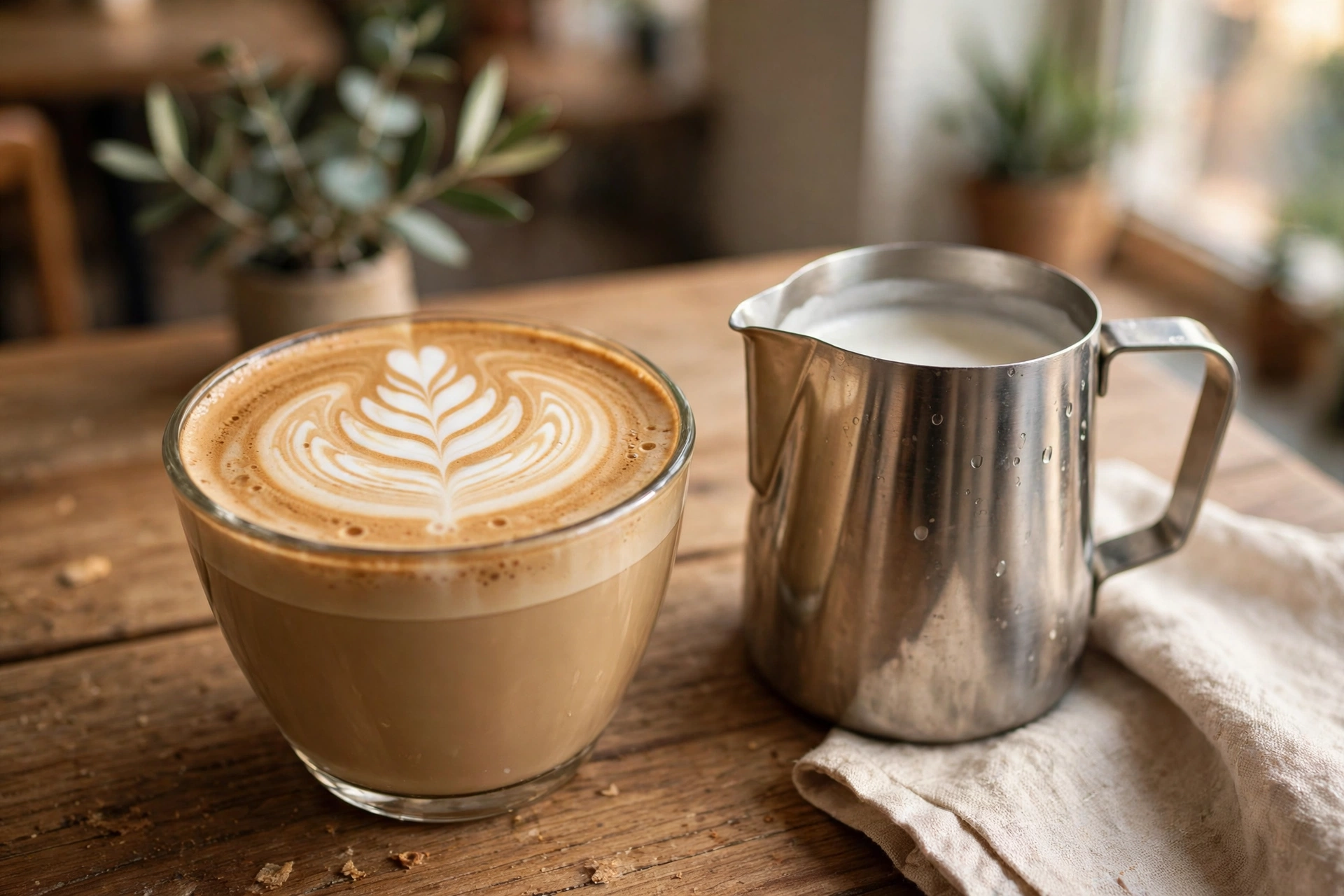
The main difference between a cappuccino and a latte is the amount of milk and foam. A cappuccino is smaller, stronger, and foamier. A latte is larger, milkier, and smoother, with only a thin foam layer. If you love the taste of coffee and want a drink that still feels light, choose a cappuccino. If you prefer a gentle, milky coffee, choose a latte. Our latte guide shows the milkier method step by step, so you can compare the two side by side.
Common Cappuccino Mistakes
Milk that is too hot. Overheated milk tastes scorched and loses its sweetness. Stop at 60 to 65 degrees Celsius, and remember that the pitcher keeps heating for a few seconds after you stop steaming.
Big, bubbly foam. If your foam looks like soap bubbles, you added air too fast or for too long. Start with the wand tip just at the surface, add air only until the milk grows by about a third, then heat it through without adding more air. Swirling and tapping the pitcher helps too.
A weak coffee base. A cappuccino made with weak, watery coffee will taste like warm milk no matter how good the foam is. Use fresh beans, grind just before brewing, and keep the shot short and strong. For help choosing beans, see our guide to choosing fresh coffee beans, and for keeping them fresh, see our guide to storing coffee beans.
Frequently Asked Questions
Can I make a cappuccino with instant coffee?
Yes, in a pinch. Dissolve two teaspoons of instant coffee in a small amount of hot water to make a strong base, then add hot frothed milk and foam as above. It will not have espresso crema, but it works well when you are short on time or equipment.
What milk is best for cappuccino foam?
Cold whole milk is the easiest choice, because its fat and protein build stable foam. Skim milk can make a lot of foam, but it tends to be dry and bubbly. Barista-style oat milk is the most reliable plant option, but check the carton, since not every oat milk froths well.
How do I get thick foam without a steam wand?
Heat the milk until hot but not boiling, then froth it in a French press by pumping the plunger quickly, or use a handheld frother in a tall jug. In both cases, add air at the surface first, then mix the foam through, and spoon the thickest foam on top of the drink.
How to Make Cappuccino at Home: A Simple Closing Check
Finish every cappuccino with three checks: the coffee base is strong, not watery; the milk is hot but not scorched, around 60 to 65 degrees Celsius; and the foam cap is thick, smooth, and holds its shape for a minute. If one check fails, change only that step next time. Once this method feels easy, try the same care with milk in our latte guide, or try a different brew in our French press coffee guide. If you are shopping for equipment, our best coffee grinders guide and our De’Longhi coffee machines guide will help you choose, and learning how to make cappuccino at home gets much easier once the base coffee and the foam are both right.