How to Make Espresso at Home: 7 Steps to a Better Double Shot

Short answer: To learn how to make espresso at home, start with a standard double shot: 18 grams of finely ground coffee, 36 grams of espresso out, in 20 to 30 seconds. That 1:2 ratio is the reliable starting point the National Coffee Association (NCA) gives for espresso, and you adjust grind and time from…
Short answer: To learn how to make espresso at home, start with a standard double shot: 18 grams of finely ground coffee, 36 grams of espresso out, in 20 to 30 seconds. That 1:2 ratio is the reliable starting point the National Coffee Association (NCA) gives for espresso, and you adjust grind and time from there — not by guessing.
This guide is about home espresso in general. It is not tied to one brand or machine. If you want a brand-specific walkthrough, read our Lavazza espresso guide separately; here, the focus is the shot itself, the method, and how to fix it when it tastes wrong.
What Espresso Actually Is
Espresso is a method, not a bean or a roast. The NCA puts it plainly: “Espresso is not a type of coffee bean or even a roast. It’s a coffee drink, named after the method used to brew it.” Hot, near-boiling water is forced through finely ground coffee under pressure, producing a small, concentrated drink topped with crema, the golden-brown foam layer.
That concentration is why a small shot can taste so intense. It is also why small errors show up fast: a grind that is slightly too fine, a dose that is slightly uneven, or a shot that runs too long can turn a sweet, balanced cup bitter or sour.
What You Need for Home Espresso
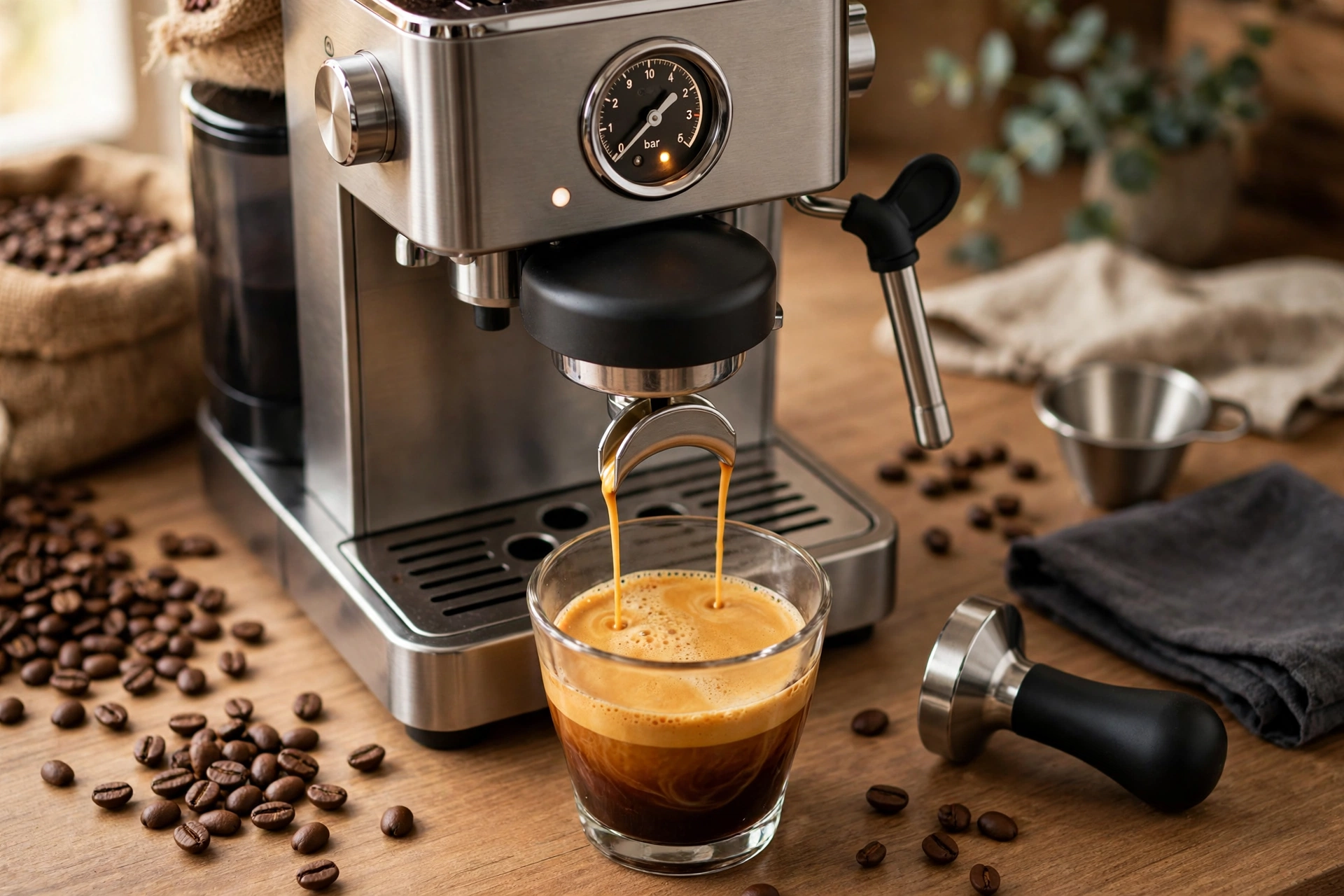
You do not need a cafe setup to begin, but you do need the right basics. A pump-driven home espresso machine, a burr grinder, a scale, a tamper, and a preheated cup cover most home setups. The NCA recommends a burr grinder over a blade grinder because it crushes beans more evenly and is less likely to overheat the grounds.
If you are still deciding whether to learn how to make espresso at home, start with the machine you already own and a fresh bag of beans.
When learning how to make espresso at home, use fresh beans and grind close to brewing time. Use cold, filtered water if you can; the NCA advises avoiding distilled or softened water for espresso. Weighing your coffee and your shot, rather than judging by eye, is what makes your results repeatable from day to day.
The Standard Home Espresso Recipe
| Item | Starting point |
|---|---|
| Dry coffee (double shot) | 18 grams |
| Espresso out | 36 grams |
| Ratio | 1:2 |
| Time | 20 to 30 seconds |
| Grind | Fine, about like table salt |
| Water | Cold and filtered, if possible |
How to Make Espresso at Home in 7 Steps
- Warm the cup and the machine. Run the machine through its warm-up cycle and warm your cup. A cold cup cools a small shot quickly, and a machine that is not fully warm will brew unevenly.
- Weigh and grind. Weigh 18 grams of beans and grind them fine, close to table-salt texture. Grind fresh for each shot when you can.
- Dose and distribute. Put the grounds in the portafilter basket and spread them evenly. Break up clumps with a light stir or tap, then level the surface before tamping.
- Tamp level and firm. Press straight down with even pressure, keeping the tamper level. An uneven tamp lets water find an easy path through one side, which is a common cause of sour, thin shots.
- Lock in and brew. Clear the group head briefly if your machine allows it, lock the portafilter in place, and start the shot at once. Put your cup and scale under the spouts.
- Watch weight and time. Aim for 36 grams out in 20 to 30 seconds. Watch the stream: it should start dark and syrupy, then lighten to a warm, honey-like color near the end.
- Stop, taste, and note it. Stop at your target weight, stir the shot lightly if you like, and taste it while it is fresh. Write down dose, grind setting, time, and taste so the next shot is an adjustment, not a guess.
How to Dial In Your Shot Without Overthinking It
Dialing in simply means adjusting until the shot tastes balanced. Use time as your first clue. If 36 grams arrives much faster than 20 seconds, the water is moving through too easily, so grind finer. If it takes much longer than 30 seconds, grind a little coarser.
Change the grind in small steps and keep the dose at 18 grams while you learn how to make espresso at home. That is the practical core of how to make espresso at home: one change, one taste, one note.
Taste gives the second clue. The NCA notes that coffee that tastes bitter or sour may be ground too fine and over-extracted, while coffee that tastes flat or watery may be ground too coarse and under-extracted. Use time plus taste together: a very fast shot that tastes sour usually needs a finer grind; a very slow shot that tastes bitter usually needs a coarser grind.
If the shot is close but a little sharp, try a slightly longer ratio, such as 18 grams in to 40 grams out, before you change anything else. If it is close but a little thin, try stopping a few grams earlier. Small moves protect the sweetness in the middle of the shot.
Troubleshooting: What Went Wrong and What to Change
| Problem | Likely cause | Try this first |
|---|---|---|
| Shot runs too fast, tastes sour or sharp | Grind too coarse, dose too low, or uneven tamp | Grind finer, check the 18-gram dose, tamp level |
| Shot drips slowly, tastes bitter or harsh | Grind too fine or too much coffee | Grind a little coarser, keep dose steady |
| Thin body, little crema | Stale beans, coarse grind, or cold cup | Use fresher beans, grind finer, preheat the cup |
| Channeling or spraying from one spout | Uneven distribution or tamp | Distribute evenly, tamp straight and level |
| Good first sips, bitter finish | Shot ran too long | Stop at 36 grams and taste again |
Espresso, Moka Pot, and Drip: How They Compare
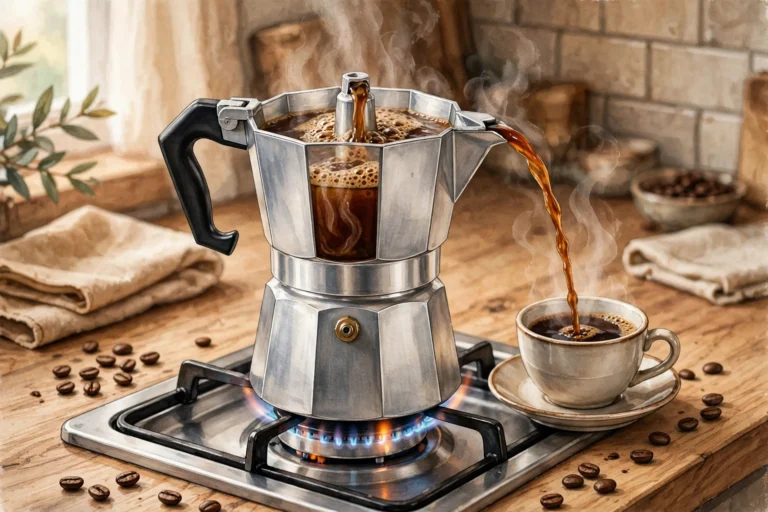
Home brewers often ask whether a moka pot is “espresso.” It is not, even though it makes a strong, concentrated cup. A moka pot uses steam pressure on a stovetop, while a true espresso machine uses pump pressure. That difference matters for texture: espresso can produce a fuller crema and a more syrupy body, while moka pot coffee is bold and rich but brewed differently.
For a stovetop method, see our guide to how to make moka pot coffee at home, and compare it with how to brew drip coffee at home for a lighter, larger cup.
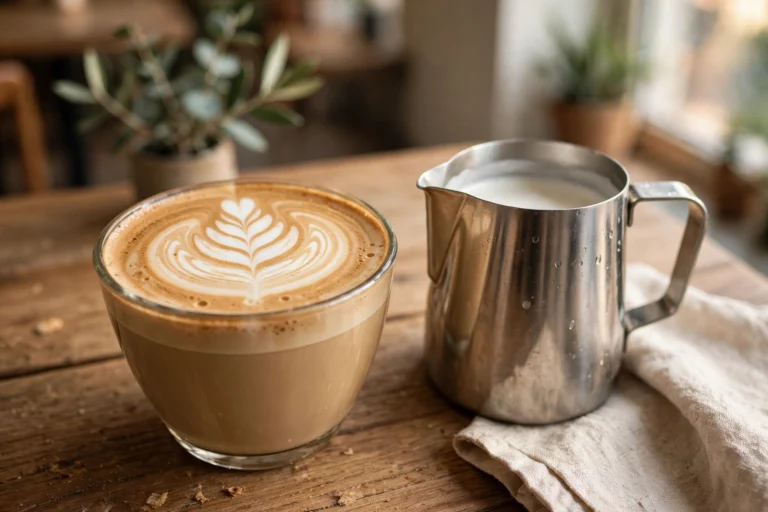
Espresso is also the base for many milk drinks. Once your double shot is steady, the same shot works for a latte at home or a cappuccino at home, or an Americano at home. When learning how to make espresso at home, fix the shot first; milk will not rescue a shot that is badly over- or under-extracted.
For equipment choices, our best coffee grinders guide explains burr versus blade, and how to choose fresh coffee beans helps you pick beans that will hold up in a small, intense shot.
Frequently Asked Questions
Do I need a scale to make espresso at home?
No, but a scale makes learning much faster. Without one, you are guessing dose and yield, which are the two numbers that explain most good or bad shots. A small kitchen scale is enough to start.
Is 18 grams in and 36 grams out the only correct recipe?
No. It is a widely used starting point for a double shot, consistent with the NCA 1:2 ratio. Single baskets, different beans, and personal taste may lead you to a shorter or longer shot, but change one variable at a time.
Why does my espresso taste sour even when I follow the recipe?
When learning how to make espresso at home, sourness often points to under-extraction: water moved through too quickly or the grind was too coarse for your beans. Try a finer grind, check that the tamp is level, and make sure the machine is fully warm before you brew.
A Final Note
Good home espresso is less about expensive gear and more about repeatable habits: weigh the dose, grind fresh, tamp level, and stop at a target weight. Learn how to make espresso at home by tasting one change at a time, and your shots will become steadier week by week. Keep the NCA ratio as your anchor, and let taste, not fashion, decide your final recipe.
Sources
- National Coffee Association — Espresso (1:2 ratio, 20–30 seconds, fine grind, filtered water)
- CoffeeGeek — How to Make an Americano (for the espresso base used in diluted drinks)

3 Comments