Best Pour Over Coffee Maker for Beginners (2026 Guide)

If you are looking for the best pour over coffee maker for beginners, the short answer is this: start with the Kalita Wave if you want the most forgiving first dripper, the Melitta if you want the cheapest possible start, or the Clever Dripper if you want good coffee with almost no technique at all. Buy the Hario V60 when you can pour steadily and want the most room to grow. This guide explains why, compares the five best beginner drippers side by side, and walks you through your very first brew, step by step.
Pour over has a reputation for being fussy, and the reputation is half true. The wrong dripper punishes every wobble of your hand. The right one forgives it. That is the whole secret of choosing a first pour over coffee maker: pick the dripper that is hardest to mess up, not the one the experts love most.
Best Pour Over Coffee Maker for Beginners: Quick Picks
| Dripper | Shape | Filters | Best for |
|---|---|---|---|
| Kalita Wave 185 | Flat bottom | Kalita Wave 185 paper filters | Most forgiving first dripper |
| Melitta Pour-Over #2 | Wedge cone | Standard #2 paper filters | Cheapest possible start |
| Clever Dripper | Cone with a valve | Standard #4 paper filters | Easiest coffee, almost no technique |
| Hario V60 02 | Cone with spiral ribs | Hario V60 02 paper filters | The one to grow into |
| Chemex 6-Cup | Hourglass, thick filter | Chemex bonded paper filters | Brewing for two or more people |
Prices change often, so treat every price in this guide as approximate — check the current price before you buy. The Hario V60 costs about $10–$30 depending on the material, and the plastic version, at about $10, brews identically to the ceramic one. The Melitta is the cheapest start of all. The Kalita Wave costs more than the Melitta and less than a good kettle. Filter costs add up too: Kalita Wave 185 filters run about $17 for 100, and the smaller 155 size about $10 for 100.
What Makes a Dripper Beginner-Friendly?
Three things decide how forgiving a dripper is, and none of them is the brand name.
Flat bottom beats cone for beginners. A flat-bottom dripper like the Kalita Wave spreads the coffee bed evenly, so the water drains at a steady pace even if your pour is uneven. A cone dripper like the V60 concentrates the bed into a point, so an uneven pour shows up in the cup immediately. That is why every “best for beginners” list puts a flat-bottom dripper first.
Small holes slow the water down. The Kalita Wave has three small holes in its base; the Melitta has one small hole. Small holes hold the water back, which keeps the brew time steady even when your pouring is not. The V60 has one large hole, which is exactly why experts love it — it gives them control — and exactly why beginners struggle with it.
Paper filters forgive; steel mesh does not. Paper filters trap fine grounds and oils, which hides small mistakes and gives a clean cup. A steel-mesh filter, like the Bodum’s, lets everything through, so a bad grind or a rushed pour lands straight in your cup. Paper costs a little per brew, but for a beginner it is cheap insurance.
If you remember one rule, make it this: the more the dripper controls the flow for you, the less technique you need. That is the ranking this guide uses.
1. Kalita Wave 185: The Most Forgiving First Dripper
The Kalita Wave is the safest first pour over coffee maker for a beginner, and almost every guide that has actually brewed with it says the same. Its flat bottom and three small drain holes keep the water level steady, so the coffee extracts evenly even when your pour wanders. The result is a good cup while you are still learning, instead of a good cup only after you have learned.
The 185 size brews 1 to 4 cups, which covers a solo morning and a second cup for someone else. It comes in stainless steel, ceramic, and glass; the steel version is the practical choice, because it does not break and it holds heat well. It takes Kalita Wave 185 paper filters, which cost about $17 for 100 — roughly 17 cents a brew, and the smaller 155 filters run about $10 for 100.
The trade-off is real: the Wave gives you less control than a V60, so an experienced brewer can coax more clarity out of a V60. But control is only useful once you have the basics down. For a first dripper, forgiveness beats control, and the Wave is the most forgiving dripper you can buy.
2. Melitta Pour-Over #2: The Cheapest Start
The Melitta is the cheapest way to find out whether pour over is for you. It is a simple plastic wedge cone that sits on top of a mug, and it uses standard #2 cone paper filters that cost almost nothing and are sold in every supermarket. There is no learning curve to speak of: put the filter in, add coffee, pour water, and you get coffee.
The coffee it makes is good, not exceptional. The wedge shape and single small hole make it predictable and easy, but the same design limits how much clarity you can get out of a great bean. That is a fair trade at this price. If you brew one cup at a time and you want pour over with the smallest possible investment, start here. If you love it, the money you saved buys your next dripper.
3. Clever Dripper: The Easiest Coffee, Almost No Technique
The Clever Dripper is the cheat code of this list. It looks like a pour over cone, but it has a valve in the base, so it works like a French press first and a pour over second: you pour all the water in at once, let the coffee steep, then set it on your cup and the valve opens and the coffee drains through the filter. No gooseneck kettle, no slow circles, no technique at all.
That makes it the easiest pour over coffee maker for a true beginner — easier than the Kalita Wave, because there is no pouring technique to learn. The cup is clean like a pour over but fuller-bodied, closer to a French press, because the coffee steeps before it drains. The catch is the same as its strength: you learn nothing about pouring, so when you eventually move to a V60, you start the technique from zero. If you want great coffee now and do not care about learning the craft, the Clever Dripper is the honest pick.
4. Hario V60 02: The One to Grow Into
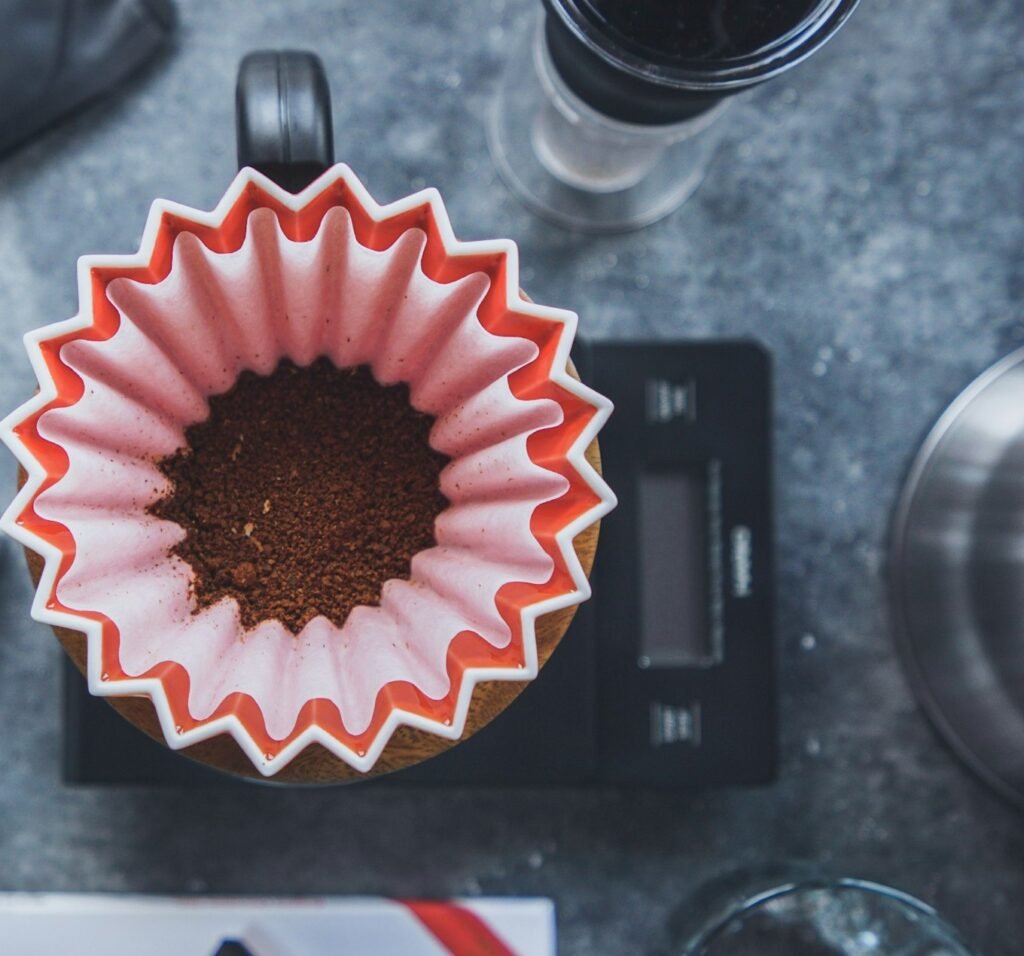
The Hario V60 is the most famous pour over dripper in the world, and the one most beginners buy first — usually too soon. Its cone shape, spiral ribs, and single large hole give you complete control over the flow rate, which is why it is the dripper of choice for professionals and the winner of six out of ten World Brewers Cup championships. But control is a double-edged tool: the same large hole that lets an expert fine-tune a brew lets a beginner’s uneven pour run straight through, and the result is a sour or weak cup.
Buy the V60 when you can pour steadily and you want the most room to grow. The plastic version costs about $10 and brews identically to the ceramic one, which runs higher — plastic is also nearly indestructible, so it is the smart first V60. The 02 size brews 1 to 4 cups. Use Hario V60 02 paper filters, and rinse the filter with hot water before brewing. The V60 was released in 2005, and Hario’s own page for the dripper explains the cone shape, spiral ribs, and single-hole design that make it work — see Hario’s official V60 page.
The V60 is not a bad first dripper; it is a demanding one. If you buy it first, pair it with the troubleshooting guide linked below, because your first few brews will need it.
5. Chemex 6-Cup: Best for Brewing for Others
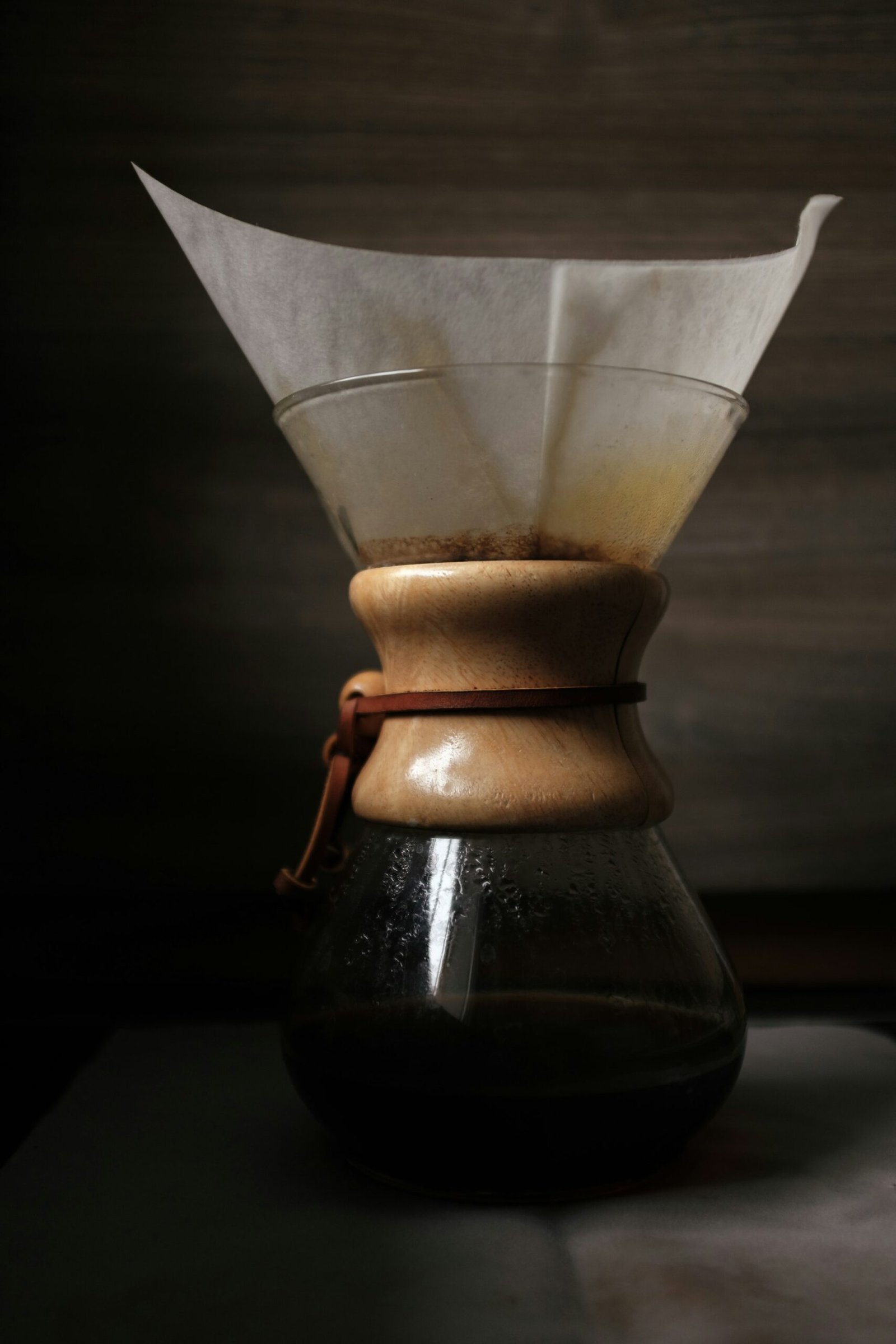
The Chemex is the only dripper on this list built for more than one person. Its hourglass glass carafe brews 6 cups at once, and its thick bonded paper filters produce the cleanest cup of any pour over — so clean that some people find it almost tea-like. It looks beautiful on a counter, which is a genuine part of its appeal.
For a beginner, the Chemex is a second dripper, not a first. The thick filter slows the drawdown, so grind and pour matter more, and the glass carafe is fragile and expensive to replace. But if you usually brew for two or more people, it is the only pick here that does the job in one brew. Start with the 6-cup size, use a medium-coarse grind, and expect a lighter, cleaner cup than the Kalita Wave gives.
Your First Brew, Step by Step
You do not need a new dripper to practice this — the steps below work for any of the five picks, with the grind and timing adjusted per dripper.
1. Measure the coffee and water. Start with a 1:16 ratio: 15 g of coffee (about 3 level tablespoons) for every 8 oz (240 ml) of water. For a full 16 oz mug, use 30 g and 480 ml. Weighing is more accurate than spooning, and the full chart is in our coffee to water ratio chart.
2. Grind medium-fine. Aim for the texture of table salt for a V60 or Kalita Wave, and a touch coarser — like coarse sand — for a Chemex. Too fine and the brew runs slow and bitter; too coarse and it runs fast and sour. See our coffee grind size chart for the full range.
3. Heat the water to 200–205°F (93–96°C). That is just off the boil. Let a kettle sit for 30–45 seconds after boiling, or use a variable-temperature kettle set to 205°F. Water straight off a rolling boil scalds the grounds and turns the cup bitter.
4. Rinse the paper filter. Set the filter in the dripper, pour hot water through it, and throw the rinse water away. This removes the papery taste and warms the dripper and cup at the same time.
5. Bloom the coffee. Put the grounds in, pour in just enough water to wet them — about twice the coffee’s weight, so about 30 g of water for 15 g of coffee — and wait 30–45 seconds. The grounds will bubble and swell. This releases trapped gas and sets up an even extraction.
6. Pour in slow circles. Pour the remaining water in slow, steady circles, starting from the center and spiraling outward, then back in. Keep the water level below the rim. You do not need a gooseneck kettle for this — a steady hand and a normal kettle with a narrow spout will do — but a gooseneck makes it far easier.
7. Watch the clock. A full brew should take about 2:30 to 3:30 from the first pour to the last drip. Faster than that and the cup will taste sour and weak; slower and it will taste bitter and dry. If the time is off, change the grind first — coarser to speed up, finer to slow down — and change only one thing at a time.
That is the whole method. The dripper you choose changes how forgiving each step is, but the steps themselves never change.
Do You Need a Gooseneck Kettle?
No — not to start. A gooseneck kettle gives you a slow, precise pour, which matters most for the V60 and least for the Clever Dripper, where you pour all the water in at once. If you already own a normal kettle, use it: pour slowly, keep the spout close to the grounds, and you will make good coffee.
If you decide to buy one, there are two sensible choices. The Bonavita Variable Temperature kettle, at about $60, is the value pick — it holds a set temperature, which removes one variable from your brew. The Fellow Stagg EKG, at about $150, is the premium pick — precise, beautiful, and the one most coffee lovers end up with. Neither is required for your first month of pour over. Spend the money on good beans first.
Paper Filters vs No Filter: What a Beginner Should Know
Paper filters are the beginner’s friend. They trap fine grounds and most of the coffee oils, which gives a clean cup and hides small mistakes in grind and pour. They cost a little per brew — Kalita Wave 185 filters run about $17 for 100, V60 02 filters about the same — and they need a quick hot-water rinse before brewing to remove any papery taste.
Steel-mesh filters, like the one in the Bodum Pour Over, cost nothing per brew and need no paper at all. The trade-off is that everything the paper would have caught lands in your cup: fine grounds, more oils, more sediment. The cup is heavier and less clean, and a bad grind shows up immediately. For a first dripper, paper is the safer choice. Try mesh later, once your grind and pour are steady.
One practical note: buy the filters that match your dripper size. V60 02 filters do not fit a 01 dripper, and Kalita Wave 185 filters do not fit the 155. Check the number on the box before you buy.
Kalita Wave vs Hario V60: Which One First?
This is the decision most beginners actually face, so here it is plainly. The Kalita Wave is the easier first dripper: its flat bottom and three small holes keep the brew steady when your pour is not, so you get good coffee while you are learning. The Hario V60 is the better second dripper: its cone and large hole give you full control, so you get better coffee once you have learned.
If you can only buy one, and you have never brewed pour over before, buy the Kalita Wave. If you already brew pour over and want to go deeper, or you enjoy the ritual of controlling every variable, buy the V60. If you buy the V60 first anyway — and many people do — read our pour-over guide for beginners and our guide to why pour over tastes bitter before your first brew. Both will save you from the two most common beginner mistakes: pouring too fast and grinding too fine.
5 Mistakes Beginners Make With a Pour Over Coffee Maker
1. Buying the V60 first. It is the most famous dripper, so it feels like the obvious first buy. It is also the least forgiving. Start with a flat-bottom dripper and move to the V60 when your pour is steady.
2. Using water straight off the boil. Boiling water scalds the grounds and pulls out harsh, bitter flavors. Let the kettle rest 30–45 seconds, or set it to 200–205°F.
3. Skipping the bloom. Pouring all the water in at once traps gas in the grounds and extracts unevenly. A 30–45 second bloom with twice the coffee’s weight in water fixes it, and it costs nothing.
4. Grinding too fine. A fine grind slows the drawdown, stretches the brew past 4 minutes, and turns the cup bitter. If your brew runs long, go coarser before you change anything else.
5. Changing everything at once. A bitter cup has one cause, not five. Change the grind, taste, then change the temperature, taste — one variable at a time, or you will never know what fixed it.
Frequently Asked Questions
Which pour over is easiest for beginners?
The Clever Dripper is the easiest, because you pour all the water in at once and let it steep — there is no pouring technique to learn. The Kalita Wave is the easiest true pour over, because its flat bottom and three small holes forgive an uneven pour. The Hario V60 is the hardest of the three to learn, but the most rewarding once you can pour steadily.
Do I need a gooseneck kettle for pour over?
No, not to start. A gooseneck kettle makes a slow, controlled pour much easier, and it matters most for the V60. For a Kalita Wave, Melitta, or Clever Dripper, a normal kettle with a narrow spout works fine. If you buy one later, the Bonavita Variable Temperature kettle at about $60 is the value pick, and the Fellow Stagg EKG at about $150 is the premium pick.
What grind size should I use for pour over?
Medium-fine, about the texture of table salt, for a V60 or Kalita Wave. Go a touch coarser, like coarse sand, for a Chemex, because its thick filter slows the drawdown. If the brew runs longer than about 3:30, go coarser; if it finishes in under 2:30, go finer. Our coffee grind size chart shows the full range by method.
How much coffee per cup for pour over?
15 g of coffee (about 3 level tablespoons) for every 8 oz (240 ml) of water — a 1:16 ratio. For a 16 oz mug, use 30 g and 480 ml. Adjust from there: move toward 1:15 for a stronger cup or 1:17 for a lighter one. The full chart is in our coffee to water ratio chart.
Is pour over better than drip coffee?
Pour over gives you a cleaner, brighter cup with more flavor detail, because the paper filter removes oils and fines and you control every variable. A drip machine is easier and more consistent, and it brews a full pot at once. Pour over is better for one or two cups and for tasting a good bean; drip is better for a busy morning and a full household.
Can I use regular ground coffee for pour over?
Yes, but the grind matters more than the brand. Supermarket ground coffee is usually ground for drip machines, which is a little coarse for a V60 and about right for a Chemex. If the bag says “drip” or “all-purpose”, it will brew — but a bag ground fresh at medium-fine, or whole beans with a good burr grinder, will taste noticeably better.
The Bottom Line on the Best Pour Over Coffee Maker for Beginners
The best pour over coffee maker for beginners is the one that forgives your first month of brewing. For most people that is the Kalita Wave — flat-bottomed, steady, and hard to mess up. If money is tight, the Melitta makes good coffee for the price of a bag of beans. If you want the easiest possible start, the Clever Dripper removes technique from the equation entirely. And when your pour is steady and you want the most room to grow, the Hario V60 is waiting — it is the dripper the professionals use for a reason.
Whichever you choose, start with the same recipe: 15 g of coffee per 8 oz of water, a medium-fine grind, water at 200–205°F, a 30–45 second bloom, and a total brew time of 2:30 to 3:30. Get that right and the dripper matters less than you think; get the dripper right and the recipe gets easier to learn. For the full method, see our pour-over guide for beginners, and if a cup comes out bitter, our guide to why pour over tastes bitter will tell you exactly which variable to change first.