French Press vs Pour Over: Which Brews Better? (2026)

If you are choosing between a French press vs pour over, the short answer is this: buy a French press if you want a heavy, full-bodied cup, several servings at once, and almost no technique. Buy a pour over setup if you want a cleaner, brighter cup that shows off a coffee’s origin and you enjoy a few minutes of hands-on pouring. Neither is objectively better — they make fundamentally different coffee from the same beans, and the right choice is the cup you actually like to drink.
The two methods sit at opposite ends of brewing. A French press steeps the grounds in hot water, then pushes a metal mesh down to hold them back. A pour over drips water through a bed of grounds and a paper filter. That one difference — steeping versus dripping — decides the taste, the texture, the effort, and the cost. This guide compares them side by side so you can pick with confidence.
French Press vs Pour Over at a Glance
| Factor | French press | Pour over |
|---|---|---|
| How it brews | Immersion: grounds steep in all the water, then a plunger pushes a metal mesh down | Percolation: water is poured over a bed of grounds and drains through a paper filter |
| Grind | Coarse, like breadcrumbs | Medium to medium-fine, like table salt (coarser for a thick Chemex filter) |
| Ratio | About 1:12 to 1:15 (stronger) | About 1:15 to 1:17 (lighter) |
| Brew time | About 4 minutes, mostly waiting | About 2:30 to 3:30 of active pouring |
| Cup style | Heavy body, rich texture, some sediment | Clean, bright, lighter body, more clarity |
| Skill needed | Low — very forgiving | Medium — pour rate and pattern affect the result |
| Extra kit | Any kettle | Paper filters; a gooseneck kettle and scale help a lot |
| Ongoing cost | None — no filters to buy | Paper filters for every brew |
| Batch size | Several cups at once is easy (32–34 oz) | Usually 1–2 cups per brew |
| Cleanup | Annoying — wet grounds stick to the mesh | Easy — lift out the filter and toss it |
| Best roasts | Dark roasts shine | Light and medium roasts shine |
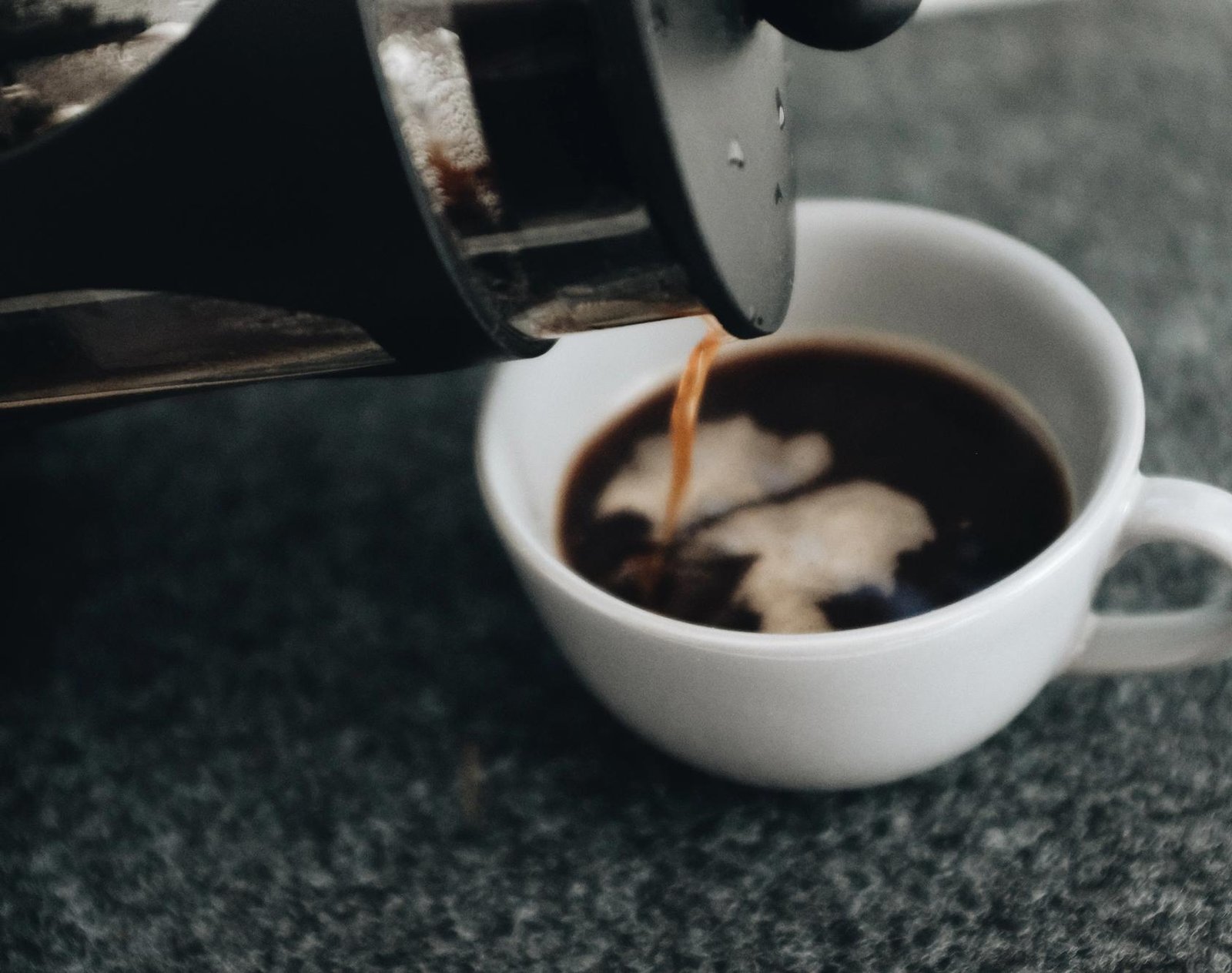
What Is a French Press?
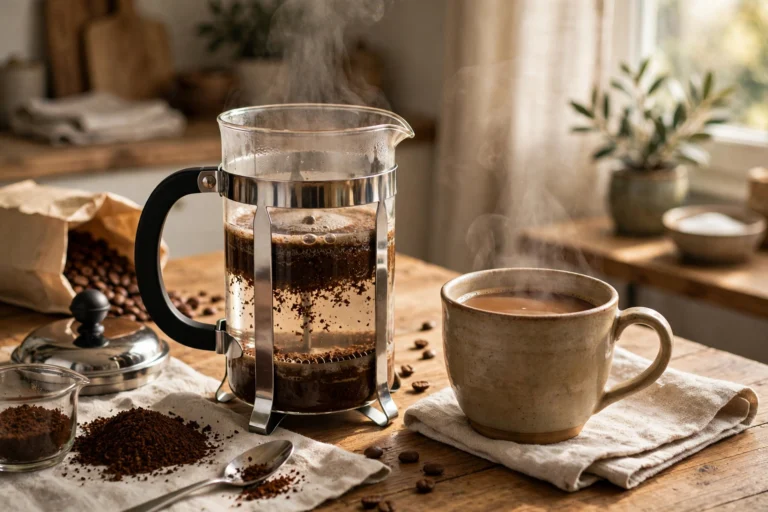
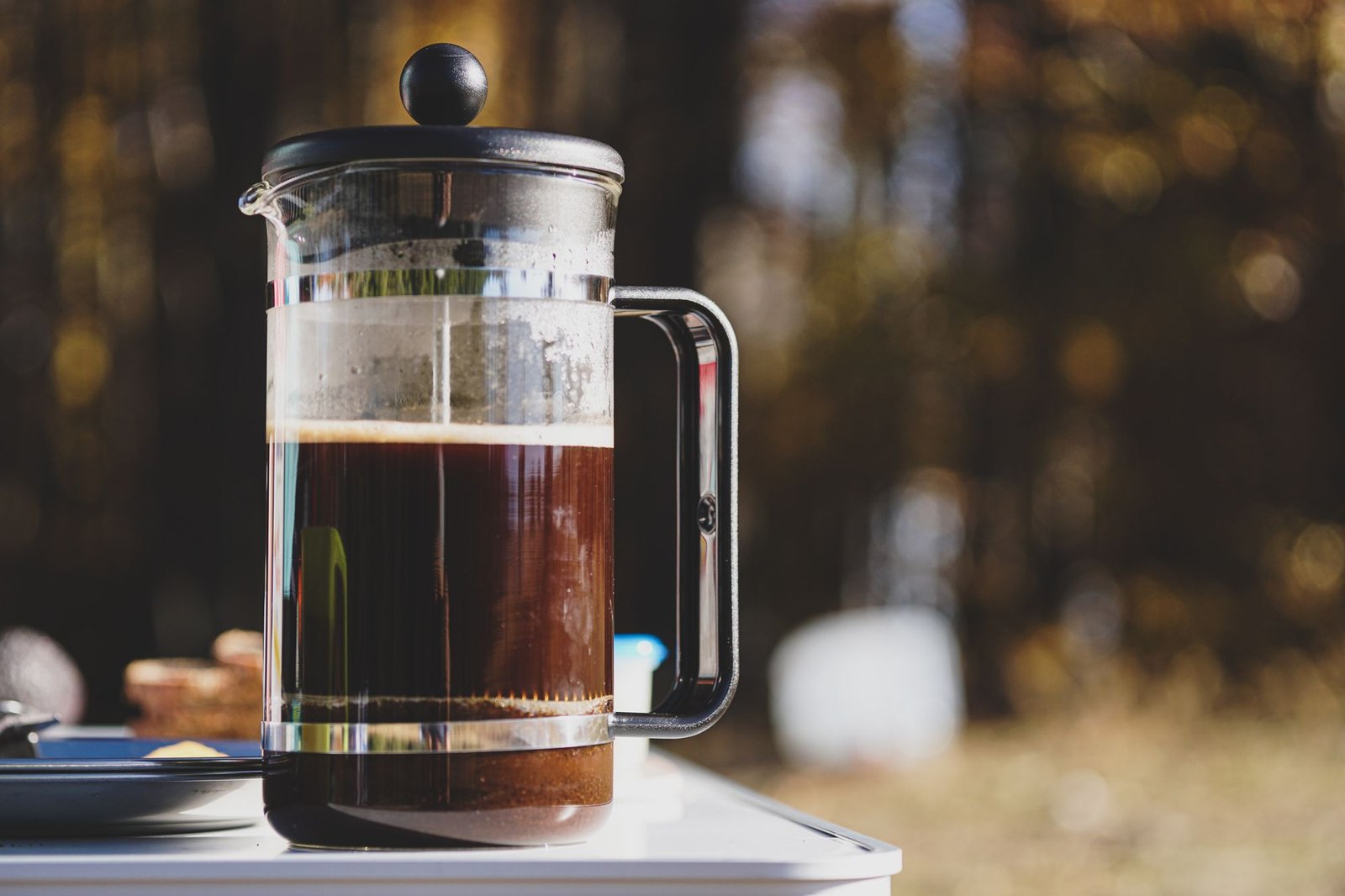
A French press is immersion brewing. You put coarse ground coffee in a glass or steel beaker, pour in hot water, wait about four minutes, then press a metal mesh plunger down to hold the grounds at the bottom while you pour. Every ground steeps for the same time in the same water, so the extraction is even and forgiving — a minute more or less will change the cup, but it will not ruin it.
The metal mesh is the whole story. It lets coffee oils and very fine particles through into the cup, which is why French press coffee feels heavy, rich, and almost chewy, and why the last mouthful can be a little silty. It also means there is nothing to buy after the press itself: no paper filters, no special kettle, no scale. A good press costs about $20–$40 and lasts for years. Most presses brew 32–34 oz at once, enough for four or more cups, which makes it the easy choice when you brew for more than one person.
For the full method, see our French press guide.
What Is a Pour Over?
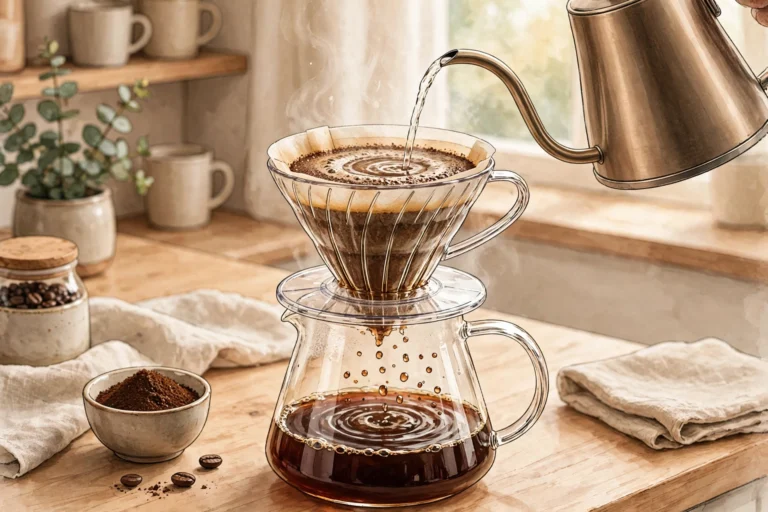
A pour over is percolation brewing. You put medium-fine ground coffee in a paper filter inside a dripper, then pour hot water over it in slow circles. The water passes through the bed of grounds and drips into a cup or carafe below. Because fresh water keeps meeting fresh coffee as it drains, and because the paper filter traps oils and fine particles, the cup comes out clean, bright, and light — and the flavors of the bean itself stand out more clearly.
That clarity is also the demand. Pour over rewards attention: the pour rate, the pattern, and the timing all change the result, so there is a technique to learn, and a gooseneck kettle and a scale help a lot. The dripper itself is cheap — about $10–$50 — but paper filters cost a little on every brew, and most drippers make one or two cups at a time. It is the method for a single great cup, not a full pot.
For the full method, see our pour-over guide for beginners, and if you are buying your first dripper, see our guide to the best pour over coffee maker for beginners.
Taste and Texture: The Real Difference
This is what actually matters, so here it is plainly: these two methods taste like different drinks made from the same beans.
French press gives you body. The metal mesh lets oils and fine particles into the cup, so the coffee feels heavy and rich, with a round, full flavor. It tends to emphasize chocolate, nutty, and earthy notes, which is why dark roasts shine in a French press. The trade-off is clarity: the same oils that give it body can muddy the delicate notes, and the fine sediment in the last sip is part of the deal.
Pour over gives you clarity. The paper filter traps most oils and fines, so the cup tastes cleaner and lighter, and individual flavors stand out. It tends to emphasize bright, acidic, and fruity notes, which is why light and medium roasts show their complexity better in a pour over. The trade-off is body: the cup is thinner, and a dark roast can taste a little flat without the oils to carry it.
Neither is better. If you like coffee that tastes like coffee — rich, heavy, and direct — the French press is your drink. If you like tasting what makes one bean different from another, the pour over is yours. A useful rule: the darker the roast, the more the French press helps it; the lighter the roast, the more the pour over helps it.
Grind, Ratio, and Time: The Numbers
The numbers are close, and the differences are the point:
- Grind: French press needs a coarse grind, like breadcrumbs — fine grounds slip through the mesh and over-extract, and they clog the filter. Pour over needs a medium to medium-fine grind, like table salt; go coarser for a thick Chemex filter, which slows the drawdown.
- Ratio: French press runs stronger, about 1:12 to 1:15 — that is 30 g of coffee to 360–450 g of water. Pour over runs lighter, about 1:15 to 1:17 — 15 g per 8 oz mug, or 20 g to 320–340 g of water. The full chart is in our coffee to water ratio chart.
- Time: French press steeps for about 4 minutes, then you press and pour. Pour over takes about 2:30 to 3:30 from the first pour to the last drip. The French press time is mostly waiting; the pour over time is mostly pouring.
- Water: both use water at 195–205°F (90–96°C), just off the boil.
One thing people get wrong: caffeine. At the same ratio, a French press cup often has slightly more caffeine, because the longer immersion pulls out a little more — but the difference is small, and serving size matters far more than method. A 12 oz French press serving and a 12 oz pour over serving made from the same beans are close enough that you should choose on taste, not on caffeine.
Ease of Use: Which Is More Forgiving?
The French press, and it is not close. Add coffee, add water, wait four minutes, press, pour. Timing is not critical — a minute more or less changes the cup but does not ruin it, and there is no pouring technique to learn. It works from day one, which is why it is the most forgiving manual brewer you can buy.
Pour over asks more of you. You pour in stages, keep the water temperature steady, and finish inside a target time. An uneven pour shows up in the cup right away, especially with a cone dripper like the V60. It is a skill, and the first week of brews will be uneven while you learn it. The reward is control: once you can pour steadily, you can steer the flavor in a way a French press never lets you.
If you want great coffee with no learning curve, buy the French press. If you enjoy the ritual and want the ceiling to be higher, buy the pour over — and read our guide to why pour over tastes bitter before your first brew, because it covers the two mistakes every beginner makes.
Cost: What You Actually Spend
The French press is cheaper to own. A good press costs about $20–$40, and after that there is nothing to buy — no filters, no special kettle, no scale. You might replace the mesh screen after a few years, but that is it.
A pour over dripper is cheaper to buy — about $10–$50 — but it costs more to run. Paper filters run about $5–$10 per 100, which is a few cents a brew and adds up over a year. A gooseneck kettle and a scale, which most pour over brewers eventually buy, add real money on top. Neither method is expensive, but over two years of daily brewing, the French press is the cheaper of the two, because its running cost is zero.
Cleanup: The Daily Difference
This is the difference you feel every morning, and it cuts the other way.
Pour over cleanup takes ten seconds. Lift out the paper filter — grounds and all — toss it in the trash or compost, rinse the dripper, done. There is nothing to scrub and nothing to take apart.
French press cleanup is the chore. Wet grounds stick to the beaker, to the plunger, and to the mesh filter, and some always cling to the screen. You have to scoop or rinse them out, and the plunger has several parts that need taking apart for a proper clean. It is not hard, but it is the one daily annoyance of the method — and it is the reason many French press owners eventually buy a pour over dripper for weekdays.
Batch Size: Who Are You Brewing For?
A French press is built for more than one person. Most presses hold 32–34 oz, enough for four cups in a single brew, and larger ones go to eight cups without any change in method. If you brew for a household, the French press wins on convenience alone.
A pour over is built for one or two cups. Most drippers make a single mug or a small carafe, and brewing a second round means starting the whole pour again. If you usually brew for yourself, that is no problem at all — and it is one reason pour over suits solo mornings so well.
The Health Note: Unfiltered Coffee and Cholesterol
One honest difference, and it matters if you drink a lot of coffee. Coffee contains natural oils called diterpenes — cafestol and kahweol. Harvard’s Nutrition Source notes that unfiltered coffee, such as French press and Turkish coffee, contains diterpenes that can raise LDL (“bad”) cholesterol, while paper-filtered coffee contains almost none, because the paper traps them. (Pro Coffee Academy’s comparison lays out the same point with the Harvard citation — see their French press vs pour over guide.)
That does not make French press coffee unhealthy, and one cup a day is not the issue. It matters if you drink several large unfiltered cups a day, or if you already watch your cholesterol. If that is you, pour over — or any paper-filtered method — is the safer daily habit, and you lose nothing on taste if you like a clean cup anyway.
Which Should You Buy?
Buy a French press if you want a full-bodied, rich cup; you like a forgiving technique that works from day one; you brew for two or more people; or you want the lowest total cost, with no filters and no special kettle.
Buy a pour over setup if you want a clean, bright cup that shows off single-origin beans; you enjoy a hands-on morning ritual; you mostly brew one cup; or you want the fastest cleanup in manual brewing.
If you are still unsure, buy the French press first. It is cheaper to run, harder to get wrong, and it brews for a crowd. Then, when you want to taste what a light roast can really do, add a pour over dripper — at about $10 for a plastic V60, it is the cheapest second brewer in coffee, and the two together cover every mood. Most serious home brewers end up owning both, because the question was never which one is better. It is which cup you want this morning.
How to Make Each One
French press (4 minutes): add coarse coffee (about 30 g for a 12 oz serving), pour in water just off the boil, stir once after a minute, wait until four minutes total, press the plunger down slowly, and pour right away — coffee left sitting on the grounds keeps extracting and turns bitter. The full step-by-step is in our French press guide.
Pour over (about 3 minutes): rinse the paper filter with hot water, add medium-fine coffee (15 g per 8 oz of water), bloom with a little water for 30–45 seconds, then pour the rest in slow circles until the brew finishes at about 2:30 to 3:30. The full step-by-step is in our pour-over guide for beginners, and our best pour over coffee maker for beginners guide will help you pick the dripper.
Frequently Asked Questions
Which has more caffeine, French press or pour over?
At the same ratio, a French press cup often has slightly more caffeine, because the grounds steep for four full minutes. But the difference is small, and serving size matters more: a 12 oz serving of either method made from the same beans has roughly the same caffeine. Choose on taste, not on caffeine.
Which is stronger, French press or pour over?
A French press tastes stronger, because the oils and fine particles give it a heavier body and a more intense flavor. A pour over tastes cleaner and lighter, even at the same strength. Strength and body are not the same thing — the French press wins on body, the pour over wins on clarity.
Which is easier for a beginner?
The French press. There is no pouring technique to learn, timing is forgiving, and it works well from the first brew. Pour over needs a steady pour and a little practice before the cups get consistent.
Which is cheaper?
The French press is cheaper over time. A good press is about $20–$40 with no running costs. A pour over dripper is cheaper to buy (about $10–$50) but needs paper filters on every brew, and most brewers eventually add a gooseneck kettle and a scale.
Can I use the same beans for both?
Yes. The same beans brewed both ways will taste noticeably different — that is the point of the comparison. Dark roasts tend to shine in a French press, where the oils carry their chocolate and nutty notes; light roasts tend to shine in a pour over, where the clean cup lets their bright and fruity notes show.
Which is better for a single cup?
Pour over. It is built for one or two cups, it cleans up in seconds, and it shows off a good bean. A French press can make a single cup, but it is at its best brewing a full pot for several people.
The Bottom Line on French Press vs Pour Over
The French press vs pour over choice is simpler than it first looks. The French press is immersion: coarse grounds steep for four minutes behind a metal mesh, and the cup is heavy, rich, and full — with oils, a little sediment, and no filters to buy. The pour over is percolation: water drips through medium-fine grounds and a paper filter, and the cup is clean, bright, and clear — with technique to learn and filters to buy.
Buy the French press for a rich, forgiving cup that feeds a crowd. Buy the pour over for a clean, precise cup that shows off a great bean. And if you can, buy both — together they cost less than one mid-range drip machine, and between them they cover every coffee mood there is.