
Coffee Flavor Combinations You Need to Try (2026 Guide)

Short answer: the best coffee flavor combinations are the ones that either echo a flavor already in the coffee or balance it out. Chocolate, vanilla, caramel, cinnamon, and hazelnut work with almost any coffee, because they match coffee’s own roasted, sweet, and nutty notes. Citrus and fruit work best with lighter roasts, where their brightness has room to show. Start with one flavor at a time, use a small amount, and add a second flavor only when the first one already tastes right.
How Flavors Pair With Coffee
Coffee already has a wide flavor range of its own: sweet, bitter, acidic, nutty, chocolatey, and fruity, depending on the bean and the roast. A good flavor combination works with that range instead of fighting it. There are two simple ways to think about it.
Echo the coffee. Find a flavor that matches a note already in the cup. A chocolatey Brazilian coffee with a spoonful of cocoa tastes richer, because the two chocolate notes stack. A fruity Ethiopian coffee with a little orange zest tastes brighter, because the citrus echoes the bean’s own fruitiness. Echoing is the safest way to start, and it is how most café drinks are built.
Balance the coffee. Use a flavor to soften something sharp. Sweetness cuts bitterness, which is why caramel and vanilla are so popular in strong coffee. Creaminess rounds off acidity, which is why milk drinks take flavored syrups so well. A pinch of salt in salted caramel works the same way: it takes the edge off the sweet and the bitter at the same time.
The roast matters too. Light roast coffee is bright and slightly acidic, so it suits citrus and fruit flavors that share that brightness. Medium roast is the most flexible: balanced and a little sweet, it works with nutty, chocolatey, and caramel flavors. Dark roast is bold and a little bitter, so it suits rich flavors like dark chocolate, caramel, and warm spices that can stand up to it. Esquires Coffee’s pairing guide makes the same point: dark roasts pair best with rich chocolate-based flavors, while light roasts suit citrus and delicate fruit.
Milk changes the picture as well. A flavor that tastes sharp in black coffee — cinnamon, for example — turns soft and warm in a latte, because the milk smooths it out. That is why most flavored syrups were designed for milk drinks in the first place.
Coffee Flavor Combinations Table
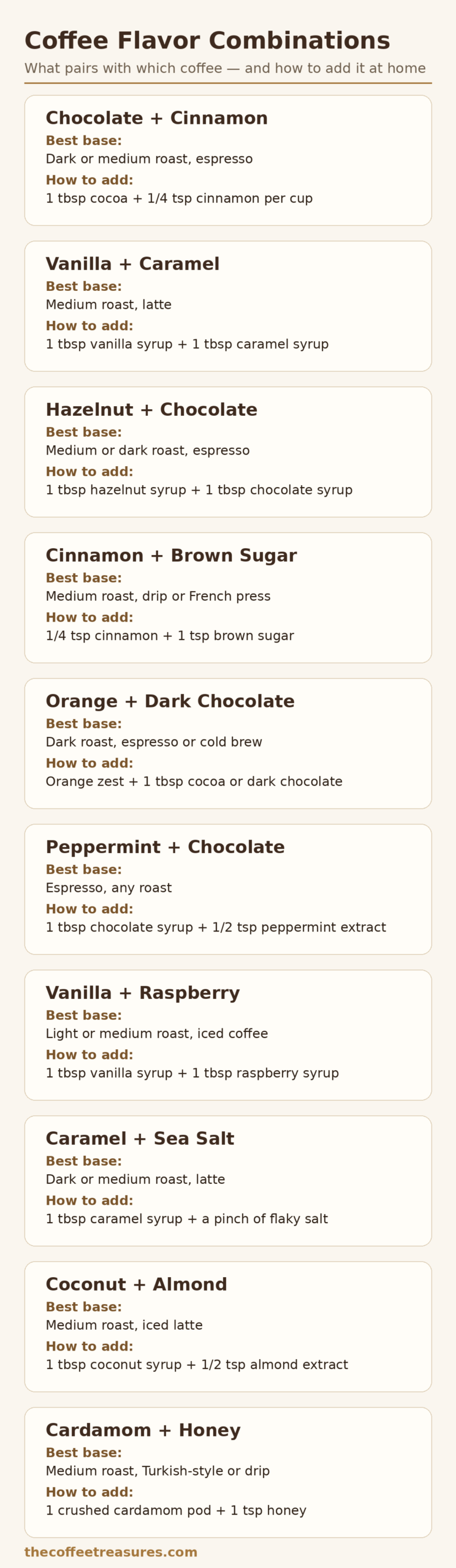
| Flavor combination | Best coffee base | How to add it |
|---|---|---|
| Chocolate + cinnamon | Dark or medium roast, espresso | 1 tbsp cocoa + 1/4 tsp cinnamon per cup |
| Vanilla + caramel | Medium roast, latte | 1 tbsp vanilla syrup + 1 tbsp caramel syrup |
| Hazelnut + chocolate | Medium or dark roast, espresso | 1 tbsp hazelnut syrup + 1 tbsp chocolate syrup |
| Cinnamon + brown sugar | Medium roast, drip or French press | 1/4 tsp cinnamon + 1 tsp brown sugar |
| Orange + dark chocolate | Dark roast, espresso or cold brew | Orange zest + 1 tbsp cocoa or dark chocolate |
| Peppermint + chocolate | Espresso, any roast | 1 tbsp chocolate syrup + 1/2 tsp peppermint extract |
| Vanilla + raspberry | Light or medium roast, iced coffee | 1 tbsp vanilla syrup + 1 tbsp raspberry syrup |
| Caramel + sea salt | Dark or medium roast, latte | 1 tbsp caramel syrup + a pinch of flaky salt |
| Coconut + almond | Medium roast, iced latte | 1 tbsp coconut syrup + 1/2 tsp almond extract |
| Cardamom + honey | Medium roast, Turkish-style or drip | 1 crushed cardamom pod + 1 tsp honey |
6 Coffee Flavor Combinations Explained
1. Chocolate + Cinnamon
This is the classic Mexican-style mocha combination, and it is the easiest place to start. Chocolate gives the coffee body and sweetness, while cinnamon adds warmth without adding sugar. The two flavors suit each other because cinnamon lifts chocolate the same way it lifts a chocolate cake.
At home: brew a double shot of espresso or a strong cup of coffee. Stir in 1 tablespoon of cocoa powder or chocolate syrup and 1/4 teaspoon of ground cinnamon while the coffee is still hot, so both dissolve fully. Add steamed milk if you want a mocha, or drink it black for a spicier cup. If you enjoy this style of drink, our guide to how to make a cappuccino at home shows the milk technique that works for any chocolate coffee.
2. Vanilla + Caramel
Vanilla and caramel is the most popular flavored-latte combination in cafés, and the reason is balance: vanilla is soft and floral, caramel is rich and buttery, and together they round off coffee’s bitterness without hiding the coffee flavor. It works best in milk drinks, where the creaminess ties the two flavors together.
At home: make a latte or a cup of coffee with steamed milk. Add 1 tablespoon of vanilla syrup and 1 tablespoon of caramel syrup, then stir well. Taste before adding more — caramel is the stronger of the two, and a second spoonful can take over the cup. A drizzle of caramel on top is for looks; the flavor is already in the drink. Our guide to how to make a latte at home covers the milk steaming step that makes this combination work.
3. Hazelnut + Chocolate
Hazelnut and chocolate is the flavor of chocolate-hazelnut spread, and it works the same way in coffee: nutty, rich, and sweet at the same time. This is a dessert-style combination, best in a smaller cup so the sweetness does not get tiring. It suits medium and dark roasts, which have enough body to carry both flavors.
At home: brew a double shot of espresso. Add 1 tablespoon of hazelnut syrup and 1 tablespoon of chocolate syrup, then top with a small amount of steamed milk. If you use flavored hazelnut coffee beans, skip the hazelnut syrup — beans plus syrup together usually make the nut flavor muddy instead of stronger.
4. Cinnamon + Brown Sugar
This is the simplest combination on the list, and it needs no syrups at all. Brown sugar brings a warm, molasses-like sweetness that white sugar does not have, and cinnamon adds spice on top of it. It works especially well in drip coffee and French press, where there is no milk to soften the flavors.
At home: add 1/4 teaspoon of ground cinnamon to the coffee grounds before brewing, so the spice infuses through the whole pot. Then stir 1 teaspoon of brown sugar into your cup. Adding the cinnamon to the grounds instead of the cup gives a smoother flavor, because the grounds filter out the gritty texture. For the best result, start with fresh beans — see our guide to choosing fresh coffee beans for what to look for.
5. Orange + Dark Chocolate
Orange and dark chocolate is a classic dessert pairing, and it translates well to coffee because dark roast already has cocoa notes for the orange to play against. The zest is the key: it gives citrus aroma without adding juice, which would make the cup sour and could curdle milk.
At home: brew a dark roast coffee or a double shot of espresso. Stir in 1 tablespoon of cocoa powder or a small piece of dark chocolate until it melts. Then grate a thin strip of orange zest over the cup and stir it in. Use only the colored outer peel, not the white pith underneath, which tastes bitter. This combination also works cold: the same flavors over ice make a refreshing iced mocha.
6. Peppermint + Chocolate
Peppermint and chocolate is the flavor behind the peppermint mocha, a café winter classic. The mint cools and brightens the chocolate, and the chocolate keeps the mint from tasting like toothpaste. It is a strong combination, so the peppermint should always be the smaller half — too much mint will take over the whole cup.
At home: brew a double shot of espresso and stir in 1 tablespoon of chocolate syrup. Add just 1/2 teaspoon of peppermint extract or 1 tablespoon of peppermint syrup, then add steamed milk and stir. Taste before adding more mint. For the full version with whipped cream and a candy-cane topping, see our peppermint mocha recipe.
Combinations to Avoid or Use Lightly
Not every pairing works, and a few common ones cause real problems.
Citrus juice in milk drinks. Orange or lemon juice can curdle milk, especially in a hot latte. If you want citrus in a milk drink, use zest instead of juice, or keep the drink black. This is the one combination that can genuinely ruin a cup.
Three or more syrups at once. Two flavors can complement each other. Three usually compete, and the result tastes muddy — sweet, but with no clear flavor at all. If a recipe calls for three syrups, drop the weakest one and see if the cup improves.
Strong mint with a light roast. Peppermint is powerful enough to cover the delicate fruity notes that make light roast special. Save mint for medium and dark roasts, and use a light hand even there.
Flavored beans plus flavored syrup. Coffee beans sold as “hazelnut” or “vanilla” already carry that flavor. Adding the matching syrup on top doubles it and usually makes the cup taste artificial. Choose one or the other.
Common Mistakes With Coffee Flavor Combinations
Using too much syrup. The most common mistake is pouring first and tasting later. Start with 1 tablespoon of syrup per 8-ounce cup, stir, and taste. You can always add more, but you cannot take it out. Café drinks often use several pumps per cup, but home cups are smaller, so start small.
Flavoring bad coffee. No syrup can fix stale beans or a badly brewed cup. If the coffee underneath tastes bitter or flat, fix the brew first — fresh beans, the right grind, and clean water — then add flavor. A good flavor combination makes good coffee better; it does not rescue bad coffee.
Changing everything at once. If you change the beans, the roast, and the flavor in the same cup, you will not know which change caused the result. Change one thing per brew. That is how you learn which combinations actually work for your taste.
Adding flavors to boiling coffee. Ground spices and cocoa dissolve best in hot coffee, but flavored syrups and extracts keep more of their aroma when stirred in after the coffee has cooled for a minute. Let the cup sit for 30 seconds before adding syrup, and you will taste the difference.
Frequently Asked Questions
What is the best flavor to add to coffee?
Vanilla is the safest first choice, because it suits almost every roast and every brewing method. It softens bitterness and adds sweetness without covering the coffee flavor. If you want something richer, caramel is the next step, and chocolate is the best choice for dark roasts.
Can you mix two coffee syrups together?
Yes, and most café flavor combinations are two syrups. The rule is to pair flavors from different groups: one sweet flavor (vanilla, caramel) with one nutty or spicy flavor (hazelnut, cinnamon). Two syrups from the same group, like caramel and butterscotch, usually taste like one flavor instead of two.
What flavors go well with black coffee?
Cinnamon, cardamom, and cocoa work best in black coffee, because they add warmth and depth without needing milk to carry them. Vanilla extract and a little brown sugar also work. Citrus zest suits light roasts. Avoid fruit syrups in black coffee unless you like a very sweet cup, because there is no milk to balance them.
What flavors go best in a latte?
Vanilla, caramel, and hazelnut are the classic latte flavors, because milk carries them well and softens their sweetness. Chocolate works too — that is what makes a mocha. For something different, try cinnamon or coconut, which both taste smoother in milk than they do in black coffee.
Do flavor combinations work in cold coffee?
Yes, and some work better cold. Vanilla and raspberry, coconut and almond, and chocolate and peppermint all taste cleaner over ice, because cold mutes sweetness a little. Stir syrups into the coffee while it is still warm, then pour over ice — syrups dissolve poorly in cold liquid.
What flavor is best for dark roast coffee?
Dark chocolate, caramel, and cinnamon are the best match for dark roast, because they are bold enough to stand up to the roast’s bitterness. Hazelnut also works well. Avoid delicate flavors like vanilla on their own with dark roast — they tend to disappear — unless you pair the vanilla with caramel or chocolate.
The Bottom Line on Coffee Flavor Combinations
The best coffee flavor combinations follow one rule: echo the coffee or balance it. Chocolate, vanilla, caramel, cinnamon, and hazelnut cover most cups, and citrus and fruit open up lighter roasts. Start with one flavor, measure it, and add a second only when the first one tastes right. The combination table above is a good place to start, and the six recipes in this guide all use ingredients you probably already have. For more pairing ideas from other coffee writers, Esquires Coffee’s guide to coffee flavor combinations covers roast matching and food pairings in detail, and Starbucks’ coffee and creamer pairing guide shows how cafés match creamers to different roasts.
