How to Choose Fresh Coffee Beans: 5 Easy Tips for Home Brewing

How to choose fresh coffee beans comes down to one habit: read the roast date before you read anything else on the bag. Origin, tasting notes, and price all matter less than whether the coffee was roasted recently, bought in a small bag, and ground close to brewing. This guide turns that habit into five checks you can use in any shop.
Start With Freshness
Freshness comes first, before origin or tasting notes. Look for a roast date on the bag, not just a best-by date. A roast date tells you when the coffee was actually roasted, while a best-by date can sit months in the future and still hide stale beans. Buy whole beans when you can, and buy small bags, enough for a week or two of brewing, rather than one giant bag that goes stale before you finish it.
Once you open a bag, keep it in an airtight container away from light and heat, and grind just before you brew. Our guide to storing coffee beans covers the details, including what to avoid.
How to Choose Fresh Coffee Beans for Home Brewing
Use this short framework every time you stand in front of a shelf of bags:
- Pick a bag with a recent roast date, ideally within the last few weeks.
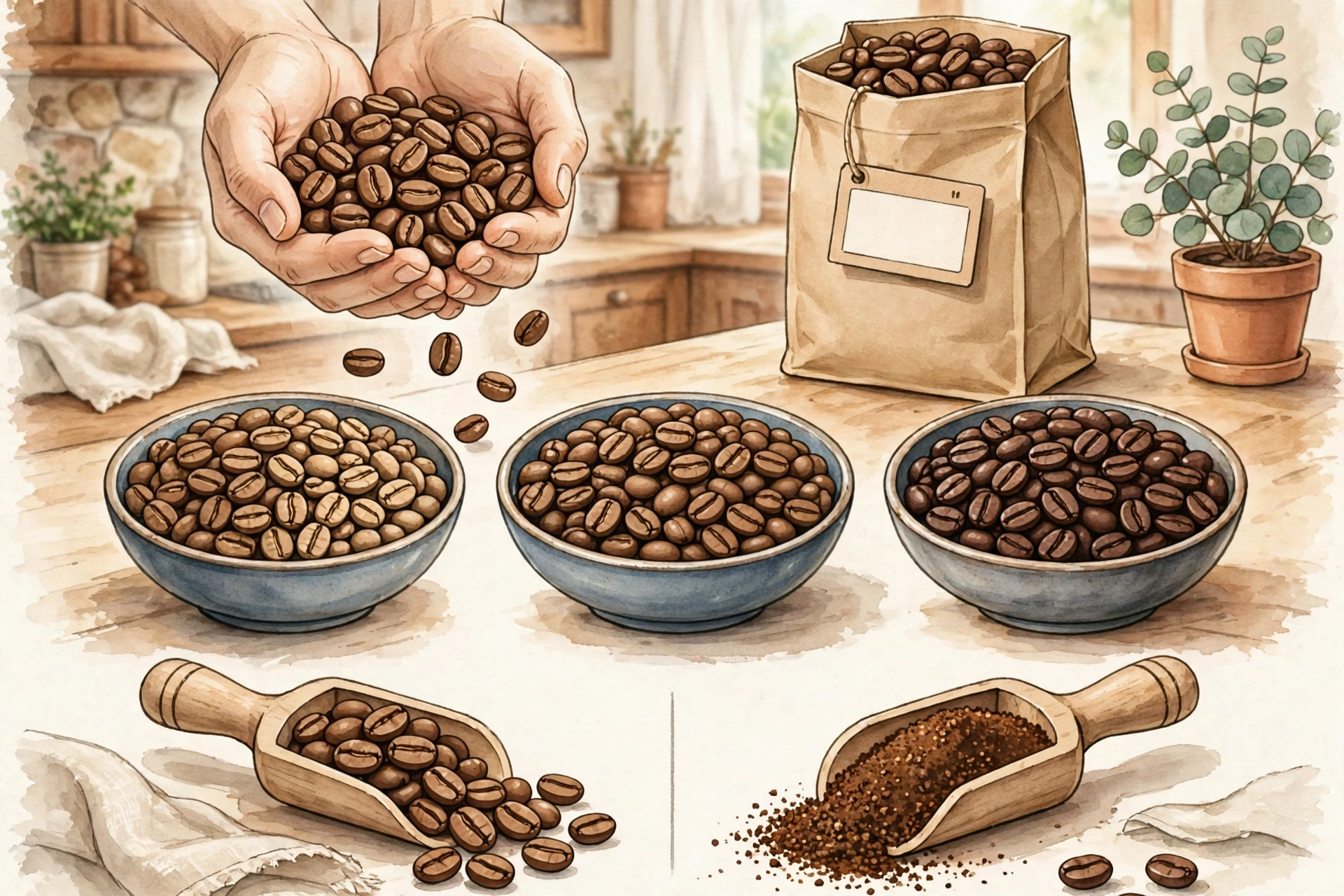
- Choose a roast level for your brewer. Lighter roasts tend to suit pour-over and drip, medium roasts are the most flexible all-round choice, and darker roasts suit French press and espresso-style drinks.
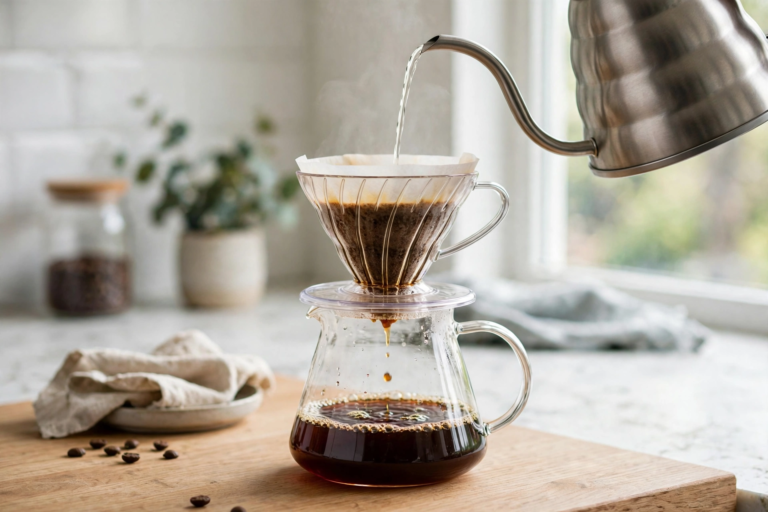
- Match the grind to your method: coarse for French press, medium for drip, and medium-fine for pour-over. See our best coffee grinders guide for grind sizes by method.
- Buy whole bean and grind at home when you can. Pre-ground coffee goes stale faster, because far more surface is exposed to air.
Match the Bean to Your Brewing Method
For French press, choose a medium to dark roast and a coarse grind. The metal mesh lets more oils through, so a fuller-bodied bean works well, and a coarse grind keeps the cup from turning gritty. Our French press coffee guide walks through the method step by step.
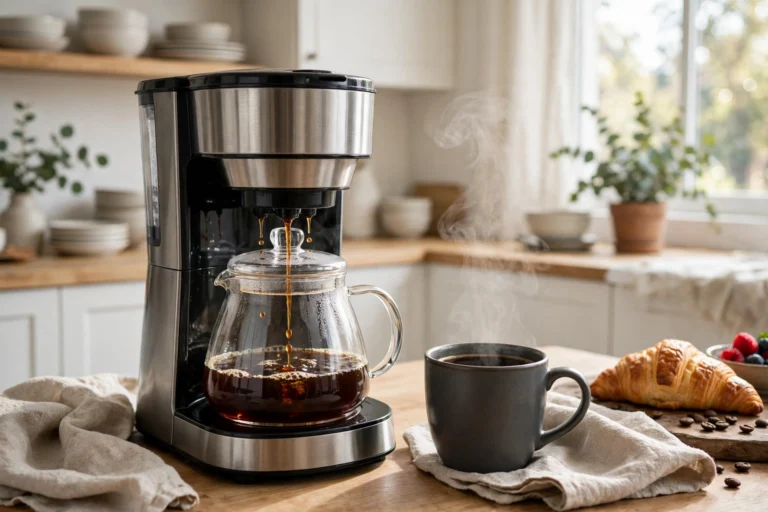
For drip coffee, a medium roast and a medium grind are a safe starting point. Drip is forgiving, so it is a good method for trying a new origin or roast without changing anything else. See our drip coffee guide for the basic recipe.
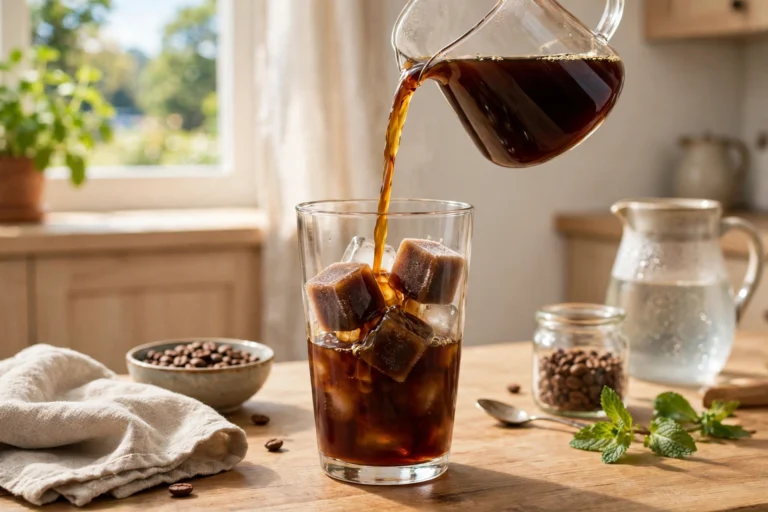
For cold brew, use a coarse grind and a bean with chocolate or nutty notes, which hold up well over a long, slow steep. Cold brew uses time rather than heat, so it forgives a darker roast. Our cold brew coffee guide covers ratios and steep times.
What the Bag Label Actually Tells You
Bag labels vary by roaster, but most give you the same five pieces of information. Learn to read them, and you can ignore the marketing words around them:
- Roast date: when the coffee was roasted. This is the freshness clue that matters most.
- Origin: the country or region the beans came from. It hints at flavor, but it is not a quality guarantee on its own.
- Roast level: light, medium, or dark. Roasters use these words differently, so treat them as a rough guide.
- Tasting notes: flavors like chocolate, berry, or citrus. These are hints about what you might taste, not promises.
- Blend or single origin: a blend mixes beans for balance, while a single origin shows off one place. Neither is automatically better.
Common Mistakes When Choosing Coffee Beans
The most common mistake is buying the biggest bag to save money, then drinking stale coffee for the last half of it. A smaller, fresher bag almost always tastes better. Another common mistake is buying pre-ground coffee ground for the wrong method, such as fine espresso grind for a French press, which makes a muddy, bitter cup.
Do not assume a dark roast means stronger coffee. Strength comes mostly from how much coffee you use for the water, not from the color of the bean. And do not store beans in a clear jar on the counter, where light and heat wear them out. Our guide to storing coffee beans explains the simple setup that works.
Frequently Asked Questions
Should I buy whole bean or pre-ground coffee?
Whole bean stays fresh longer, because the inside of the bean is protected until you grind it. Pre-ground coffee is fine if it is ground for your brewing method and you use it up quickly, but it goes stale noticeably faster once opened.
How much coffee should I buy at once?
Enough for a week or two of your normal brewing. That keeps every cup close to the roast date, and it lets you try a different origin or roast next time instead of being stuck with one big bag.
Is expensive coffee always better?
No. Freshness and roast fit matter more than price. A fresh, medium roast you enjoy will beat a stale, expensive bag every time. Pay more only when you can taste the difference and the roast date is recent.
Start with one fresh bag, brew it the same way for a few days, and change only one thing at a time. For keeping that bag at its best, see our guide to storing coffee beans, and for the right grind for your brewer, see our best coffee grinders guide.
How to Choose Fresh Coffee Beans for Home Brewing: A 5-Check Shopping List
Use this checklist in the shop, and you will not need to memorize anything. First, check the roast date. Second, match the roast to your brewer. Third, check that the bag is sealed and the beans look even, not mixed light and dark. Fourth, buy only what you will use in a week or two. Fifth, grind at home if you can. When you follow those five checks, learning how to choose fresh coffee beans for home brewing becomes a habit, not a gamble, and every bag you buy starts from a better place.
Roast is where many shoppers get stuck, so keep it simple: light roasts keep more of the bean’s origin character, medium roasts are balanced and forgiving, and dark roasts taste bold and roasty. A dark roast is not automatically stronger coffee. The National Coffee Association explains that roasts fall into light, medium, and dark categories, and that a dark roast’s strong flavor does not mean it is stronger, in its guide to coffee roasts. Use that guide when a bag label lists a roast name you do not recognize, such as city roast or French roast.
How to Choose Fresh Coffee Beans for Home Brewing: A Simple Closing Rule
Close with one rule: buy fresh, buy small, and brew the same bag the same way for a few days before you judge it. That is how to choose fresh coffee beans for home brewing without wasting money on bags that go stale. Once you have a bean you like, match it to your brewer in our French press coffee guide, our drip coffee guide, and our cold brew coffee guide, and keep it fresh with our guide to storing coffee beans.
What Trusted Sources Agree On — and Where They Differ
When you are deciding how to choose fresh coffee beans, four sources point in the same direction. The National Coffee Association’s storage guide says to buy smaller batches of freshly roasted coffee, keep it in an airtight, opaque container in a dark, cool place, and wait to grind until you brew. Its roast guide adds that light roasts preserve more of a bean’s origin character, that dark roast is not stronger coffee, and that roast names such as city roast and French roast sit on one light-to-dark spectrum rather than describing fixed quality levels. Retailer learning hubs agree on the practical side: Prima Coffee frames bean choice as a beginner learning path, and Stumptown organizes its brew guides by brewer, which is a reminder that the same bag behaves differently in a French press than in a pour-over dripper.
Where they differ is in emphasis. The NCA gives shelf-life windows — roasted beans at room temperature last about 1–3 weeks — while retailer guides rarely give a date and instead stress matching roast and grind to the brewer. This guide’s recommendation combines both: start with a roast date within the last few weeks, buy only enough for one to two weeks, choose whole bean, and let the brewer decide the roast and grind, not the prettiest bag. If the roast date is missing, treat that as the deciding fact and pick a different bag. Sources: National Coffee Association — Storage and shelf life, National Coffee Association — Roasts, Prima Coffee — Learning Center, Stumptown — Brew Guides. For brewing the bag once you buy it, see our pour-over guide and our guide to storing coffee beans.
How to Choose Fresh Coffee Beans: Roast and Grind by Brewer
When you are learning how to choose fresh coffee beans for a new brewer, use this table as a starting point, then adjust by taste. Grind matters as much as roast: the wrong grind for the brewer will hide what the bean can do.
| Brewer | Roast starting point | Grind | Watch out for |
|---|---|---|---|
| Pour-over | Light to medium | Medium-fine | Stale beans flatten bright notes first |
| French press | Medium to dark | Coarse | Fine grind slips through the mesh and muddies the cup |
| Drip | Medium | Medium | Old pre-ground coffee tastes flat even with a good machine |
| Cold brew | Medium to dark, chocolate or nutty notes | Coarse | A bag bought too large goes stale during a long steep cycle |
A Note Worth Keeping
“Espresso roast isn’t a specific roast level.” — National Coffee Association, Roasts. That is a useful warning against label language: a bag marked “espresso roast” tells you about the roaster’s intended use, not a measured roast level, so judge it by roast date and taste instead.
More Questions About How to Choose Fresh Coffee Beans
Does dark roast coffee have more caffeine?
No. The National Coffee Association notes that light roasts have a slightly higher amount of caffeine, and that dark roast’s strong, rich flavor is not the same as strength. Strength in the cup comes mostly from how much coffee you use for the water.
Is single origin better than a blend?
Neither is better in general. A blend is mixed for balance, while a single origin shows off one place. Pick a blend when you want a consistent everyday cup, and a single origin when you want to taste what one region does differently.
What if a bag has no roast date?
Do not guess. A best-by date can sit months in the future while the coffee inside is already stale. If no roast date is printed, choose another bag or ask the seller when it was roasted.
Closing Note: Judge a Bag on Its Second Brew
A first cup can mislead: a new bag, a new grind setting, and a new routine all change at once. Brew the same bag the same way a second time before you decide you dislike it. If the second cup still disappoints, change one variable — grind first — and keep the bag, brewer, and ratio the same. That second-brew rule is part of how to choose fresh coffee beans well: judge the bag, not the first unfamiliar brew.

3 Comments