
How to Make Iced Coffee at Home: 6 Easy Steps

How to make iced coffee at home well comes down to one decision: brew strong, then chill fast. This guide keeps that decision simple, with a full glass of ice, a troubleshooting table for watery or bitter cups, and a clear line between iced coffee and cold brew, so you can learn how to make iced coffee at home without a watery last sip.
Iced Coffee vs Cold Brew
Iced coffee and cold brew are not the same drink. Iced coffee is hot coffee brewed the usual way and then chilled fast over ice, so it keeps the bright, familiar flavor of hot coffee. Cold brew steeps grounds in cold water for hours, which gives a smoother, naturally sweeter cup. If you want iced coffee now, use the method below. If you can wait and want a make-ahead option, try our cold brew coffee guide instead.
What You Need
You probably own everything already. The only thing that matters is using enough ice and brewing strong enough coffee to survive it:
- Fresh coffee, whole bean or ground for your brewer
- Any hot brewing method: a drip machine, a French press, or a pour-over dripper
- Plenty of ice, enough to fill a tall glass to the top
- A tall glass, and milk, cream, or sweetener if you want them
How to Make Iced Coffee at Home, Step by Step
The key rule is to brew strong. Ice will melt and dilute your coffee, so a normal-strength brew turns watery. For a single glass, use about 30 grams of coffee for 250 grams (about 8 ounces) of hot water, roughly double the 15 grams you would use for a hot mug.
- Fill a tall glass to the top with ice. Do not skimp: a half-empty glass of ice melts fast and waters the coffee down.
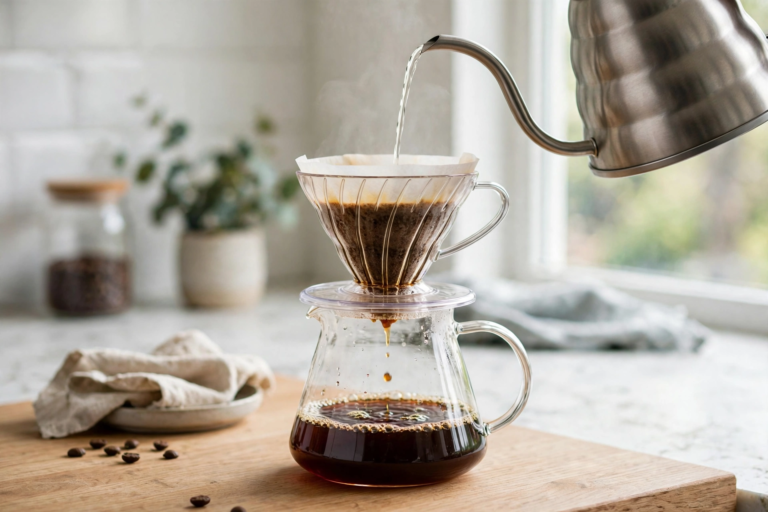
- Brew a strong batch of hot coffee with your usual method. Our drip coffee guide and our French press coffee guide both work well here.
- Pour the hot coffee straight over the ice and stir well, so it chills fast instead of sitting warm.
- Taste it before adding anything. Good iced coffee often needs less milk and sweetener than you expect.
- Top up with a little more ice if the drink is still warm, and add milk, cream, or sweetener only if you want them.
- Drink it fresh. Iced coffee goes flat and dull if it sits for hours, so make only what you will drink now.
Tips for Better Iced Coffee
Freeze leftover coffee into ice cubes. Coffee ice cubes chill your drink without watering it down, which solves the biggest iced coffee problem in one move. Make a tray whenever you have coffee left over, and keep it in the freezer for your next glass.
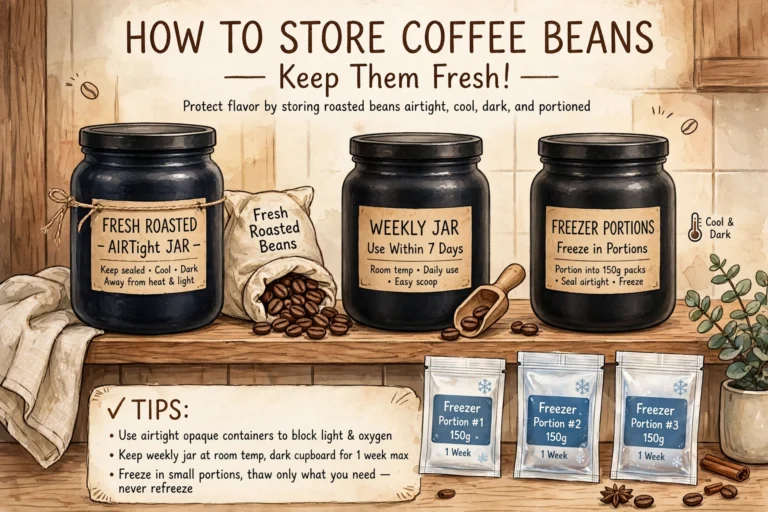
Use fresh beans and grind just before brewing. Stale coffee tastes even flatter cold than it does hot, so start with beans you would enjoy as a hot cup. Our guide to storing coffee beans covers keeping them fresh, and our best coffee grinders guide covers grind size by method.
Common Mistakes
The most common mistake is brewing normal-strength coffee and pouring it over ice. The ice melts, the coffee thins out, and the result tastes like coffee-flavored water. Brew strong on purpose, and use a full glass of ice so the drink chills fast instead of melting slowly.
Another mistake is making a big batch and leaving it in the fridge all day. Iced coffee is best fresh. If you want a cold coffee you can store, cold brew is the better choice, because it is made to be kept and served over several days.
Frequently Asked Questions
Can I use instant coffee?
Yes. Dissolve the instant coffee in a little hot water first, using a bit more than you would for a hot cup, then pour it over a full glass of ice and stir. It will not taste quite like fresh-brewed coffee, but it works well when you are short on time.
Can I make iced coffee without a machine?
Yes. Any manual brewer works, including a French press. Brew it strong, pour it over ice, and stir. Our French press coffee guide shows the hot method you can use as the base.
How is iced coffee different from cold brew?
Iced coffee is brewed hot and chilled fast over ice, while cold brew is steeped in cold water for hours. Iced coffee tastes brighter and more like regular hot coffee; cold brew tastes smoother and sweeter. For the slow method, see our cold brew coffee guide.
Start with the strong-brew method above, and change only one thing at a time until it tastes the way you like it. For a make-ahead cold option, see our cold brew coffee guide, and for keeping your beans fresh between brews, see our guide to storing coffee beans.
How to Make Iced Coffee at Home: Strong-Brew Ratios That Work
For a single tall glass, a simple starting point for how to make iced coffee at home is to brew about one and a half times the coffee you would use for a hot mug of the same size, then pour it over a glass filled to the top with ice. The extra coffee is not about making the drink harsh; it is about leaving room for the ice to melt without turning the cup watery. If the result still tastes thin, add a little more coffee next time rather than less ice, because a full glass of ice chills the coffee fast and keeps it clear-tasting.
Do not confuse this quick method with cold brew, even though both end up over ice. The National Coffee Association explains that cold brew is made with room-temperature or cooler water over a longer time, and that cold brew and iced coffee are not interchangeable terms, in its guide to cold brew coffee. That distinction is why how to make iced coffee at home starts with hot coffee: you get the bright flavor of a hot brew, chilled in minutes instead of steeped for hours.

How to Make Iced Coffee at Home: A Simple Closing Check
Finish with three checks: the glass was full of ice before you poured, the coffee was brewed strong, and you tasted it before adding milk or sweetener. Keep those checks, and how to make iced coffee at home becomes a fast, reliable routine. If you want the make-ahead version instead, try our cold brew coffee guide, use our French press coffee guide for the hot base, and keep your beans fresh with our guide to storing coffee beans.
What Trusted Sources Agree On — and Where They Differ
When you are deciding how to make iced coffee at home, the sources agree on the one distinction that matters most: iced coffee is hot coffee cooled fast over ice, while cold brew is made with room-temperature or cooler water over a long steep. The National Coffee Association’s cold brew guide gives cold brew a 1:4 to 1:5 coffee-to-water ratio, a coarse grind, and typically about 12 hours of contact, and notes that steep times can vary from a few minutes to 12–18+ hours. Its drip guide, by contrast, gives a “Golden Ratio” of 1 to 2 tablespoons of ground coffee per 6 ounces of water, a medium grind, and about 5 minutes of brewing. Retailer guides agree on the practical point: Stumptown organizes its brew guides by brewer, and Prima Coffee frames iced and cold methods as separate beginner topics.
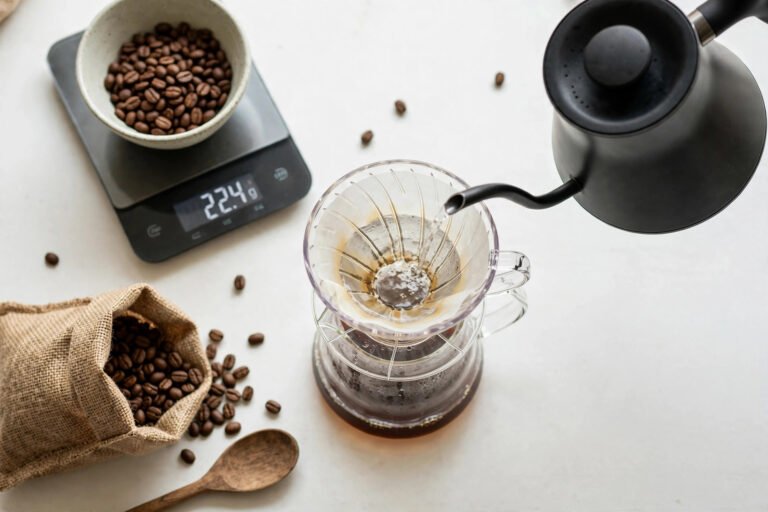
Where they differ is in how much they pin down. The NCA gives numbers for cold brew and drip, but no single iced-coffee ratio, because iced coffee inherits the ratio of whatever hot method you start from. This guide’s recommendation follows from that: brew your chosen hot method strong, fill the glass with ice first, and pour over ice at once. If you brew the hot base with a pour-over dripper, follow our pour-over guide for the hot recipe, then chill it the way this guide describes. Sources: National Coffee Association — Cold brew coffee, National Coffee Association — Drip coffee, Stumptown — Brew Guides, Prima Coffee — Learning Center. For the make-ahead alternative, see our cold brew coffee guide.
Iced Coffee Troubleshooting: Watery, Bitter, or Flat
| What you taste | Likely cause | Change one thing first |
|---|---|---|
| Watery or weak | Normal-strength brew diluted by melting ice | Brew stronger or use coffee ice cubes |
| Bitter or harsh | Hot base over-extracted, or coffee sat warm too long | Grind slightly coarser and pour over ice at once |
| Flat or dull | Stale beans, or a batch left sitting for hours | Use fresh beans and make only what you will drink now |
| Too sweet or milky | Milk and sweetener added before tasting | Taste the chilled coffee plain first, then add a little |
A Note Worth Keeping
“Cold brew vs iced coffee — both are great, but they’re not interchangeable terms.” — National Coffee Association, Cold brew coffee. That distinction is the whole point of this guide: the two drinks end up over ice, but they are made differently and taste different.
More Questions About How to Make Iced Coffee at Home
Can I make iced coffee the night before?
You can, but it will taste flatter than a fresh glass. Iced coffee is best made and drunk fresh. If you need a make-ahead drink, cold brew is the better choice, because it is designed to be steeped and chilled in advance.
Do I need coffee ice cubes?
No, but they help. Regular ice melts and dilutes the drink, while coffee ice cubes melt into more coffee. They are worth making if you often find your iced coffee turns watery before you finish it.
Is iced coffee stronger than hot coffee?
Not automatically. Strength follows the coffee-to-water ratio and how much ice melts into the drink. A strong hot brew poured over a full glass of ice can end up close to normal strength once the ice melts.
Closing Note: Judge Iced Coffee by the Last Sip
A good iced coffee is judged by its last sip, not its first. If the last sip is watery, the brew was not strong enough or the glass was short of ice. Fix that one thing next time, and keep the beans, brewer, and milk the same.