
How to Make Moka Pot Coffee at Home in 8 Steps: A Stovetop Guide Without the Bitterness

Short answer: To learn how to make moka pot coffee at home, preheat your water, grind the coffee to a drip-like, table-salt texture, fill the bottom chamber just below the safety valve, fill the basket without tamping, and brew on moderate heat. Remove the pot when the stream turns the colour of yellow honey, stop…
Short answer: To learn how to make moka pot coffee at home, preheat your water, grind the coffee to a drip-like, table-salt texture, fill the bottom chamber just below the safety valve, fill the basket without tamping, and brew on moderate heat. Remove the pot when the stream turns the colour of yellow honey, stop it with a chilled towel, and serve at once. That heat control, more than any gadget, is what keeps moka pot coffee sweet instead of bitter.
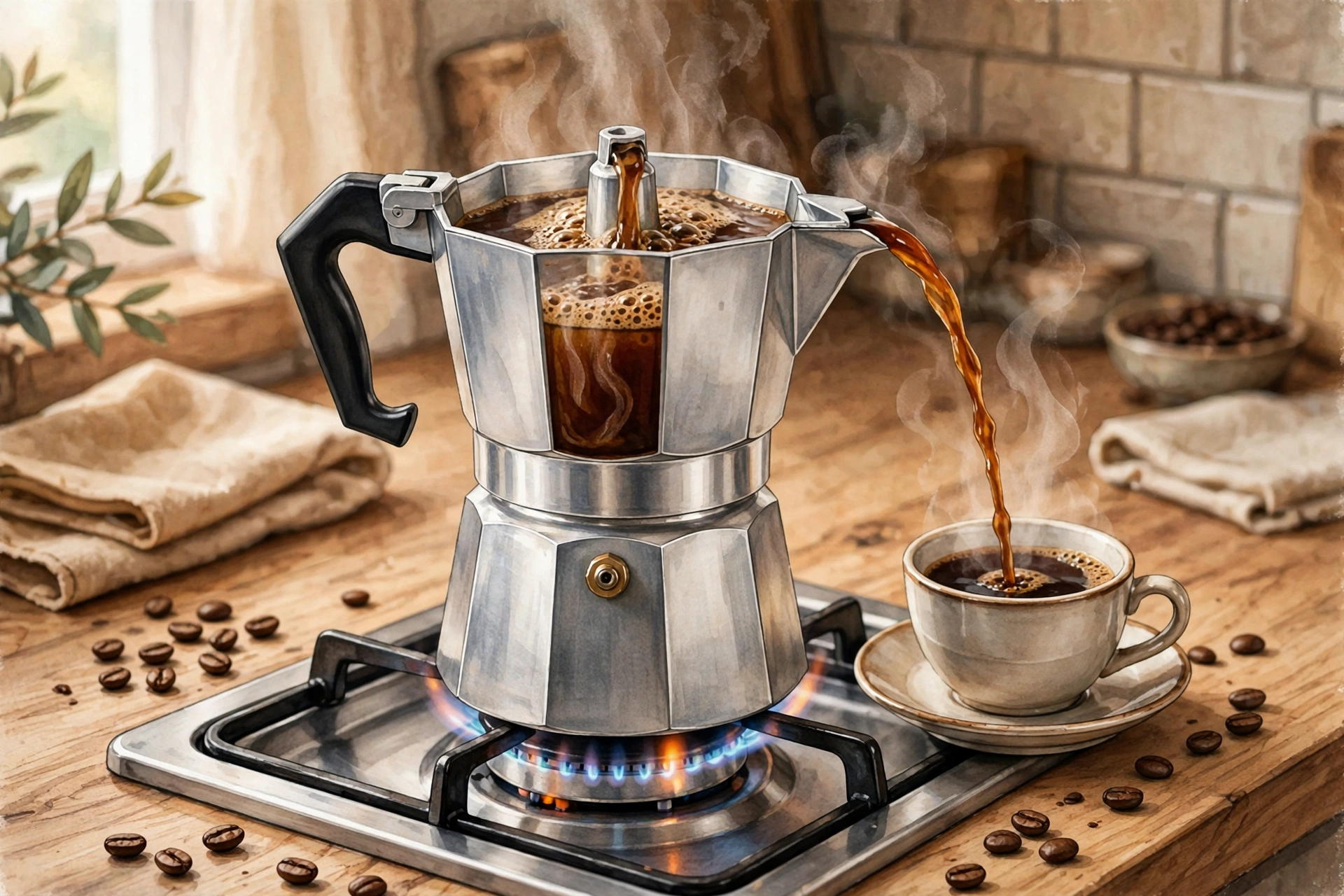
A moka pot is the classic Italian stovetop brewer: a small, three-part pot that pushes hot water up through ground coffee using steam pressure. It makes a big-bodied, strong cup, and it is inexpensive and simple to use. It is not, however, true espresso. Stumptown Coffee Roasters is clear on this point: a moka pot does not generate the pressure needed for true espresso. Treat it as its own method, with its own strengths, and you will enjoy it far more than if you judge it as a failed espresso machine.
Know Your Pot Before You Brew
A moka pot has three parts: a bottom chamber that holds water, a filter basket that holds ground coffee, and a top chamber that collects the brewed coffee. Moka pots come in different sizes, so there is no single gram amount that fits every pot. The basket should be filled, not half-filled, for the pot you own, and the water should stop just below the safety valve in the bottom chamber. Never fill past the valve, and never block it.
For scale, Stumptown gives about 15 to 17 grams, or about 2½ tablespoons, for the pot size discussed in its guide. Use that as an example, not a universal rule: if your pot is larger or smaller, fill its own basket and adjust from there. Fresh beans help; see how to choose fresh coffee beans and how to store coffee beans to keep them fresh.
How to Make Moka Pot Coffee at Home in 8 Steps
- Preheat the water. Bring kettle water to a boil, then remove it from the heat. Preheating helps keep the pot from overheating and scorching the coffee, according to Stumptown.
- Grind to drip consistency. Grind about as fine as table salt, like drip coffee. Do not use an espresso-fine grind: Stumptown warns that it can clog the filter and create bitterness.
- Fill the bottom chamber. Pour the heated water into the bottom chamber, stopping just below the safety valve line.
- Insert the basket and fill it. Put the filter basket in place, fill it with ground coffee, slightly mounded, and level it gently with a finger. Do not tamp.
- Clean the rim and screw the pot together. Brush loose grounds from the rim, then screw the top and bottom together snugly, not overly tight. Use a towel or hot pad, because the base will be hot.
- Brew on moderate heat. Put the pot on the stove over moderate heat, with the handle clear of the burner. High heat is the fastest route to a bitter, metallic cup.
- Watch the stream, not the clock. Coffee begins with a soft puffing sound and a rich brown stream that gradually lightens. When the stream turns the colour of yellow honey, remove the pot from the heat and close the lid.
- Stop the brew and serve at once. Wrap the bottom with a chilled towel, or briefly run it under cold water, to halt extraction and preserve sweetness. Serve immediately, once the bubbling stops. For a longer, lighter cup, dilute with hot water.
Heat Control Is the Whole Game
Most moka pot bitterness comes from heat, not from the beans. Brewing too hot, or for too long, over-extracts the coffee and can leave a metallic taste. Moderate heat, preheated water, and an early finish at the honey-coloured stream are the three controls that matter. If your coffee regularly tastes burnt, turn the heat down before you change beans or grind. Letting brewed coffee sit in a hot pot has the same effect as brewing too long, so do not leave it on the stove while you do something else.
Grind is the second control. A grind that is too fine slows the water, clogs the filter, and adds bitterness; a grind that is too coarse lets water through too easily and gives a thin, weak cup. Aim for drip consistency first, then adjust in small steps. See our best coffee grinders guide for grinder choices.
Moka Pot vs Espresso vs Drip vs French Press
| Method | Pressure | Grind | Cup character |
|---|---|---|---|
| Moka pot | Steam pressure, stovetop | Drip-like, like table salt | Big-bodied, sweet, viscous |
| Espresso machine | Pump pressure, about 9 bar | Fine | Small, syrupy, with crema |
| Drip | Gravity | Medium | Lighter, larger cup |
| French press | Immersion, then pressing | Coarse | Full-bodied, with sediment |
That table explains why the moka pot sits in the middle: stronger than drip, without espresso crema and syrup. If you want the espresso method itself, read our guide to how to make espresso at home. If you want a diluted espresso drink, see how to make americano at home. For a gentler immersion method, see how to make French press coffee at home.how to make Cuban coffee at home.p>
Troubleshooting: What Went Wrong and What to Change
| Problem | Likely cause | Try this first |
|---|---|---|
| Bitter or metallic taste | Brewing too hot or too long, grind too fine, or coffee left sitting | Use moderate heat, preheat water, remove at the honey stream, serve at once |
| Weak or thin cup | Grind too coarse, or basket underfilled | Grind a little finer, fill the basket fully, do not tamp |
| Sputtering or spurting | Heat too high, or grind too fine | Lower the heat, check the drip-like grind, clean the filter |
| Grounds in the cup | Grind too fine, or grounds on the rim breaking the seal | Grind coarser, brush the rim clean before screwing together |
| Coffee barely rises | Heat too low, seal not snug, or filter clogged | Raise heat to moderate, screw snugly, clean the basket and valve area |
What Other Guides Say: Where They Agree, and Where They Differ
The guides agree on the essentials, and the differences are instructive. Stumptown, the source verified in full for this guide, preheats the water, uses a drip-like grind, fills below the valve, does not tamp, uses moderate heat, and stops at the honey-coloured stream. Its answer to tamping is blunt: “No. Tamping restricts water flow and can cause over-extraction.”
Bialetti snippets describe room-temperature water up to the valve, while Illy snippets describe filling the funnel completely without pressing. This guide follows Stumptown on preheating, because it shortens the time grounds spend heating on the stove. Basket advice is the same in all three: fill it, do not press it. Note: the Bialetti and Illy points are snippet-level, not linked sources.
Frequently Asked Questions
Is moka pot coffee the same as espresso?
No. Stumptown states that a moka pot does not generate the pressure needed for true espresso. It makes a strong, concentrated cup, but without the pump pressure, crema, and syrup of an espresso shot.
Should I tamp coffee in a moka pot?
No. Level the grounds gently with a finger and leave them loose. Tamping restricts water flow and can cause over-extraction, and therefore bitterness.
Why does my moka pot coffee taste bitter even with fresh beans?
Check heat and timing first. Brewing too hot, brewing too long, grinding too fine, or letting the coffee sit in a hot pot are the usual causes. Use moderate heat, a drip-like grind, preheated water, and remove the pot at the honey-coloured stream.
A Final Note
Learning how to make moka pot coffee at home is a lesson in patience: moderate heat, a loose fill, and an early finish. Do those three things well, and this small stovetop pot will give you a sweet, full-bodied cup that needs no milk and no apology. Rush it on high heat, and no bean will save it.
Sources
- Stumptown Coffee Roasters — How to Brew Coffee in a Moka Pot (preheat water, drip-like grind, fill below valve, no tamp, moderate heat, honey stream, chilled-towel stop)
- National Coffee Association — Espresso (for the espresso comparison: espresso as a method, 1:2 ratio, fine grind)


3 Comments