How Much Coffee for Moka Pot? Ratio Chart for Every Pot Size

If you just bought a moka pot — or dug one out of a cupboard — and searched “how much coffee for moka pot,” you are in the right place. The first question is always the same: how much coffee do I actually put in this thing? A “6-cup” pot does not make six mugs, the basket looks too small to matter, and every blog seems to give a different number.
Here is the short answer: fill the basket level with medium-fine coffee, fill the water to just below the safety valve, and you will land near a 1:10 coffee-to-water ratio automatically. That is how the moka pot was designed — the basket and the valve do the measuring for you. But if you want exact numbers for your pot size, the chart below has them: grams, tablespoons, and water for every common pot, plus how to adjust the strength and fix the five mistakes that ruin moka pot coffee.
How a moka pot sets its own ratio
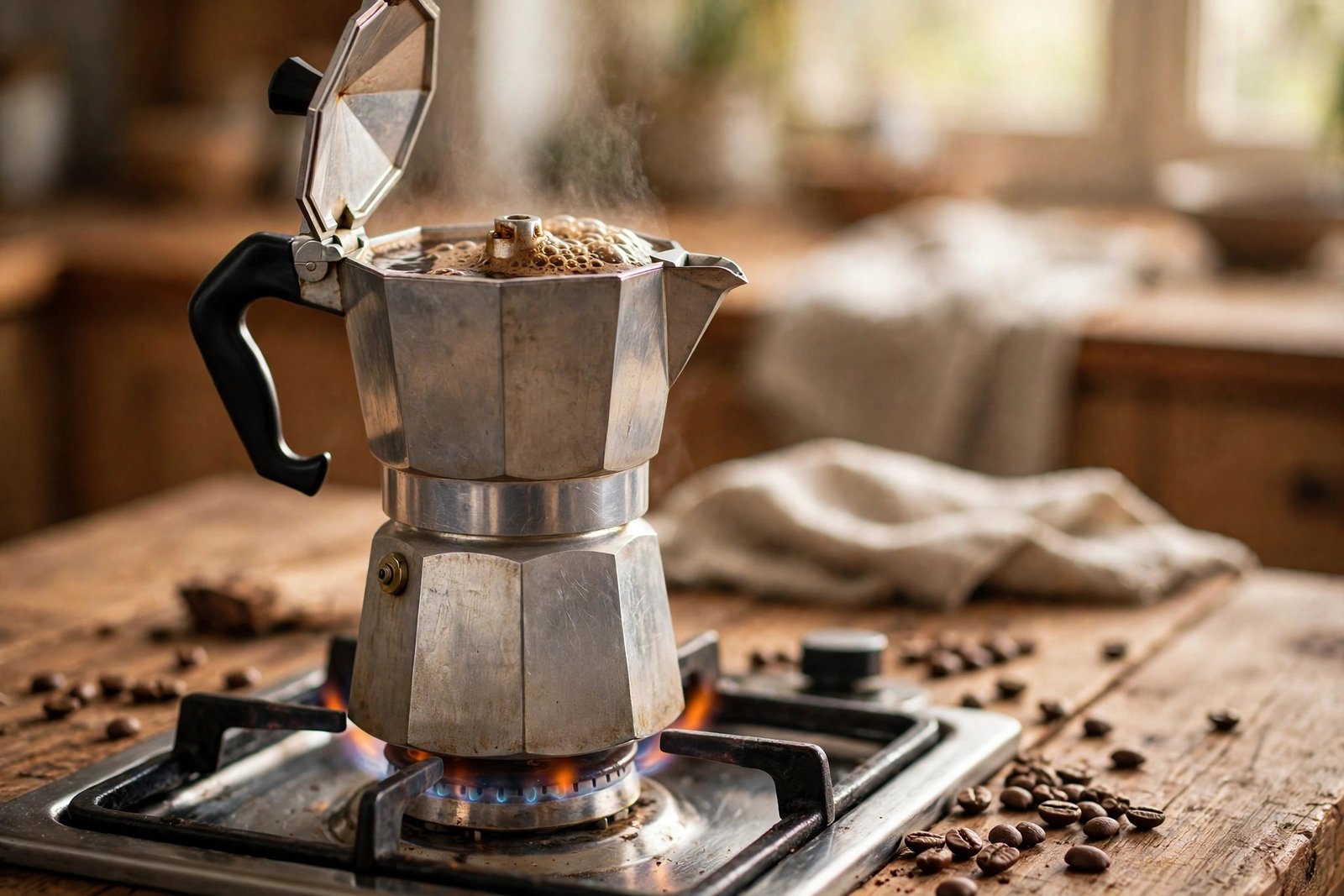
A moka pot has three chambers: water goes in the bottom, ground coffee fills the funnel basket in the middle, and brewed coffee collects on top. As the base heats, steam pressure pushes the water up through the grounds at about 1 to 2 bars — real pressure, but well short of the 9 bars of a true espresso machine.
Because the basket holds a fixed amount of coffee and the chamber holds a fixed amount of water (up to the safety valve), the ratio is essentially built into the pot. Fill both to their marks and most pots land between 1:7 and 1:10 coffee to water by weight. That is why “how much coffee for moka pot” has such a simple answer: the pot already decided. Your job is just to fill it correctly and control the two things that actually change the cup – grind size and heat.
One more thing that confuses everyone: a moka pot “cup” is a small Italian espresso-size cup of about 60 ml (2 oz), not an American mug. A 6-cup pot makes roughly 300 ml of brewed coffee — about one and a half regular mugs. If you were expecting six mugs, now you know why the pot looked small.
How much coffee for moka pot: ratio chart by pot size
This chart is the complete answer to how much coffee for moka pot in every common size. Water goes in the base to just below the safety valve (never above it); coffee goes in the basket level and loose – more on both below.
| Pot size | Water (to valve) | Coffee (level basket) | In tablespoons | Brewed coffee you get |
|---|---|---|---|---|
| 1-cup | 60 ml (2 fl oz) | 7–8 g | ~1 tbsp | ~50 ml |
| 3-cup | 150 ml (5 fl oz) | 14–18 g | ~2.5–3 tbsp | ~130 ml |
| 6-cup | 300 ml (10 fl oz) | 25–30 g | ~4–5 tbsp | ~270 ml |
| 9-cup | 450 ml (15 fl oz) | 35–45 g | ~6–7 tbsp | ~400 ml |
| 12-cup | 600 ml (20 fl oz) | 50–55 g | ~8–9 tbsp | ~550 ml |
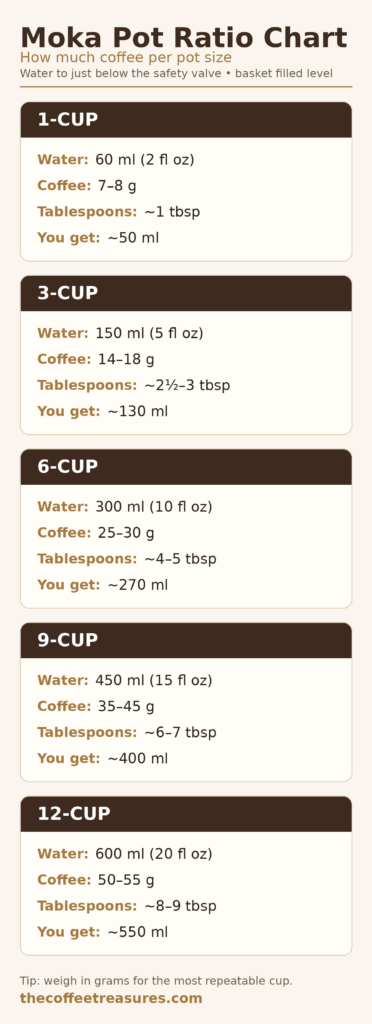
A few notes on reading this chart:
- The brewed amount is less than the water you put in. Some water stays behind in the base and the grounds absorb some. That is normal — a 6-cup pot takes 300 ml of water and gives you about 270 ml of coffee.
- Tablespoons are approximate. One level tablespoon of medium-fine ground coffee weighs roughly 5 to 7 grams, and it varies with the bean and the grind. Grams on a cheap kitchen scale are far more repeatable — but if you only have a spoon, the tablespoon column will get you close.
- Ranges, not exact numbers. Baskets differ slightly between brands. Start in the middle of the range for your pot and adjust to taste. (BeanBox’s moka pot guide publishes a similar size-by-size table if you want a second reference.)
For the full step-by-step brewing method — including when to take the pot off the heat — see our moka pot brewing guide.
Grams vs tablespoons vs scoops: which should you use?
If you own a kitchen scale, use grams. It is the only measurement that does not change with grind size, roast level, or how the grounds settle in the spoon. A dark roast weighs less per tablespoon than a light roast, because roasting drives off moisture and expands the bean — so “3 tablespoons” can mean noticeably different amounts of coffee from one bag to the next.
No scale? Tablespoons work fine for everyday brewing. Just be consistent: same spoon, level (not heaped), same grind. And avoid “scoops” unless you know your scoop’s size — coffee scoops vary wildly, from 1 tablespoon to 2 or more.
How to adjust the strength
Here is the thing most guides gloss over: you cannot freely change the ratio in a moka pot. The basket and the water line are fixed. If you want stronger or weaker coffee, change these instead:
- For stronger coffee: grind slightly finer (still coarser than espresso), make sure the basket is completely full and level, and use a darker roast. Do not tamp — a packed basket chokes the flow and turns the cup bitter, not stronger.
- For milder coffee: grind slightly coarser, or dilute the finished brew with a little hot water (an Americano-style stretch). Trying to “weaken” it by half-filling the basket just gives you thin, unevenly extracted coffee.
The single biggest lever, though, is not the amount at all — it is heat control, which brings us to the mistakes section.
5 common moka pot mistakes (and the fix for each)
1. Bitter, burnt-tasting coffee
This is the #1 moka pot complaint, and it is almost always the heat, not the beans. A roaring burner scorches the grounds, and leaving the pot on after it starts sputtering cooks the last of the brew. Fix: brew on medium-low, start with hot water in the base so the grounds spend less time on the heat, and pull the pot off the burner the second the coffee stream turns pale and starts to gurgle. Run the base under cold water to stop the extraction cold.
2. Loud sputtering and spurting
A little gurgle at the end is normal — violent sputtering from the start is not. Fix: lower the heat as soon as coffee appears. The brew should rise in a slow, steady, honey-colored stream.
3. Weak, watery coffee
Fix: check three things in order — is the grind too coarse (it should be medium-fine, like table salt)? Is the basket truly full and level? Is your coffee fresh? A stale bag tastes flat no matter how careful the technique. Grinding fresh with a burr grinder fixes more “weak” moka pots than any ratio tweak.
4. Metallic or “off” taste from a new pot
Completely normal with a new aluminum moka pot. Fix: brew and discard two or three batches to season it. And never wash an aluminum pot with soap or put it in the dishwasher — hot water rinse only — or the seasoning (and the taste) goes backwards.
5. Grounds in the cup
Fix: grind slightly coarser first. If it persists, check the filter plate and rubber gasket — a worn gasket lets fines through, and both are cheap to replace once a year or so. A paper filter disc placed on top of the basket also works as a quick fix.
What grind size does a moka pot need?
Medium-fine — finer than drip, coarser than espresso, roughly the texture of table salt or fine sand. Too fine and the basket clogs, pressure builds, and the coffee comes out bitter and over-extracted. Too coarse and the water races through, giving you a thin, sour cup. If you are buying pre-ground coffee, look for bags labeled “moka pot” or “stovetop espresso” grind.
FAQs
How much coffee do I put in a 6-cup moka pot?
About 25–30 grams (roughly 4–5 tablespoons) of medium-fine coffee, with water filled to just below the safety valve (about 300 ml). That is the most common pot size, and it brews roughly 270 ml of coffee.
Should I tamp the coffee in a moka pot?
No — never tamp. Fill the basket level with a finger or the back of a spoon and leave the grounds loose. Tamping restricts the water flow, builds excess pressure, and produces bitter, over-extracted coffee.
Do I fill the water above the safety valve?
No. Fill to just below the safety valve, never above it. The valve is a safety device — covering it with water defeats its purpose, and overfilling the base is also a classic cause of weak, watery brews.
Can I brew a half pot in a large moka pot?
Not well. The moka pot is designed to brew full: a half-filled basket extracts unevenly and tastes thin. For less coffee, use a smaller pot — they are inexpensive — or look for a reducer insert made for your model.
How much caffeine is in moka pot coffee?
Moka pot coffee is strong — roughly in the same territory per ounce as espresso. One coffee source estimates around 100–120 mg of caffeine per 2 oz serving, but the real number moves with your beans, grind, and ratio. For how caffeine compares across drinks, see our caffeine guide.
Is moka pot coffee the same as espresso?
No. A moka pot brews at about 1–2 bars of steam pressure; true espresso needs around 9 bars of pump pressure, which is what creates thick crema. Moka pot coffee is strong, rich, and a little foamy — excellent in milk drinks — but it is its own drink. More on real espresso here.
What is the best coffee for a moka pot?
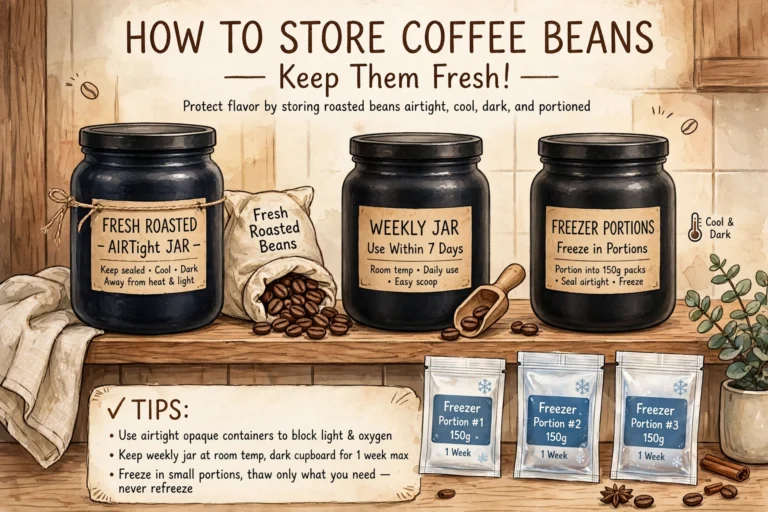
A fresh medium to medium-dark roast, ideally ground just before brewing. The moka pot’s intensity flatters chocolaty, balanced coffees; very light roasts can taste sharp brewed this way. Our guide to choosing fresh beans and storing them properly applies here more than most methods, because the moka pot concentrates every flaw in stale coffee.
Should I use hot or cold water in a moka pot?
Hot — pre-boil the water in a kettle before filling the base. Starting with hot water shortens the pot’s time on the heat, so the grounds spend less time exposed to steam and hot metal, which is the main cause of bitter, burnt-tasting moka pot coffee. Handle the hot base with a towel or oven mitt when assembling.
Can I use less coffee than the basket holds?
Not really — and you should not try. The moka pot is engineered around a full, level basket; underfilling it gives you thin, unevenly extracted coffee, not a milder version of the same cup. If you want less coffee, brew a smaller pot, or brew full strength and dilute with hot water.
What is the moka pot ratio for an americano?
Brew the moka pot exactly as normal — full basket, water to just below the valve — then dilute the finished coffee with hot water to taste (start with equal parts coffee and water). Do not try to “weaken” the brew by using less coffee in the basket; that just gives you under-extracted, sour coffee instead of a clean americano.
What is James Hoffmann’s moka pot method?
Coffee expert James Hoffmann’s widely watched method comes down to four moves: pre-boil the water before filling the base, use a full level basket of medium-fine coffee, brew on low heat with the lid open so you can watch it, and pull the pot off the heat the moment coffee starts flowing — then cool the base under cold water to stop extraction before the bitter sputtering phase. It is the single best-known refinement of the classic technique, and it works with any pot size in the chart above.
How much coffee for a 2-cup moka pot?
About 10–12 grams (roughly 2 tablespoons) of medium-fine coffee, with water to just below the valve (about 100 ml / 3.5 fl oz). The 2-cup is Bialetti’s smallest standard size — use the same 1:10 ballpark as the rest of the chart.
The bottom line
Stop overthinking the numbers. The full answer to how much coffee for moka pot brewing comes down to five things: level basket, water to just below the valve, medium-fine grind, medium-low heat, off at the gurgle. Use the chart above for your pot size, weigh in grams when you can, and fix heat before you blame the beans. Do that, and the moka pot goes from the most frustrating brewer in the kitchen to the most rewarding one – a rich, full-bodied cup for the price of the pot, which, last we checked, costs less than two weeks of coffee shop lattes.