What Is a Lungo? The Long Espresso Shot, Explained

So, what is a lungo coffee? A lungo is a long espresso shot: the same amount of ground coffee is used, but more water is pushed through the coffee puck, so the finished drink is larger, thinner, and more bitter than a regular espresso. It is not a different bean or a drink with milk. It is the same starting point as espresso, stretched further.
That one change changes almost everything: ratio, shot time, body, and flavor. This guide explains the lungo in plain language, including how it compares with ristretto, espresso, and americano, what it tastes like, its caffeine, the Nespresso lungo button, and how to make one at home.
What Is a Lungo Coffee?
The word lungo means “long” in Italian, and the name describes the drink exactly. You start with the same dose of ground coffee you would use for a regular espresso, then let more water flow through that coffee. The water does not go around the coffee, and it is not added to the cup afterwards. It passes through the puck for longer than a normal shot.
A regular espresso uses a ratio of about 1:2. From an 18 g double dose, that gives a yield of about 36–40 g, and the shot takes about 25–30 seconds. A lungo stretches that ratio to about 1:3 to 1:4. From the same 18 g double dose, the yield becomes about 54–72 g, and the shot takes roughly 40–60 seconds. A single lungo is about 45–60 ml.
The dose stays the same, the water increases, and the time increases with it. The first part of the shot is the sweet, balanced part. The extra water keeps flowing after that, and the later part of the extraction brings out bitter, drying compounds. That is why a lungo does not taste like a bigger espresso — it tastes like an espresso pulled further than usual.
For the standard shot, see how to make espresso at home, and for the short shot, see how to make a ristretto.
The Shot Family: Ristretto vs Espresso vs Lungo vs Americano
The table below compares ristretto, espresso, lungo, and americano on ratio, shot time, yield, body, and taste.
| Drink | Ratio | Shot time | Yield | Body | Taste |
|---|---|---|---|---|---|
| Ristretto | About 1:1 to 1:1.5 | About 15–20 seconds | Smaller than espresso | Thick and syrupy | Sweet, intense, concentrated |
| Espresso | About 1:2 | About 25–30 seconds | 36–40 g from an 18 g double dose | Full and rounded | Balanced, sweet, rich |
| Lungo | 1:3 to 1:4 | Roughly 40–60 seconds | 54–72 g from an 18 g double dose | Thinner and lighter | More bitter, less sweet, drying |
| Americano | Espresso ratio, then water added after the shot | About 25–30 seconds for the espresso part | Espresso yield plus added water | Lighter than espresso, but smoother than a lungo | Cleaner, softer, less bitter than a lungo |
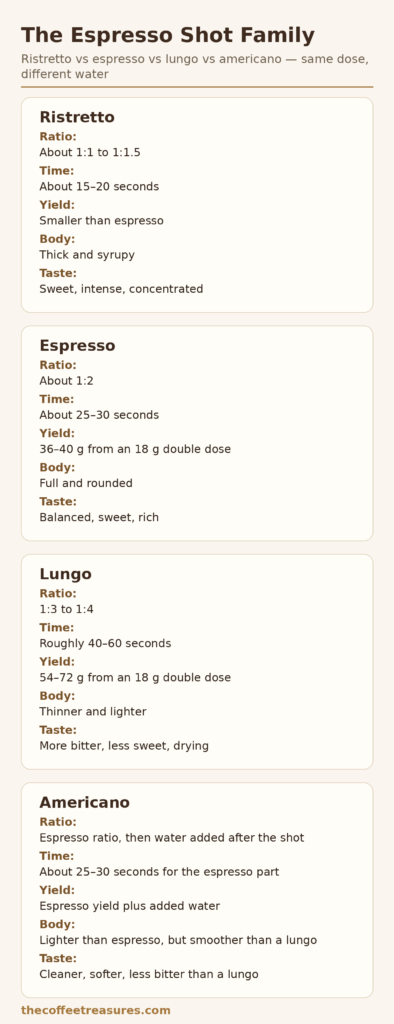
As the ratio moves from ristretto toward lungo, the shot gets longer, the yield gets larger, and the body gets thinner, while the taste moves from sweet and concentrated toward bitter and drying. The americano sits outside that pattern: its espresso part is pulled normally, and the extra water is added after the shot, so its taste stays cleaner.
What Does a Lungo Taste Like?
A lungo tastes thinner, more bitter, and less full-bodied than a regular espresso from the same dose. It is not a stronger-tasting drink, even though the shot is longer. It is a longer, more diluted drink, and the flavor leans toward bitterness rather than sweetness.
The reason is extraction. In the first seconds of a shot, the water pulls out sweet, balanced compounds. As the shot continues, the later part brings out bitter, drying compounds. A regular espresso stops before too much of that later part comes through. A lungo keeps going for roughly 40–60 seconds, so more of those bitter compounds end up in the cup, and the extra water thins the body.
Lungo vs Espresso
The difference between a lungo and an espresso comes down to water, time, and ratio, all from the same dose. An espresso uses a ratio of about 1:2, takes about 25–30 seconds, and gives a yield of about 36–40 g from an 18 g double dose. A lungo uses a ratio of 1:3 to 1:4, takes roughly 40–60 seconds, and gives a yield of about 54–72 g from the same dose.
An espresso stops while the extraction is still sweet and balanced. A lungo keeps going into the later, bitter stage. The espresso is smaller, thicker, and more balanced. The lungo is larger, thinner, and more bitter. A lungo is not a stronger espresso — it is a longer one, and it tastes weaker per sip, because the same coffee is spread through more water. Choose a lungo for a larger black coffee made as one shot; choose an espresso for the fullest, most balanced flavor. A doppio, by contrast, uses a double dose, while a lungo stretches a single dose with more water.
Lungo vs Americano
The lungo vs americano comparison causes the most confusion, because both drinks are larger than an espresso and both are served black. The difference is simple: an americano is water added after the shot, while a lungo is more water through the puck.
An americano starts with a regular espresso, pulled at about 1:2 in about 25–30 seconds, with a yield of about 36–40 g from an 18 g double dose. Then hot water is added after the shot is finished. The extraction stops at the normal point, so the extra water only dilutes what has already been extracted — it does not pull out more bitter compounds, because it never passes through the coffee.
A lungo works the other way around. The extra water passes through the puck while the shot is still running, for roughly 40–60 seconds, at 1:3 to 1:4, until the yield reaches about 54–72 g. The extraction continues into the bitter, drying stage. So an americano tastes cleaner, softer, and less bitter, while a lungo tastes more bitter and more drying. For a long black coffee that still tastes balanced, choose an americano; to taste what a longer extraction does to a single dose, choose a lungo. See how to make an americano at home.
Does a Lungo Have More Caffeine Than Espresso?
A lungo has slightly more total caffeine than the same dose pulled as a regular espresso, but it tastes weaker per sip because the extra caffeine is spread through much more water. Both drinks start with the same dose, and a longer shot gives the water more time in contact with the coffee, so it pulls out a little more caffeine.
A 2023 extraction study in the Foods journal found that stretching a shot from 1:2 to 1:3 added only about 8% more dissolved solids and about 13% more caffeine. Most of the added liquid is water. Per sip, a lungo tastes weaker, because that caffeine is spread through 54–72 g of liquid instead of 36–40 g. A lungo is not a good way to get a stronger caffeine hit — for noticeably more caffeine, you need more coffee, not more water through the same coffee.
What Is a Nespresso Lungo?
The Nespresso lungo button is the version of this drink that most people meet first. On a Nespresso Original machine, the three standard shot sizes are ristretto at 25 ml, espresso at 40 ml, and lungo at 110 ml (3.7 oz). Press the lungo button, and the machine pushes much more water through the capsule than the espresso button does.
A single lungo from a regular espresso machine is about 45–60 ml, so the Nespresso lungo is larger still, designed to fill a bigger cup and drink more like a small black coffee. Lungo capsules are ground coarser than espresso capsules, so the longer flow runs more evenly. Two examples are Fortissio Lungo and Vivalto Lungo. It is not a bigger capsule, and it is not two espressos in one cup — it is one capsule, one dose, with more water pushed through it.
What Is a Lungo Coffee? How to Make a Lungo at Home
You can make a lungo at home with a regular espresso machine or with a Nespresso machine. The idea is the same in both cases: keep the dose the same as a regular espresso, and let more water flow through the coffee.
How to Make a Lungo With an Espresso Machine
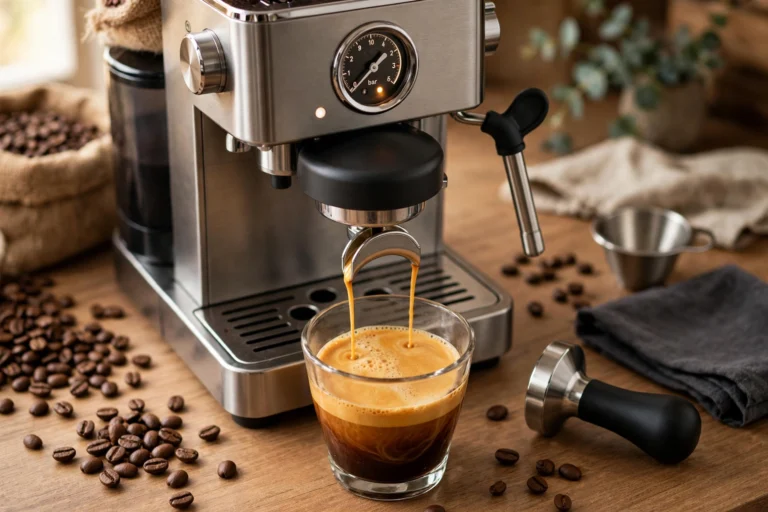
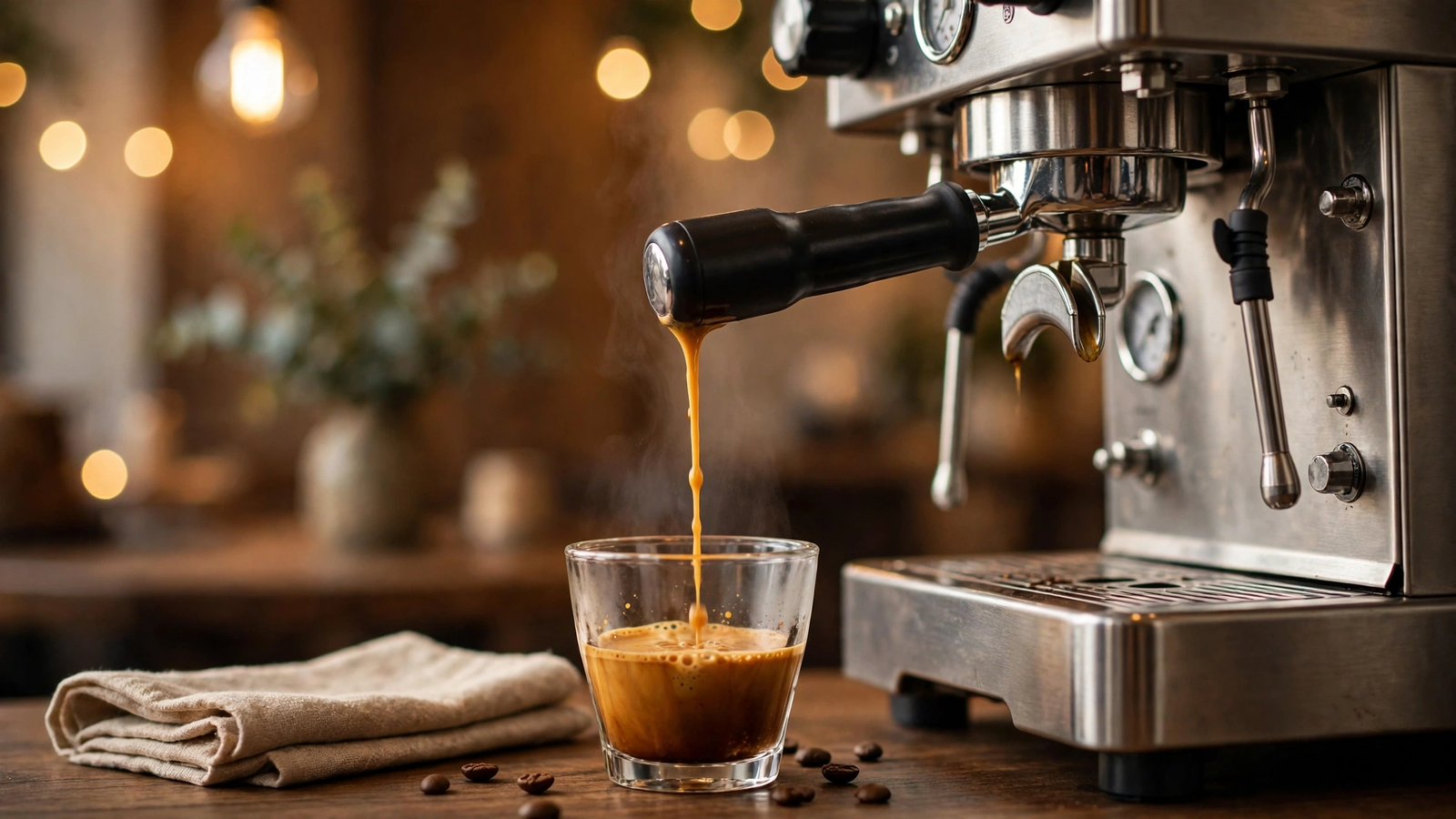
Start with the same 18 g double dose as a regular espresso. Grind, dose, and tamp as normal; do not add more coffee. The lungo is made by letting the shot run longer, not by changing the dose. Use a larger cup, start the shot as normal, and let it keep running. Aim for roughly 40–60 seconds and a total yield of about 54–72 g — a ratio of about 1:3 to 1:4. The stream will start dark and golden, then become paler. Stop at your target yield or time.
How to Make a Lungo With a Nespresso Machine
Place a lungo capsule in the machine, such as Fortissio Lungo or Vivalto Lungo, put a larger cup under the spout, and press the lungo button. The machine will dispense 110 ml (3.7 oz), the preset lungo size on Nespresso Original machines. Do not press the espresso button twice: two espressos would use two capsules and two doses. A lungo is one capsule with more water through it — larger and lighter than the 40 ml espresso, with a thinner crema and a more bitter taste.
For the standard shot, see how to make espresso at home. The steps are the same; only the stopping point changes: later, larger, and more bitter.
Who Should Drink a Lungo?
A lungo suits you if you like black coffee, you want a larger drink than a single espresso, and you do not mind a thinner body and a more bitter edge. It also suits Nespresso users who want a full cup from one capsule, without adding water afterwards or using a second capsule.
A lungo does not suit you if you want the fullest, sweetest, most balanced flavor — then a regular espresso is better, because it stops while the sweet compounds are still dominant. It also does not suit you if you want a larger drink that still tastes smooth and balanced — then an americano is better, because the water is added after a normal extraction. And it does not suit you if you want a stronger-tasting shot or a bigger caffeine hit: a ristretto tastes more intense, and a doppio gives you more coffee.
How to Tell If Your Lungo Went Right
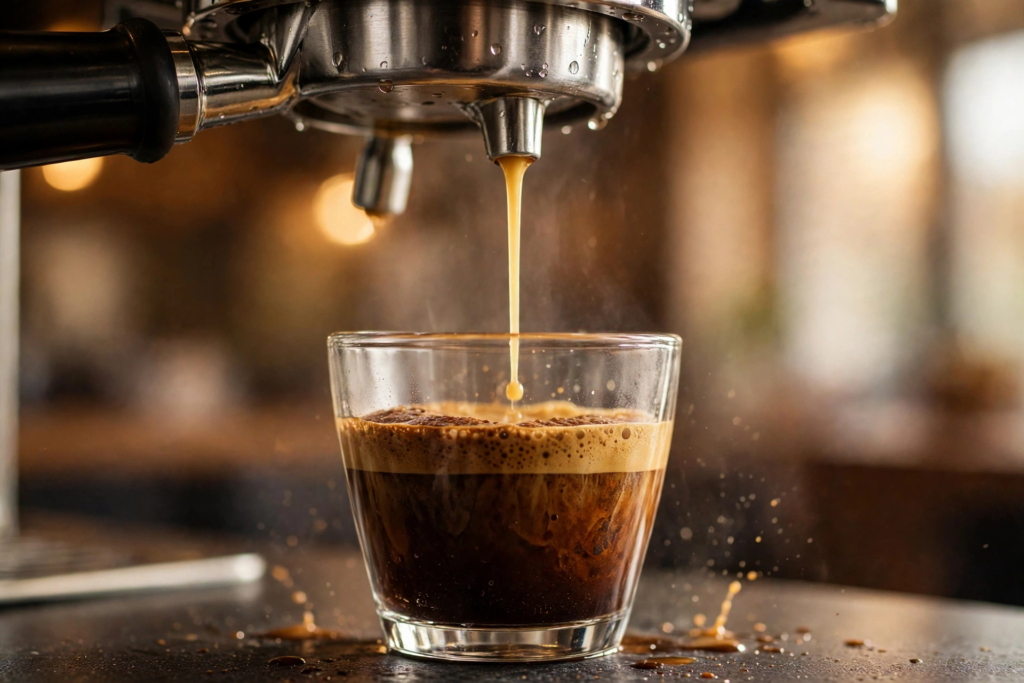
Watch the stream, not the clock alone. A lungo starts dark and golden, then turns pale and thin — baristas call this blonding. If the stream turns pale well before your target yield, the shot is running too fast (grind too coarse); if it stays dark and drips slowly past 60 seconds, it is running too slow (grind too fine).
Taste it in two parts. The first sips should taste sweet and balanced; the finish may taste more bitter and drying. If the whole cup tastes harsh from the first sip, stop the next shot earlier — aim for a 1:3 ratio instead of 1:4, or about 54 g from your 18 g dose. If it tastes weak and watery, your grind may be too coarse, and the water is rushing through without extracting enough.
A lungo is also a useful base for milk drinks: its larger volume and thinner body mix easily with steamed milk, though most cafés build milk drinks on a regular espresso instead, because the lungo’s bitter edge shows through milk.
That is what is a lungo coffee in practice: the same dose, stretched further, and the taste tells you exactly how far it went.
Frequently Asked Questions
What is the difference between a lungo and an espresso?
An espresso uses a ratio of about 1:2, takes about 25–30 seconds, and gives a yield of about 36–40 g from an 18 g double dose. A lungo uses a ratio of 1:3 to 1:4, takes roughly 40–60 seconds, and gives a yield of about 54–72 g from the same dose. The espresso is smaller, thicker, and more balanced. The lungo is larger, thinner, and more bitter.
Is a lungo stronger than espresso?
No. A lungo is longer, not stronger. The same dose is spread through more water, so each sip tastes weaker and more diluted than a sip of regular espresso. A lungo tastes more bitter, but bitterness is not the same as strength. If you want a stronger-tasting shot, a ristretto is the more intense option.
Does a lungo have more caffeine than espresso?
Yes, but only slightly more in total. A 2023 study in the Foods journal found that stretching a shot from 1:2 to 1:3 added about 13% more caffeine and about 8% more dissolved solids. Most of the added liquid is water. Per sip, a lungo tastes weaker, because that caffeine is spread through a much larger drink.
What is the difference between a lungo and an americano?
An americano is water added after the shot, while a lungo is more water through the puck. For an americano, a regular espresso is pulled at about 1:2 in about 25–30 seconds, then hot water is added. The extraction stops at the normal point, so the flavor stays cleaner and softer. For a lungo, water passes through the coffee for roughly 40–60 seconds at 1:3 to 1:4, so the extraction continues into the bitter, drying stage.
How do you make a lungo at home?
With an espresso machine, use the same 18 g double dose as a regular espresso, then let the shot run for roughly 40–60 seconds until the yield reaches about 54–72 g, a ratio of about 1:3 to 1:4. With a Nespresso machine, place a lungo capsule in the machine, such as Fortissio Lungo or Vivalto Lungo, put a larger cup under the spout, and press the lungo button, which dispenses 110 ml (3.7 oz).
What is a Nespresso lungo (the button)?
The Nespresso lungo button is the long-shot preset on a Nespresso Original machine. The three standard sizes are ristretto at 25 ml, espresso at 40 ml, and lungo at 110 ml (3.7 oz). Pressing the lungo button pushes 110 ml of water through one capsule. Lungo capsules, such as Fortissio Lungo and Vivalto Lungo, are ground coarser than espresso capsules, so the longer flow runs more evenly. The result is a larger, thinner, more bitter drink than an espresso from the same machine.
Final Thoughts: What Is a Lungo Coffee, in One Sentence?
So, what is a lungo coffee? It is a long espresso shot: the same dose of coffee, with more water pushed through the puck, for a longer time, at a ratio of 1:3 to 1:4. That one change explains the larger size, the thinner body, the more bitter taste, and the dry finish — and why a lungo is neither an americano nor a stronger espresso.
Try a regular espresso, then a lungo from the same dose, then an americano made from a regular espresso with water added afterwards. The espresso will show you balance. The americano will show you a smooth, long black coffee. The lungo will show you what happens when the extraction keeps going past the sweet part. Either way, you will know exactly what the lungo button does, and you will never confuse a long shot with a stronger shot again.
For the shot the lungo is built from, see how to make espresso at home, and for the drink that looks most like a lungo but is made differently, see how to make an americano at home. To learn more, see the Lungo entry on Wikipedia.